seeds
Germination
Last reviewed 2026-10-04
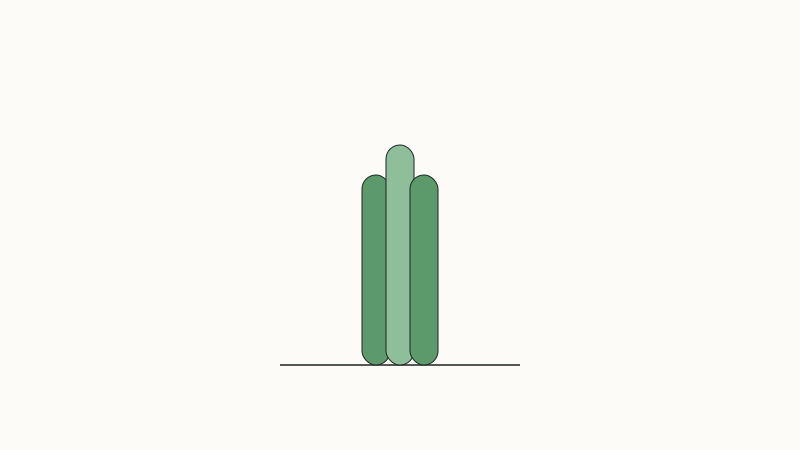
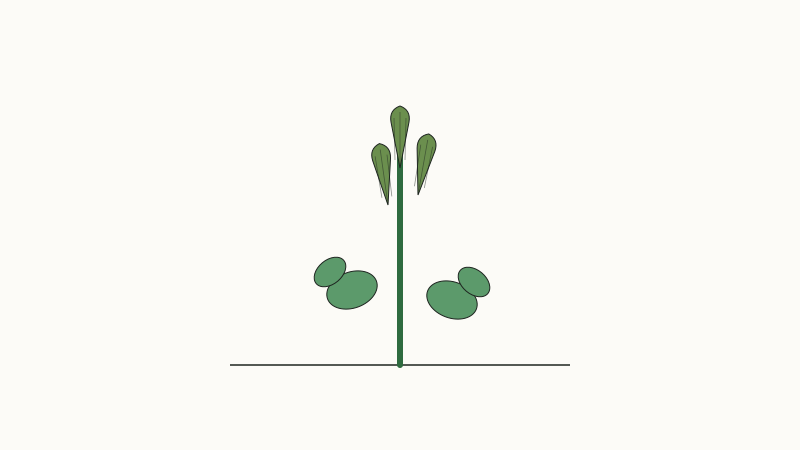
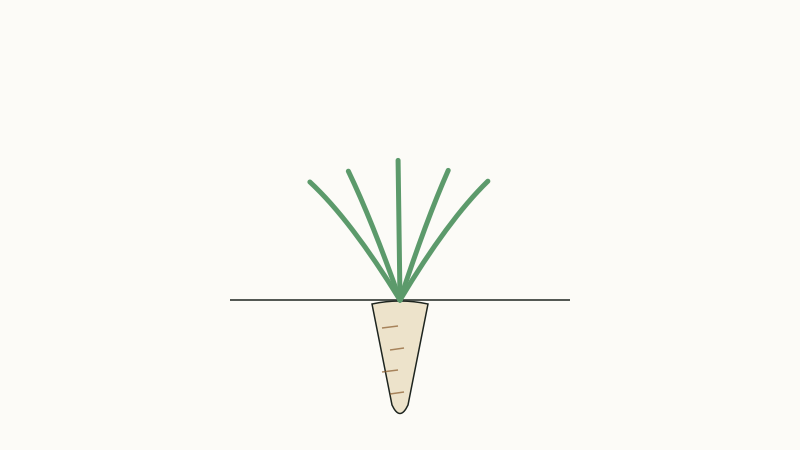
Germination is the process in which a living seed takes in water, activates its metabolism, and begins growing. The first visible sign is usually the root, followed by the shoot. Germination depends on moisture, temperature, oxygen, and, for some species, light or darkness.
What it means
A seed can be planted without germinating. It may be too old, too dry, too cold, too wet, or missing a species-specific cue. Germination ends when the seedling has emerged and is beginning to use its own leaves for photosynthesis. Emergence is therefore related to, but not exactly the same as, germination.
How it affects the garden
Use the temperature range on a seed packet when possible. Keep the growing medium evenly moist, but not waterlogged. Saturated mix fills the air spaces that roots need with water and can encourage decay. A seed-starting mix, clean containers, and gentle bottom watering make moisture easier to control.
Germination percentage is a batch estimate, not a promise for every seed. Older seed usually has a lower percentage, so sowing a few extra seeds can be sensible. The seed germination calculator can turn a test result into a practical sowing rate.
Example
If ten lettuce seeds are tested and eight sprout under the test conditions, the observed germination rate is 80 percent. That result describes that seed lot under those conditions. It does not guarantee that the same seeds will perform identically in a cold outdoor bed.
Common confusion
Germination is not the same as vigor. Two seeds can both sprout, while the stronger seed produces a faster, more robust seedling. It is also different from days to maturity, which measures time to a harvest stage from a stated starting point.
Sources
The University of Minnesota Extension guide to starting seeds indoors explains the environmental conditions that support seed starting.