Vegetable growing guide
Tomatoes
Solanum lycopersicum · Solanaceae
Sun
Full sun
Season
Warm
Maturity
60 to 80 days
Water
Moderate
Soil pH
6.0 to 6.8
Spacing
18 to 24 in
By Dandre Noah
Planting tomatoes
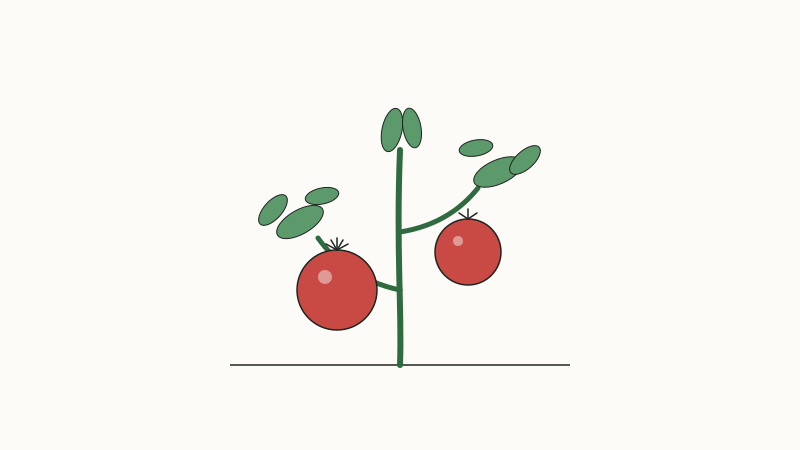
Tomatoes are a warm-season crop that spends its first month or two indoors in most climates. Start seed 5 to 7 weeks before the last frost, since they need a sturdy transplant before they go out. Move them outside only after frost risk has passed, nights hold above about 50 F, and the soil has begun to warm; cold soil and cold nights stall them badly. In zones 8 and warmer, a second crop can be started in midsummer for a fall harvest. Determinate types produce most of their fruit at once and suit canning; indeterminate types keep going until frost and need taller support.
Planting details
- Start indoors: 5 to 7 weeks before the last frost
- Transplant: after frost risk has passed and nights stay above 50 F
- Spacing: 18 to 24 inches for most types; more for large indeterminates
- Seed depth: about 1/4 inch
- Bury the stem up to the first true leaves at transplant, since tomatoes root along it
Growing requirements
Tomatoes want full sun and the richest soil you can give them, since they are heavy feeders. Soil pH 6.0 to 6.8 suits them. Water deeply and evenly rather than little and often, because dry spells followed by heavy water split ripe fruit and disrupt calcium uptake enough to cause blossom-end rot. Mulch after the soil warms to hold moisture steady and keep soil-borne disease spores from splashing onto the lower leaves. Feed lightly at planting and again when fruit sets; too much nitrogen grows a leafy bush that produces little fruit.
Harvesting and care
Pick tomatoes at full color for the best flavor, or at the breaker stage when they first blush if pests or cracking are a problem. Indeterminate vines keep producing until frost, so a season of steady picking beats a single harvest. Remove oversized or damaged fruit early so the plant puts its energy into the ones worth keeping. In the last weeks of the season, pick any green fruit before a hard frost and ripen it indoors, since a killed vine drops its fruit fast.
Common mistakes
- Transplanting into cold soil, which stalls plants for weeks
- Heavy nitrogen feeding, which grows leaves instead of fruit
- Irregular watering, which splits fruit and contributes to blossom-end rot
- Skipping support, which lets fruit touch the ground and rot
- Watering overhead, which spreads early blight and other leaf diseases
- Letting green fruit sit after frost, which spoils it
Companion plants
Basil, carrots, onions, and parsley share a tomato bed well because they do not compete for the same light or feeding schedule. Basil is often planted between tomatoes as a traditional companion and may help shade the soil. Keep tomatoes away from brassicas, which compete heavily for fertility, and from potatoes and corn, which share diseases and pests.
Varieties worth growing
- Sun Gold: sweet cherry type that keeps producing until frost
- Celebrity: determinate slicer; dependable and early
- Brandywine: heirloom with large, irregular fruit and rich flavor
- Roma: paste type for sauces and canning
Frequently asked questions
Why are my tomatoes splitting?
A dry spell followed by heavy rain or deep watering makes the fruit take up water faster than the skin can stretch. Even moisture and prompt picking are the fix.
What is the black spot on the bottom of my tomatoes?
Blossom-end rot, caused by calcium uptake being disrupted, most often by uneven watering rather than a true calcium deficiency. Keep moisture steady.
Do I need to prune tomatoes?
Indeterminate types benefit from removing some suckers to improve airflow; determinate types should be left alone, since pruning them cuts the harvest.
Can I ripen green tomatoes indoors?
Yes. Pick them before a hard frost, keep them in a cool place, and they will color up over a few weeks. A banana in the same box speeds it up.