Fall planting
When should I plant tulip bulbs?
By Tools for Gardeners · Last reviewed 2026-10-01
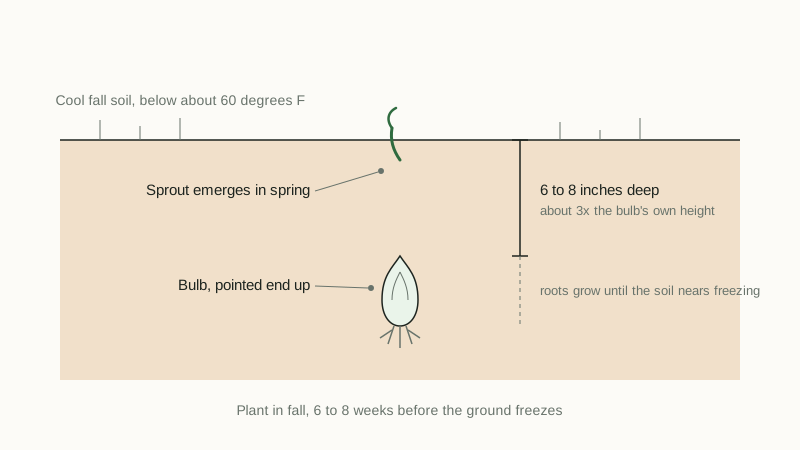
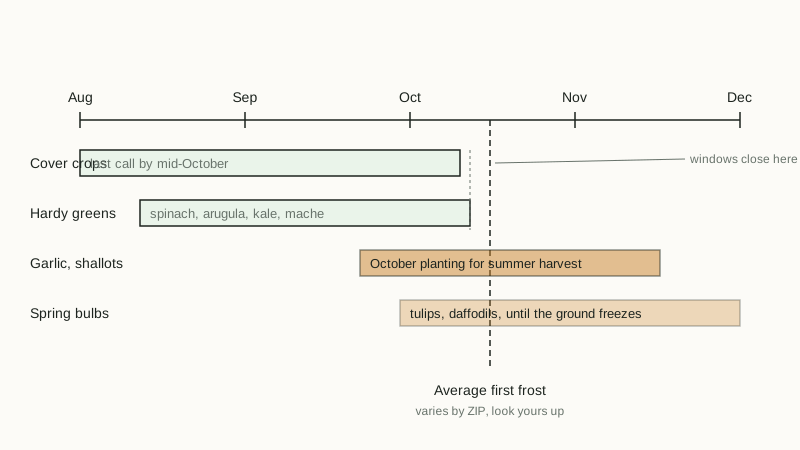
Plant tulip bulbs in fall, roughly 6 to 8 weeks before the ground freezes. In most of the US that means late September in the far north, October across the middle of the country, and November into December in the South.
The exact week depends on your climate, not the calendar alone. Bulbs need soil that has cooled enough to stop top growth but is still warm enough for roots to spread, plus a long stretch of winter cold before they can flower.
The window by region
As a general rule, count back 6 to 8 weeks from when your soil typically freezes. That lands differently across the country:
- Zones 3 to 5: late September through October.
- Zones 6 to 7: October through mid-November.
- Zones 8 and warmer: November into December, using pre-chilled bulbs.
A simpler cue that works everywhere: plant when nights are reliably cool and the soil has dropped below about 60°F. In Iowa, Iowa State University Extension calls October the ideal month, and the same logic applies one zone warmer or colder: wait for real fall, not the first chilly morning.
If you are not sure when your ground freezes, the frost date finder shows your average first fall freeze by ZIP. Soil usually stays workable for a few weeks after that date, which is why bulb planting runs later than the first frost.
Why fall timing matters
Two things have to happen underground before a tulip can bloom.
First, the bulb grows roots. Root growth continues until the soil approaches freezing, and a well-rooted bulb produces a sturdier stem in spring. Bulbs planted too late root poorly and can heave out of the ground during freeze and thaw cycles.
Second, the bulb needs sustained cold. Iowa State's bulb-forcing guidance puts the requirement at 12 to 15 weeks of temperatures around 40 to 45°F for proper flower development. Outdoor winter supplies that chill in zones 3 to 7. In zones 8 and warmer, winter does not always deliver enough cold, which is why southern gardeners buy pre-chilled bulbs or refrigerate bulbs before planting.
Planting too early is also a mistake
Warm September soil is the trap. Iowa State notes that bulbs planted while the soil is still warm can send up foliage in fall, which wastes the bulb's stored energy on leaves that winter will kill anyway. If you can still comfortably work in a t-shirt, it is probably too early. Buying bulbs in August is fine; store them somewhere cool and dry until planting conditions arrive.
How deep to plant
Set bulbs at a depth of two to three times their own height, measured to the top of the bulb:
- Standard tulips (Darwin hybrids, triumphs, and most large types): 6 to 8 inches deep.
- Small species tulips such as Kaufmanniana and Greigii types: 3 to 5 inches deep.
Pointed end up, flat or root end down. Space large bulbs 4 to 6 inches apart. Water them in after planting to settle the soil, then leave them alone. Tulips need well-drained soil; bulbs sitting in wet ground over winter rot, so avoid low spots and heavy clay that stays soggy, or amend it first.
Plant in clusters rather than single file. Iowa State recommends groups of 10 or more bulbs of one variety for a display that reads as a drift of color instead of a scattered row.
What too late looks like
The hard deadline is frozen ground. If you can still dig, you can still plant: Iowa State reports tulips going in as late as December when the soil stays workable, and late-planted bulbs usually still bloom, just on shorter stems. A bulb planted late beats a bulb left in the bag, because tulip bulbs do not store well into spring and an unplanted bulb will not bloom at all.
In zones 8 to 10, outdoor planting is still possible but treat tulips as annuals: plant pre-chilled bulbs in December or January and expect one good show rather than a perennial return.
What to do next
Check your local first freeze date with the frost date finder, then mark a planting week 6 to 8 weeks out on your planting calendar. Daffodils go in during the same window, and if you want foliage cover after bloom, interplant with perennials like hostas that leaf out as the tulip foliage fades. For the rest of what can still go in the ground this month, see what to plant right now.