Seasonal
What can I plant right now in my garden?
By Tools for Gardeners · Last reviewed 2026-10-02
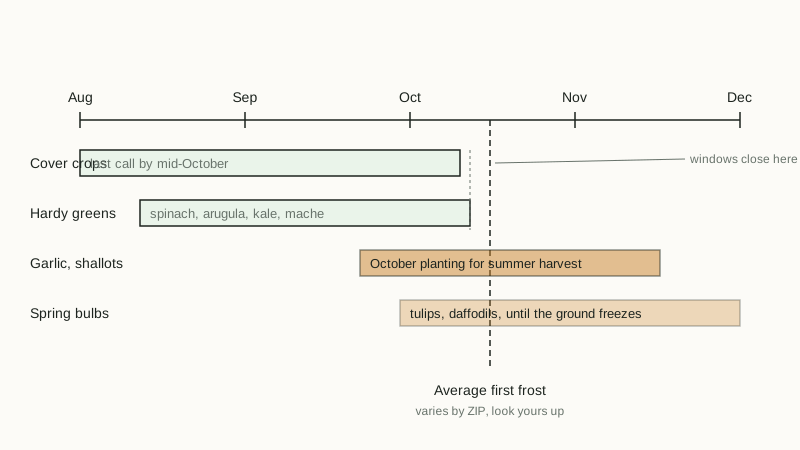
In early October, most US gardeners can still plant garlic and shallots, spring-flowering bulbs like tulips and daffodils, hardy greens such as spinach and arugula, and cover crops. Warm-season vegetables are finished for the year.
What "right now" allows depends on your first fall frost date and how fast each crop matures. Some plants go in before the frost, some go in around it, and garlic and bulbs barely care about it at all.
Check your own window first
The honest answer is local. Two gardeners a hundred miles apart can have first frost dates a month apart, and the window for each crop slides with it. The what can I plant this week tool checks crops against your ZIP's frost dates, and the fall planting calculator counts backward from your first frost to the last reasonable sowing date for each vegetable.
For any crop, the quick math is: find your first frost date, subtract the seed packet's days to maturity, then subtract about two more weeks to account for slowing fall growth. University of Maryland Extension calls this a short-day factor, because plants grow much slower as days shorten and temperatures drop. If the result is already in the past, that crop is done for the year.
Still open in October
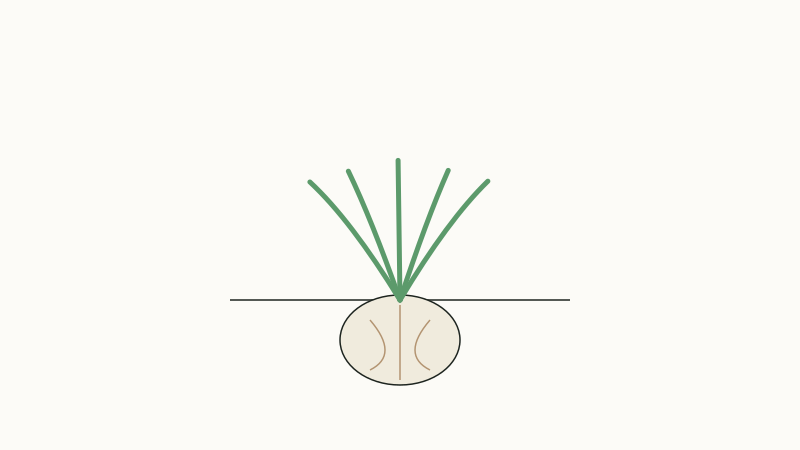
Garlic, shallots, and multiplier onions. October is the classic month to plant them for harvest next summer. Individual cloves go in pointed end up; the plants root before winter and size up fast in spring. More detail is on the garlic page.
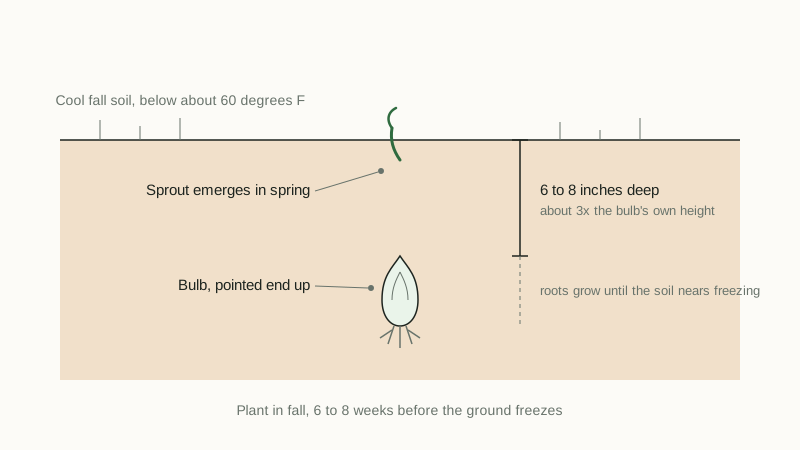
Spring-flowering bulbs. Tulips, daffodils, crocuses, and hyacinths all go in now, roughly 6 to 8 weeks before the ground freezes. The full timing rules are in the tulip planting guide.
Hardy greens for late fall and overwintering. Spinach, arugula, kale, mache, and parsley can be sown now in most of the country. University of Maryland Extension lists spinach, arugula, kale, mache, and chicories among the crops that overwinter under protection and resume growth in spring, giving you the earliest harvest of next year. In colder zones, sow them a few weeks before your first frost so plants reach a few inches tall before growth stalls; in zones 7 and warmer, the window stays open later. See spinach and kale for spacing and care.
Cover crops. Empty beds benefit more from a living cover than from bare soil all winter. Winter rye, oats, crimson clover, and hairy vetch are the usual choices. University of Maryland Extension gives an ideal sowing window of mid-August to early October, stretching to mid-October for cold-hardy types like winter rye, so this is the last call in most regions.
Radishes in mild zones. Radishes mature in about a month. Where your first frost is still four or more weeks out, one more sowing is realistic.
Perennials, trees, and shrubs. Fall is also prime planting season outside the vegetable bed. Cool air and still-warm soil let roots establish without summer heat stress, so perennials, divisions, and new shrubs all go in now, watered until the ground cools.
Already closed
Anything that needs heat is over. Tomatoes, peppers, beans, cucumbers, squash, and corn have no chance of maturing before frost, and planting them now wastes seed.
Peas are also effectively closed, not because they fear frost but because there is no time: University of Maryland Extension notes fall peas struggle with warm soil and too few days left to produce pods. The same applies to heading crops like broccoli and cabbage in cold zones. University of Maryland Extension points out that vegetable growth nearly stops once daylight drops below about 10 hours, which in the mid-Atlantic is mid-November through late January, so transplants set out now will not head up before winter.
If your frost is close
Row cover or a low plastic tunnel buys two to four weeks for greens already in the ground. Root crops go even longer: beets, carrots, and turnips can be harvested into December by piling insulating mulch over the bed, per the same Maryland guidance. The protection extends a crop that is planted; it does not reopen the sowing window.
Frequently asked questions
Can I still plant lettuce in October? In zones 7 and warmer, yes, a last sowing of looseleaf lettuce under row cover is realistic. In colder zones the plants will not size up before growth stalls, so plan on spinach or mache for overwintering instead.
Do I need to water fall plantings? Yes, at least until things are established. University of Maryland Extension's advice is to keep seedbeds evenly moist through germination and to water new garlic, bulbs, and transplants in at planting. Cool soil holds moisture longer than summer soil, so check before watering again.
What if everything has closed in my zone? Then the useful work is soil, not seed: sow a cover crop where winters allow, or top beds with compost and mulch so they are ready for the first spring sowing window.
What to do next
Set your ZIP in the frost date finder, then run what can I plant this week for the current list for your area. If your planting window has closed entirely, shift to soil work: a cover crop or a layer of compost now means a better bed in April. The planting calendar will then tell you what opens first in spring.