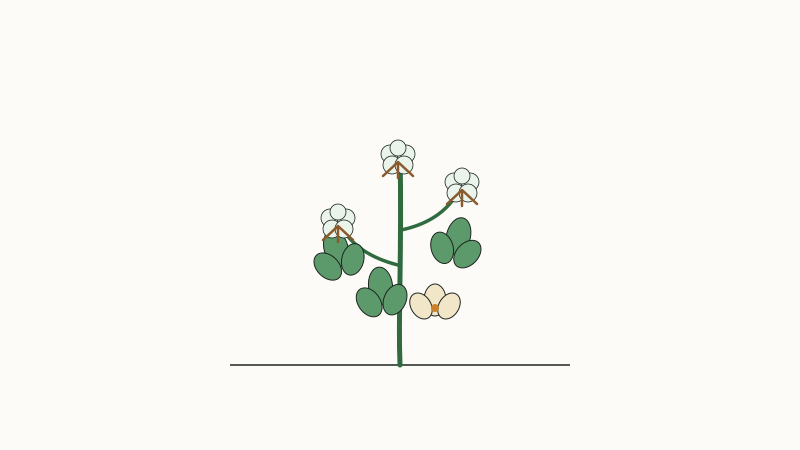
Flower growing guide
Cotton
Gossypium hirsutum · Malvaceae
Sun
Full sun
Season
Warm
Maturity
140 to 160 days
Water
Moderate
Soil pH
6.0 to 8.0
Spacing
12 to 18 in
Planting cotton
Cotton is a tender subshrub grown as a summer annual everywhere outside zones 9 to 11. Sow seed directly 1 to 2 weeks after the last frost once the soil is genuinely warm, because seed rots in cold ground. In short-season areas start indoors 4 to 6 weeks early in pots that can be planted whole, since seedlings dislike root disturbance. The crop needs a long hot run, roughly five frost-free months to open bolls, which makes it easy in the Southeast and a race in the north. Before sowing, check your state department of agriculture: several cotton-growing states regulate even a few ornamental plants under boll weevil eradication programs.
Planting details
- Direct sow: 1 to 2 weeks after the last frost, into warm soil
- Or start indoors: 4 to 6 weeks early in peat or coir pots
- Spacing: 12 to 18 inches; plants reach 3 to 5 feet
- Seed depth: about 1/2 to 1 inch
- Pick the longest, hottest, sunniest spot you have
Growing requirements
Full sun and real heat are the whole game; cotton stalls and stays small through a cool summer. It wants well-drained loam at soil pH 6.0 to 8.0 and tolerates modest salinity better than most garden plants. Water steadily while the plant grows and flowers, then let the ground dry as bolls mature, since wet weather in late season rots the open lint. Go easy on nitrogen, which produces a tall leafy plant with few bolls.
Harvesting and care
Cup-shaped cream or pale yellow flowers open in midsummer, age pink, and drop to reveal a small green boll. The boll swells for weeks before splitting into the familiar white fluff. For ornamental use, cut stems once the first few bolls have opened and hang them to dry; dried cotton stems keep for years in arrangements. Watch for the usual mallow-family pests on the pods: aphids, stink bugs, and bollworms. Frost ends the plant outright.
Common mistakes
- Sowing into cold soil, which rots the seed or stalls seedlings for weeks
- A site with too short a season; bolls need about 150 frost-free days to open
- Heavy nitrogen feeding, which grows leaves instead of bolls
- Late overhead watering or rainy spells on open bolls, which rots the lint
- Skipping the state boll weevil registration where eradication programs require it
Companion plants
Cotton works as a specimen or a short row at the back of a hot sunny bed, since 3 to 5 foot plants shade anything shorter behind them. It sits well beside other heat lovers that share its lean-to-moderate water needs, like okra, sweet potatoes, and sunflowers. Keep an eye on okra and hollyhock planted nearby, since the same pod-sucking pests move between mallows.
Varieties worth growing
- Upland cotton: the standard white-fiber type that most seed packets sell
- Burgundy cotton: dark red-purple foliage and pink blooms; ornamental before anything else
- Brown and green cotton: heirloom types with naturally colored lint for hand spinning
- Levant cotton: Gossypium herbaceum; a smaller species with showy hibiscus flowers
Frequently asked questions
Can I grow cotton in a home garden?
Yes, as a warm-season annual anywhere with a long hot summer. In several cotton-growing states you need to register even ornamental plants with the state boll weevil eradication program first, so check before sowing.
How long until the bolls open?
Roughly 140 to 160 days from sowing. Flowers appear in midsummer, and the bolls swell and split open in early fall.
What can I do with a few plants' worth of cotton?
Hand-gin it by pulling the seeds out of the lint for spinning or craft use, or cut the stems once bolls open and dry them for arrangements.