Herb growing guide
Basil
Ocimum basilicum · Lamiaceae
Sun
Full sun
Season
Warm
Maturity
60 to 75 days
Water
Moderate
Soil pH
6.0 to 7.5
Spacing
12 in
By Dandre Noah
Planting basil
Basil is one of the most heat-loving herbs and the one most often killed by impatience. Start seed indoors 4 to 6 weeks before the last frost, or sow directly once the weather is reliably warm; the seed germinates fast in warm soil but rots in cold. Transplant out only after cold nights have passed and the soil has warmed, since a single chilly night can set the plants back for weeks. In zones 8 and warmer it can grow nearly year-round, but in most climates it is a summer herb that ends at the first frost.
Planting details
- Start indoors: 4 to 6 weeks before the last frost
- Transplant or sow: after cold nights have passed and soil is warm
- Spacing: about 12 inches
- Pinch flower buds for leafy growth
- Seed depth: about 1/4 inch
Growing requirements
Basil wants full sun, warm soil, and good drainage. It tolerates a wide pH range but does best around 6.0 to 7.5 in moderately fertile soil. Water at the base rather than overhead, since wet foliage in the evening invites downy mildew and leaf spot, the two diseases that take basil out fastest. Pinch the growing tips regularly to force branching; an unpinched plant shoots straight up, flowers early, and produces a fraction of the leaves a pinched one does.
Harvesting and care
Harvest basil by cutting stems just above a pair of leaves, which makes the plant branch into two new stems where you cut. Pick in the morning when the oils are strongest, and remove every flower spike the moment it appears, since flowering turns the leaves bitter and slows new growth. A single plant kept pinched can be harvested for months. In cold climates, bring a pot indoors before frost or the plant dies at the first touch of it.
Common mistakes
- Letting plants flower, which shifts energy from leaves to seed and turns foliage bitter
- Watering overhead in the evening, which encourages leaf diseases
- Setting plants out in cold soil, which stalls growth for weeks
- Never pinching the tips, which produces a tall, leggy plant with few leaves
- Crowding plants, which traps humidity and invites mildew
Companion plants
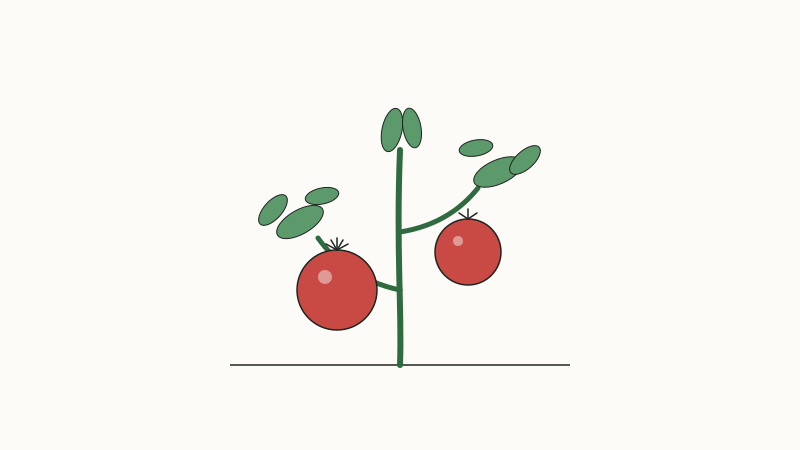
Basil grows well near tomatoes and peppers when the bed has enough sun and airflow, and the combination is both practical and traditional in the kitchen garden. It also works as a filler under taller crops and in containers. Keep it away from rue and sage, which can inhibit its growth, and give it enough space that its own foliage does not stay wet overnight.
Varieties worth growing
- Genovese: the classic pesto type with large, fragrant leaves
- Thai: spicy, anise-flavored; holds up to cooking
- Lemon: citrus-scented for fish and salads
- Purple Ruffles: dark foliage for ornamental beds and garnishes
Frequently asked questions
Why is my basil turning black at the edges?
Usually cold damage or downy mildew. Basil is tender and blackens fast once temperatures drop; wet foliage in the evening also spreads leaf diseases quickly.
How do I keep basil producing?
Pinch the tips regularly and cut stems just above a leaf pair rather than stripping leaves. Remove every flower spike the moment it appears.
Can basil grow indoors?
Yes, on a bright south-facing window or under a grow light. It needs more light than most herbs, and indoor plants still need pinching to stay bushy.