What does this soil calculator calculate?
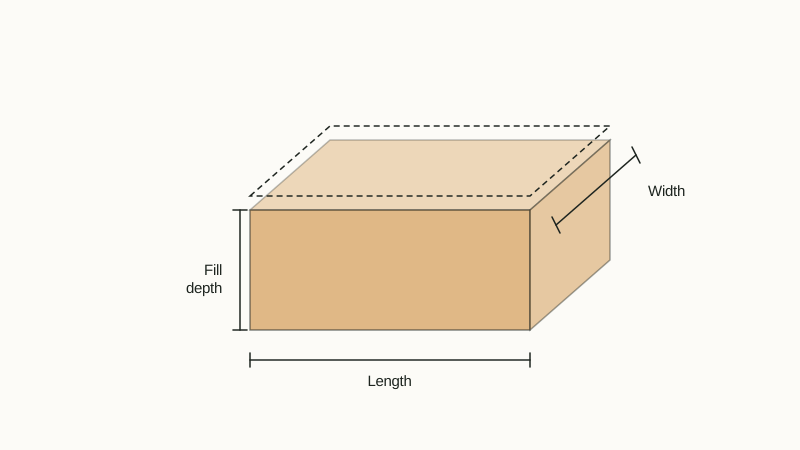
This calculator estimates the volume needed to fill a rectangular growing area. It multiplies length by width by fill depth, then converts the result into cubic yards and your selected bag size.
What you will need
Length and width
Measure the inside dimensions of the bed. Using the outside dimensions can slightly overstate the amount of soil you need when the bed has thick sides.
Fill depth
Measure only the empty depth that you plan to fill. If the bed already contains soil, do not enter the total wall height.
How the calculation works
For an 8 foot by 4 foot bed with a 12 inch fill depth, the calculation is 8 × 4 × 1 = 32 cubic feet. There are 27 cubic feet in one cubic yard, so 32 cubic feet is about 1.19 cubic yards.
Important assumptions
- The growing area is rectangular.
- Depth is treated as an average across the bed.
- The estimate does not account for settling after watering.
- Bag volume matches the amount printed on the package.
Common measuring mistakes
The most common mistake is entering the full bed height when only a partial refill is needed. Sloped ground and uneven existing soil can also change the actual volume. Measure several points and use an average depth when the base is uneven.
Frequently asked questions
How much soil does a raised bed need? Length times width times fill depth in feet gives cubic feet, and dividing by 27 gives cubic yards. An 8 by 4 foot bed filled 12 inches deep needs about 32 cubic feet, or roughly 1.2 cubic yards.
Should I order extra for settling? The estimate is the exact fill volume and does not pad for settling. Soil drops as it is watered and worked, so many gardeners order a margin or plan to top up the bed after the first season.
Can I fill the whole bed with compost? Compost is an amendment, not a complete fill for most beds. Use this tool for the total volume, then run the compost calculator for the share to blend in.