Native plant growing guide
Blazing star
Liatris spicata · Asteraceae
Sun
Full sun
Season
Perennial, blooms mid to late summer
Maturity
2 to 3 years from seed
Water
Moderate
Soil pH
5.0 to 7.0
Spacing
9 to 18 in
By Dandre Noah
Planting blazing star
Plant corms in spring about 2 to 3 inches deep and 9 to 12 inches apart, or divide established clumps in spring; in mild regions fall planting works too. Seed works but takes two to three years to bloom, so corms are the practical starting point. Hardy in zones 3 to 8, Liatris spicata is native to moist meadows from the central plains to the East Coast, and it is the blazing star that tolerates wetter ground than its prairie cousins. Pick a spot in full sun where its 3 to 6 foot spikes can stand against looser neighbors.
Planting details
- Corm depth: 2 to 3 inches
- Spacing: 9 to 18 inches; mass in drifts for the best effect
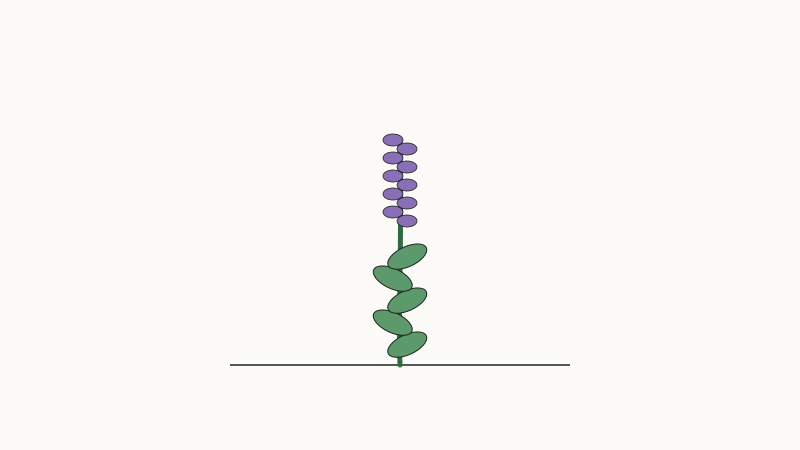
- Flower spikes open from the top down, unusual among spike flowers
- Blooms mid to late summer when little else in the native border is peaking
- Grows 3 to 6 feet; the cultivar Kobold stays under 2 feet
- Larval host for the liatris flower moth and liatris borer moth
- A florist staple: spikes hold well in the vase and dry for arrangements
Growing requirements
Full sun is where it belongs; light shade is tolerated at the cost of weaker, floppier stems. Unlike most blazing stars, this species prefers average to moist soil and handles clay and rain-garden conditions that would rot drier-loving Liatris. NC State Extension confirms it takes summer heat and humidity without complaint. Once the corms settle in, it is a low-input plant that asks for little feeding and no coddling.
Harvesting and care
Leave the spent stems standing: NC State recommends cutting dead stems to 12 to 24 inches rather than to the ground, because native bees nest in the hollow stalks and goldfinches strip the seed. Tall flower spikes can lean and may need a discreet stake in rich soil or part shade. Divide corms every few years in spring to multiply the stand, and expect the clump to widen slowly on its own.
Common mistakes
- Cutting stems to the ground in fall, which removes the stalks stem-nesting bees use
- Planting it in the dry sandy spot reserved for other blazing stars; spicata wants moisture
- Rich fertilized soil, which grows tall stems that flop
- Giving up on corms that look lifeless at planting; they wake up slowly
- Expecting first-year bloom from seed, which usually takes two or three seasons
Companion plants
This is the spike that carries a prairie border through August: coneflowers, black-eyed Susans, and bee balm bloom alongside it, and asters take over when it finishes. Monarchs, swallowtails, and native bees work it hard, and it is a larval host for the liatris flower moth. In wet ground it pairs with swamp milkweed where blazing-star cousins like L. pycnostachya would rot.
Varieties worth growing
- Kobold: compact 18 to 24 inch spikes, no staking needed
- Floristan Violett: the florist standard for cut purple spikes
- Floristan White: white flowered form for cutting gardens
- Alba: white species variant
- Callilepsis: extra-long stems bred for cutting
Frequently asked questions
Why does blazing star bloom from the top down?
It is one of the few spike flowers that opens its top florets first and works downward instead of blooming from the bottom up. The odd sequence makes it a standout cut flower.
Is blazing star a bulb?
Close enough in practice: it grows from a corm, a swollen underground stem. Plant and divide it the way you would a small bulb, a few inches deep in spring.
Does it need staking?
In rich soil or part shade, yes. In lean, sunny ground the spikes usually stand on their own, and the compact cultivar Kobold never needs it.
Is it deer resistant?
Moderately. NC State rates it as moderately resistant to deer damage, though no plant is deer-proof where pressure is high.