soil
Hardpan
Last reviewed 2026-10-04
Hardpan is a dense, restrictive soil layer that limits root growth and the movement of air and water. It may form naturally from mineral deposits or develop through compaction, repeated traffic, construction, or working wet soil. A hardpan can sit below an apparently loose surface layer.
What it means
A compacted layer has fewer connected pores than healthy soil. Water may perch above it, roots may spread sideways, and deep-rooted plants may remain shallow. The depth and strength of the layer determine whether roots can eventually penetrate it.
How it affects the garden
Identify the layer before choosing a remedy. Avoid driving or walking over wet beds, and use permanent paths where possible. Organic matter and roots can improve surface structure over time, but they may not break a severe deep layer. Mechanical loosening can help in some sites, but it should be planned so the layer is not immediately recompacted.
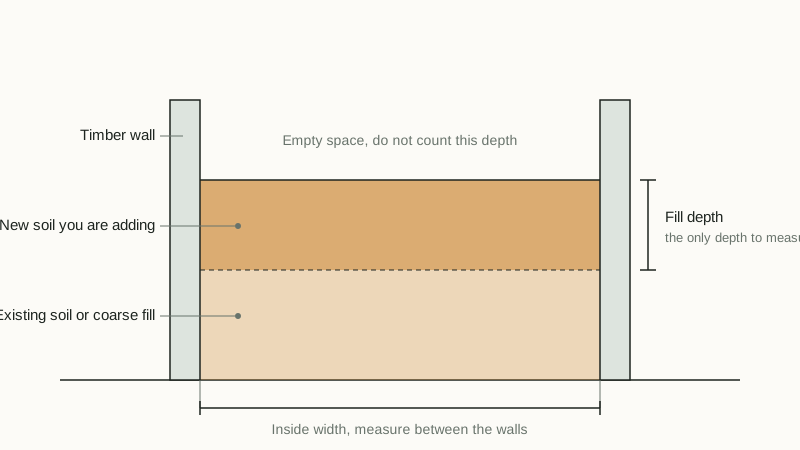
A raised bed calculator can estimate fill volume for a new bed, but adding soil above hardpan does not automatically fix drainage below it.
Example
A planting hole fills with water and roots stop at the same depth across a bed. A dense layer below the surface may be restricting movement, so the gardener tests several spots rather than adding fertilizer.
Common confusion
Hardpan is not simply clay. Clay soil can have good structure and drainage, while sandy soil can also contain a compacted layer.
Sources
USDA Natural Resources Conservation Service explains soil structure, compaction, and restrictive layers.