Choosing
What are the easiest plants to grow?
By Dandre Noah · Last reviewed 2026-11-10
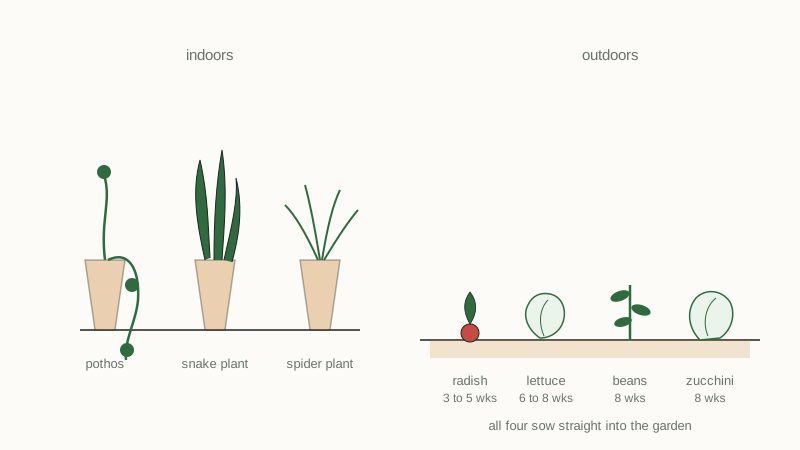
The easiest plants forgive mistakes. Outdoors that means radishes, leaf lettuce, bush beans, and zucchini, all direct sown into the garden and all ready to eat within about two months. Indoors it means pothos, snake plants, and spider plants, which survive weeks of neglect.
What makes a plant easy is not toughness alone. Easy plants share three traits: they need no indoor head start or special equipment, they tolerate the beginner errors (missed waterings, mediocre soil, imperfect light), and they show results fast enough that you learn from them instead of giving up on them.
Easiest vegetables
All four of these go straight into the ground as seed. No trays, no grow lights, no hardening off.
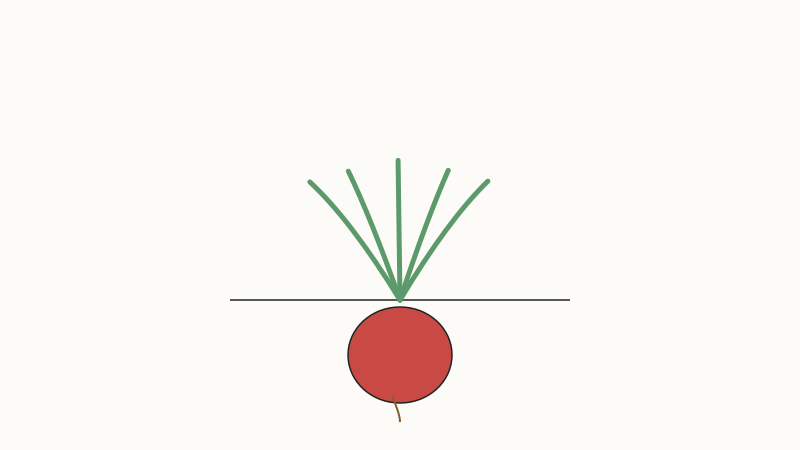
- Radish. The fastest food you can grow, ready in about 3 to 5 weeks. Sow half an inch deep in cool spring or fall soil, thin to 2 inches apart, and pull them young.
- Leaf lettuce. Sow a quarter inch deep a few weeks before your last frost and pick outer leaves while the plant keeps growing. Loose-leaf types are the most forgiving; heat is the only real enemy.
- Bush beans. Sow an inch deep, 3 to 4 inches apart, after frost in warm soil. Iowa State Extension calls green beans one of the easiest vegetables to grow and suggests sowing a short row every two weeks for a longer harvest. No trellis needed.
- Zucchini. Direct sow after frost once the soil is warm. One or two plants produce enough for a household. The only trick is picking fruit small and often, before it turns into a baseball bat.
Also easy, and worth a second planting: peas, spinach, kale, and potatoes.
Easiest herbs
- Mint, grown in a pot so it cannot take over the bed.
- Chives, a perennial that returns every spring and tolerates cutting.
- Dill, direct sown where it will grow.
Easiest houseplants
- Pothos. The money plant tolerates low light and irregular watering, droops visibly when thirsty, and roots in a glass of water if you want more of it.
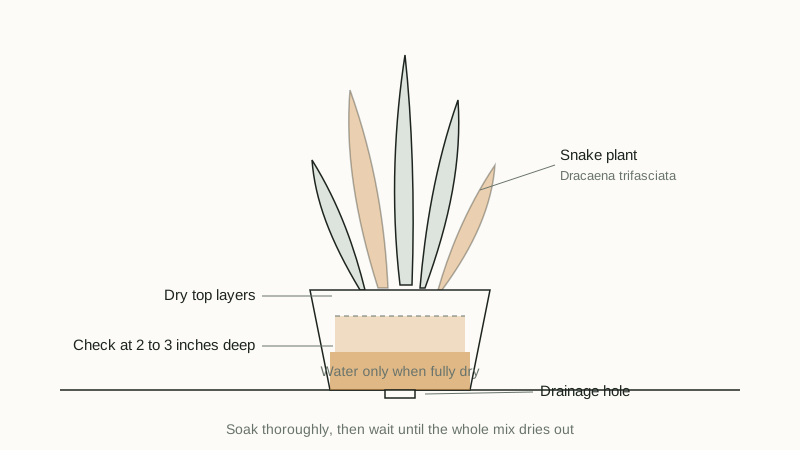
- Snake plant. Water every few weeks once the soil dries out completely. It handles the darkest corner in the house better than almost anything else.
- Spider plant. Bright indirect light and occasional watering, and it produces free baby plantlets to pot up or give away.
- Cast iron plant and aloe. The cast iron plant shrugs off low light, and aloe asks only for a bright sill and infrequent watering.
Match the plant to what you have
"Easy" depends on your conditions. Beans and zucchini need real sun; lettuce and mint manage with less. The sun calculator classifies a spot by actual hours of light, and the what should I plant tool matches crops to your sun, space, and frost dates. To size a first garden to your household, the plants per person calculator keeps you from sowing a hundred feet of radishes.
What to do next
If you are ready for a plant that asks a little more, our monstera care guide covers the classic next step indoors. For a first outdoor garden, start with one bed of radishes and lettuce in spring, and add beans and zucchini after your last frost.