Houseplants
Why is my snake plant turning yellow?
By Dandre Noah · Last reviewed 2026-10-20
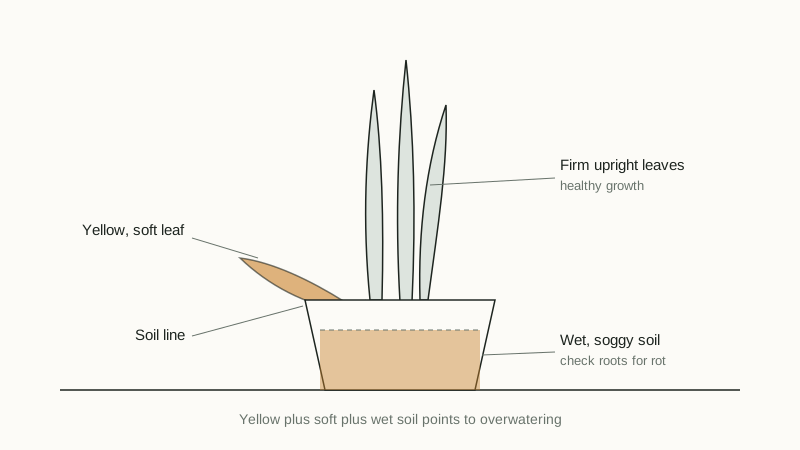
Overwatering causes most yellow snake plant leaves. If the soil is wet or stays damp for weeks, that is your answer: stop watering, check the roots for rot, and repot if needed. If the soil is dry, work through cold exposure, direct sun scorch, and old leaves dying back naturally.
Snake plants (Dracaena trifasciata) are tough, and yellow leaves are nearly always a care issue rather than a disease. The University of Connecticut's home garden program calls overwatering the quickest way to kill one. The pattern of the yellowing tells you which cause is likely.
Match the symptom to the cause
| What you see | Most likely cause |
|---|---|
| Yellow leaves that are soft or mushy, soil wet | Overwatering, root rot |
| Yellowing at the leaf base spreading upward, musty smell | Root rot |
| Yellow patches after a cold night near a window | Cold damage |
| Bleached or scorched yellow spots on the sun-facing side | Too much direct sun |
| One old outer leaf slowly yellowing while new growth is fine | Normal aging |
| Yellow tips or edges with dry soil | Underwatering or salt buildup |
Fix 1: overwatering and root rot
Feel the soil first. If it is wet at finger depth and the plant has not dried out between waterings, overwatering is confirmed.
- Stop watering and slide the plant out of the pot.
- Inspect the roots and rhizomes. Healthy roots are firm and pale. Rotten roots are brown, mushy, and smell sour.
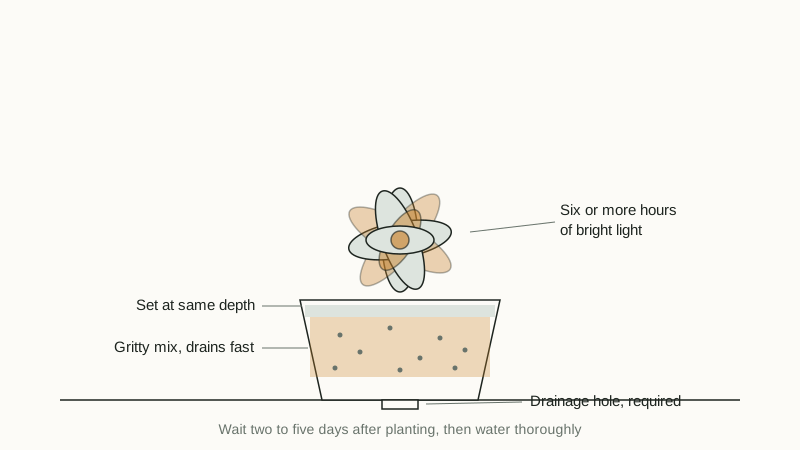
- If rot is limited, trim away the soft roots, dust the cuts with cinnamon or leave them bare, and repot into fresh cactus mix in a clean pot with a drainage hole. The potting mix calculator will tell you how much mix the new pot needs.
- If the whole root ball and most rhizomes are mushy, salvage firm leaf sections and propagate them, or cut healthy leaf tips into 3 inch pieces and root them in fresh mix.
Afterward, water only when the mix is completely dry. Our guide on how often to water a snake plant covers the rhythm: every 2 to 6 weeks depending on light and season, not on a fixed schedule.
Fix 2: cold damage
Snake plants are tropical. UConn advises keeping them above 55 degrees F, and the North Carolina Extension Gardener Plant Toolbox notes they tolerate temperatures around 50 degrees but no colder. A plant pressed against a windowpane on a freezing night or sitting in a draft from a frequently opened door can yellow within days.
Move the plant a foot or two back from cold glass and away from drafty doors. Damaged leaves will not recover, but the plant will; trim yellow leaves at the soil line with a clean knife.
Fix 3: too much direct sun
Bright indirect light is ideal, and snake plants tolerate low light well, but harsh direct sun through a south window can bleach patches yellow or pale tan. Penn State Extension warns that direct sun can burn the leaves. If the yellow spots match the sun-facing side, move the plant back or filter the light with a sheer curtain.
Fix 4: normal aging
Snake plant leaves live for years, not forever. A single oldest, outermost leaf slowly yellowing while the rest of the plant pushes new growth is normal senescence. Cut it off at the soil line and move on.
When the plant is not worth saving
If more than half the leaves are soft and yellow at the base, the rhizome is usually rotted through. Pull it out, and if the rhizome squeezes like a wet sponge or falls apart, the plant is done. Take any firm, healthy leaf sections as cuttings first: 3 to 4 inch sections rooted upright in gritty mix will start a new plant, though variegated cultivars like 'Laurentii' revert to plain green when propagated from leaf cuttings.
Prevention
- Water only when the mix is completely dry, roughly every 2 to 6 weeks and as little as once a month or two in winter.
- Use a pot with a drainage hole and a gritty cactus mix.
- Keep the plant above 55 degrees F and out of cold drafts.
- Give it bright indirect light rather than deep shade or harsh sun.
Frequently asked questions
Will a yellow leaf turn green again? No. Once a leaf yellows it does not recover its color. Cut it at the soil line with a clean knife so the plant stops spending resources on it, and judge your fix by what the next new leaf looks like.
Should I mist my snake plant or use a pebble tray? No. Snake plants come from dry regions and tolerate low humidity well. Misting adds moisture where it does harm (leaf surfaces and the crown) and none where it helps. Skip it.
Does tap water cause the yellowing? Rarely. Fluoride and salts in tap water usually show up as brown leaf tips, not whole-leaf yellowing. If you see brown tips plus yellowing with dry soil, try rainwater or distilled water for a few months and see whether new growth comes in clean.
If the yellowing plant turns out to be a different succulent entirely, the care logic is similar for jade plant and aloe, and the plant identification guide can help confirm what you are growing.