Herb growing guide
Parsley
Petroselinum crispum · Apiaceae
Sun
Full sun
Season
Cool
Maturity
70 to 90 days
Water
Moderate
Soil pH
6.0 to 7.0
Spacing
6 to 8 in
By Dandre Noah
Planting parsley
Parsley is slow to start but productive for a long season once it is going. Germination is the hard part; seed can take 2 to 4 weeks to come up, and soaking it overnight before sowing speeds it noticeably. Start indoors 8 to 10 weeks before the last frost for the strongest transplants, or sow directly in early spring once the soil can be worked. As a biennial it grows leaves the first year and flowers the second, which is why most gardeners treat it as an annual and replant each spring.
Planting details
- Start indoors: 8 to 10 weeks before the last frost
- Sow directly: early spring; germination takes 2 to 4 weeks
- Spacing: 6 to 8 inches
- Seed depth: about 1/4 inch
- Soak seed overnight to speed up germination
Growing requirements
Parsley tolerates partial shade and cool weather better than most herbs, and it does best in rich, evenly moist soil. Soil pH 6.0 to 7.0 suits it. Because it is a biennial, it needs a long first season to produce a useful amount of leaf, which is why the early start matters. Keep the bed weeded and watered, since the shallow roots compete poorly and drought makes the leaves tough and the stems woody.
Harvesting and care
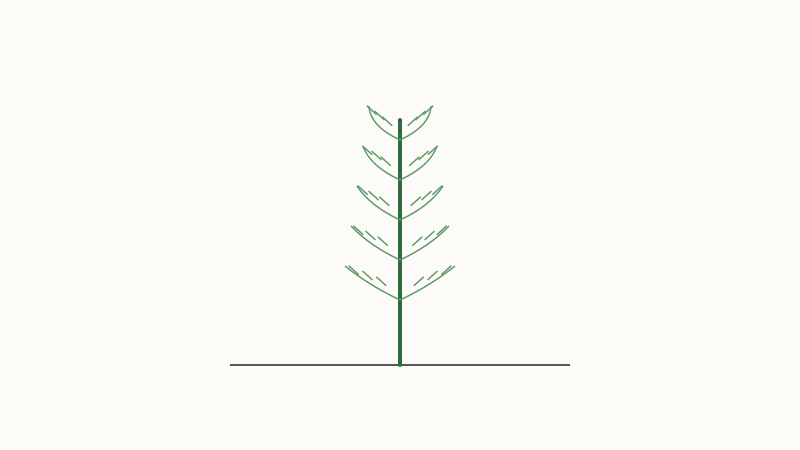
Cut whole outer stems at the base rather than snipping leaf tips, since that is how the plant grows new growth from the center. Regular cutting from the outside keeps it producing for months. In mild climates, first-year plants often survive winter under mulch and give a second flush in spring before they bolt. Once a flower stalk appears the leaves turn bitter and the plant is done, so harvest hard while it is still vegetative.
Common mistakes
- Giving up on seed that has not sprouted after two weeks
- Letting the bed dry out, which slows already slow germination
- Cutting the central crown, which stops regrowth
- Letting the plant bolt, which turns the leaves bitter
- Planting in deep shade, which produces weak, sparse growth
Companion plants
Tomatoes, peppers, and asparagus sit well beside parsley because it stays low and does not compete for the same light. If a few plants bolt in their second year, the small flowers feed beneficial wasps and other insects that prey on pests. Keep it away from mint, which can invade its bed, and avoid planting it where carrots grew the year before since they share family diseases.
Varieties worth growing
- Italian flat-leaf: the cooking type; stronger flavor and easier to clean
- Curly: the garnish type; holds up well in the garden
- Hamburg: grown for its edible root as much as its leaves
- Giant of Italy: large, vigorous flat-leaf type
Frequently asked questions
Why is my parsley taking so long to germinate?
It is normal; parsley seed is slow and uneven, often taking 2 to 4 weeks. Soaking overnight and keeping the bed evenly moist improves the stand.
Is parsley a perennial?
Technically it is a biennial, so it grows leaves the first year and flowers the second. Most gardeners treat it as an annual and replant each spring.
Can I grow parsley indoors?
Yes, on a bright window or under lights, though it grows more slowly inside than out. Keep it watered and cut from the outer stems.