soil
Loam
Last reviewed 2026-10-04
Loam is a soil texture containing a relatively balanced mixture of sand, silt, and clay. The balance gives loam a combination of drainage, moisture retention, nutrient holding, and workability that suits many garden plants. Loam is a texture classification, not a guarantee that the soil is fertile or rich in organic matter.
What it means
Sand particles are large and drain quickly. Silt particles are medium-sized and contribute to water holding and smoothness. Clay particles are very small and can hold water and nutrients, but too much clay can drain slowly and compact. Loam sits between these extremes, although sandy loam and clay loam are also useful texture classes.
How it affects the garden
A loamy soil can still need compost, nutrients, or a pH adjustment. The best amendment depends on a soil test and the crop. Adding large amounts of sand to clay can make a difficult mix, while repeated organic matter additions can improve structure over time. Avoid working any soil when it is wet enough to smear or form a hard clod.
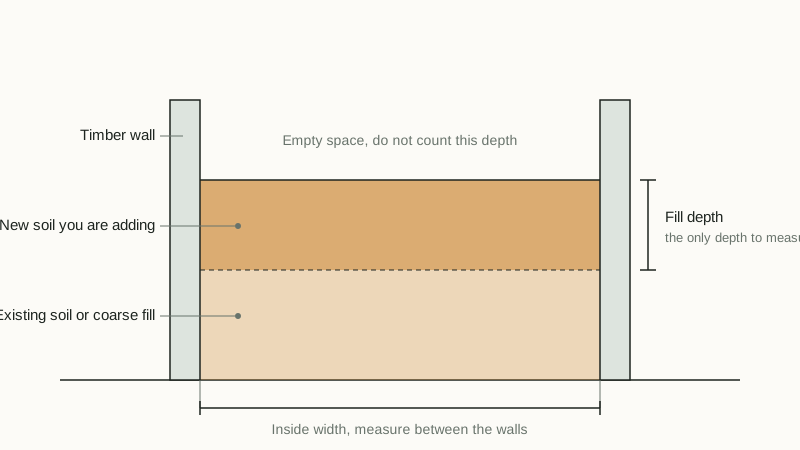
The soil calculator measures volume for filling a bed, but it does not determine texture. A laboratory or extension soil test is the better way to learn what is in an existing garden bed.
Example
A dark, crumbly soil that holds together lightly when squeezed but breaks apart with gentle pressure may be described as loam. That observation is not a laboratory texture test, but it can suggest a soil worth testing further.
Common confusion
Loam is not the same as “potting soil.” Potting mixes are manufactured blends designed for containers, while loam describes mineral soil texture.
Sources
USDA Natural Resources Conservation Service explains soil texture and the relative roles of sand, silt, and clay.