plant biology
Internode
Last reviewed 2026-10-04
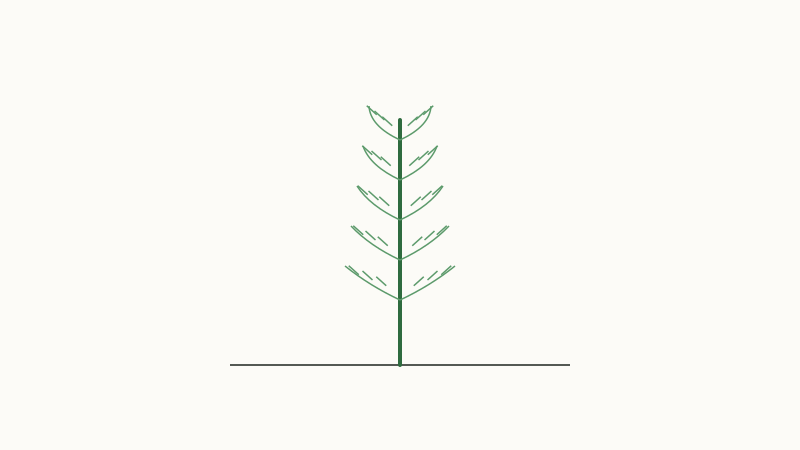
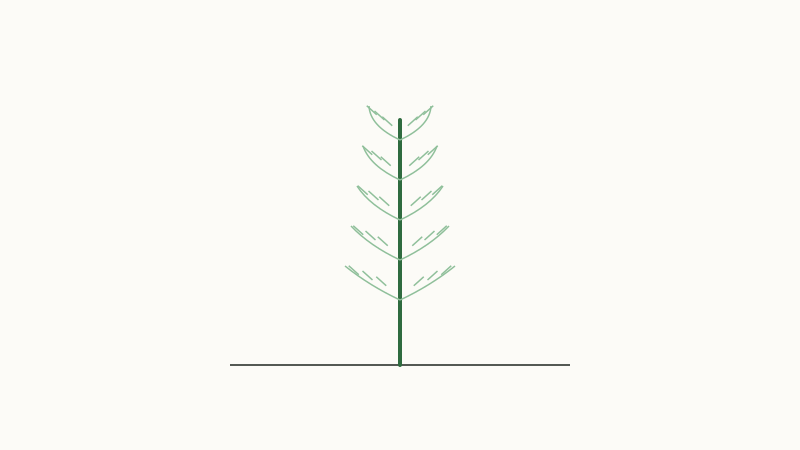
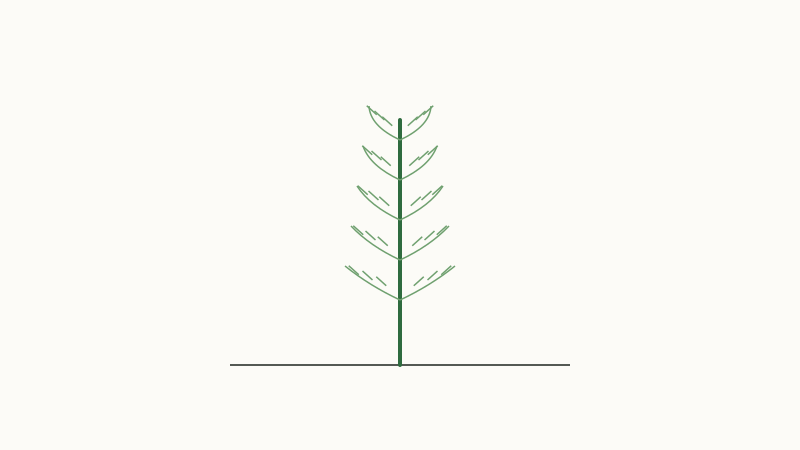
An internode is the section of stem between two nodes. Nodes are where leaves and buds attach, so internodes determine the distance between those growth points. Their length changes with plant species, variety, light, temperature, and other growing conditions.
What it means
Short internodes create a compact stem with leaves close together. Long internodes create a stretched appearance and may indicate that a plant is reaching for light, although natural growth habit also matters. The same plant can have different internode lengths in different parts of its life.
How it affects the garden
Long, weak internodes can make seedlings difficult to support and may reduce the distance between leaves and a light source. Give indoor seedlings suitable light and avoid crowded conditions. Do not assume that every long stem is a disease or that pruning alone will correct the cause.
When training or pruning, nodes provide the useful reference points. The sun calculator helps classify a site, while plant-specific guidance determines the light level the plant actually needs.
Example
A seedling grown in weak light may develop a thin stem with long spaces between leaves. Moving it to suitable light can support new growth, but the existing internodes will not shrink.
Common confusion
Internode length is not the same as plant spacing. Internodes are part of the plant's internal stem structure, while spacing is the distance between separate plants.
Sources
University of Minnesota Extension discusses light and the stretched growth that can occur in indoor seedlings.