Planting
How do you plant succulents in pots?
By Dandre Noah · Last reviewed 2026-10-16
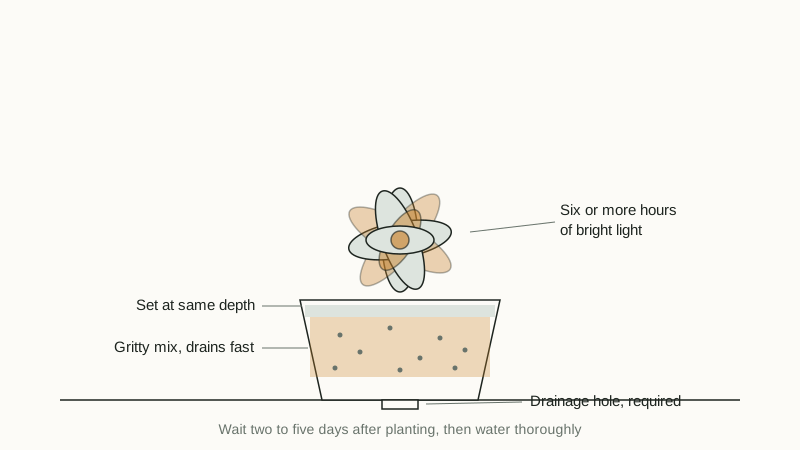
Plant a succulent in a pot with a drainage hole, filled with gritty fast-draining mix, set at the same depth it grew in its nursery pot. Wait two or three days before the first watering, then water only when the mix dries completely. Give it at least six hours of bright light a day.
Every part of that recipe pushes in the same direction: succulents store water in their leaves and stems, so the job of the soil is to hold the plant up and drain fast. West Virginia University Extension puts overwatering at the top of the list of ways to kill one, and most planting mistakes are really drainage mistakes.
What you need
- A pot with a drainage hole. Terracotta is a good default because the porous clay lets moisture escape through the walls.
- Cactus or succulent potting mix, or regular potting mix amended with one third to one half perlite, pumice, or coarse sand. UC Marin Master Gardeners suggest a simple recipe of one third potting mix, one third coarse sand, and one third pumice.
- The succulent, plus gloves or folded newspaper for spiny types.
- A bright spot: a south or west window indoors, or morning sun outdoors.
Do not put a layer of gravel in the bottom of the pot. It feels like it should help drainage, but it actually raises the wettest part of the soil closer to the roots. Drainage comes from the hole and the mix, not from a gravel layer.
Planting steps
- Fill the pot about two thirds full with dry mix.
- Slide the plant out of its nursery pot and loosen the root ball gently. If roots circle densely, tease the bottom ones outward.
- Set the plant so the top of the root ball sits just below the pot rim, at the same depth it was growing. Buried stems rot.
- Fill around the roots with mix, firming lightly. Leave about half an inch between the mix surface and the rim for watering.
- Wait two to five days before watering. Damaged roots callus over in that time, which lowers the chance of rot, then water thoroughly until it runs from the drainage hole.
If the succulent arrived as a bare-root cutting or a leaf propagation with no roots yet, let the cut end dry and callus for a day or two before setting it on the mix.
Planting succulents outdoors
The same rules apply in the ground, plus two more: drainage and cold.
For drainage, plant on a slope or mound the bed so water runs away from the crowns. Amend heavy soil generously with pumice or crushed rock. A top dressing of gravel or lava rock around the plants keeps splashing soil off the leaves and looks tidy.
For cold, know your plant. Hardy succulents like many sedums and sempervivums handle freezing winters where drainage is excellent. Tender types like echeveria, most aloes, and jade plant go indoors before frost. Your first frost date is the deadline for that move in the fall.
Light is the requirement most planting guides skip. Washington State University Extension recommends at least three hours of full sun daily to keep color and compact shape, and most succulents want more than that. In hot climates, afternoon shade prevents scorching on recently moved plants.
Planting cuttings and leaves
Most succulents propagate so easily that you will eventually plant pieces, not whole plants.
For a stem cutting, cut cleanly, strip the leaves off the bottom inch or two, and let the cut end dry in open air for two to five days until it calluses. Set the callused end into dry mix, wait a few more days, then water. Roots form from the nodes in a week or three.
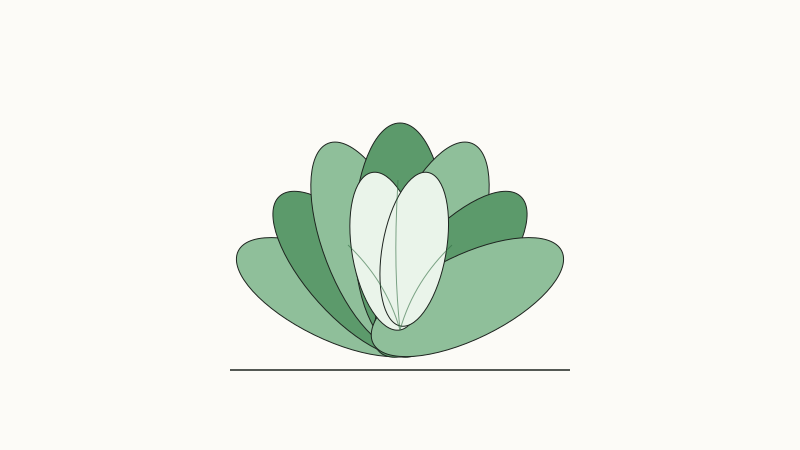
For leaf propagation on rosette types like echeveria, twist a whole leaf cleanly off the stem (the base must come away intact or it will not root), lay it on top of dry mix, and wait. Roots and a tiny rosette form at the leaf base over two to six weeks. Mist or water sparingly once roots appear. The mother leaf withers away on its own; do not bury it.
Arranging several succulents in one pot
Mixed succulent bowls sell everywhere, and they work if you plant for drainage and light. Give each plant the same gritty mix, keep rosettes above the soil line, and leave at least an inch between plants so air moves and you can see the soil to judge dryness. Combine plants with similar light and water needs: echeveria, sedum, and graptopetalum together; keep thirstier plants like string of pearls at the edge where they dry fastest.
A shallow, wide pot suits most arrangements because succulent roots run shallow. Deep pots hold a reservoir of wet mix below the root zone that the plants never use and rot can colonize.
Common mistakes
- A pot without a drainage hole. If a decorative pot has no hole, use it as a cache pot: plant in a holed nursery pot and set it inside.
- Rich, peat-heavy soil. Standard potting soil alone holds too much water for succulents.
- Burying the stem. Keep the stem-to-root junction at the surface.
- Watering on a schedule. Water when the mix is dry, not every Sunday. Indoors in winter that may be once a month.
- Too little light. Stretching, pale, widely spaced leaves mean the plant is reaching for more light.
What success looks like
New growth from the center of the rosette or stem tips, firm leaves, and colors that deepen in good light. A succulent that holds its compact shape is getting enough light; one that stretches toward the window is telling you to move it.
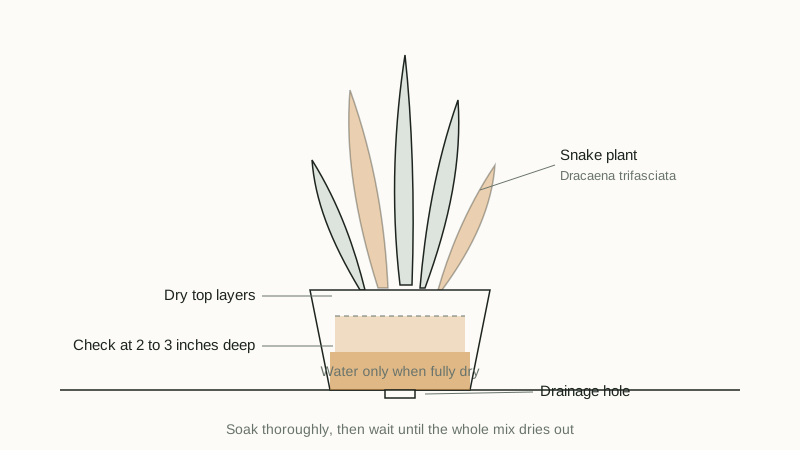
When you repot or size a new container, the potting mix calculator tells you how much mix the pot holds, and the sun calculator can classify the spot you have in mind. For specific plants, the jade plant and aloe profiles cover their individual quirks, and snake plants follow the same plant-dry-then-soak logic.