timing
Frost tolerant
Last reviewed 2026-10-04
Frost tolerant describes a plant that can survive or continue growing through some freezing conditions. Tolerance depends on the species, variety, age, moisture, wind, duration, and temperature. The label does not mean a plant can withstand every freeze or that all of its tissues will remain undamaged.
What it means
Cool-season crops often tolerate a light frost better than warm-season crops. A mature plant may be more tolerant than a tender seedling. Frozen soil, repeated freezes, and a long period below freezing can cause damage even when a plant survives one brief event.
How it affects the garden
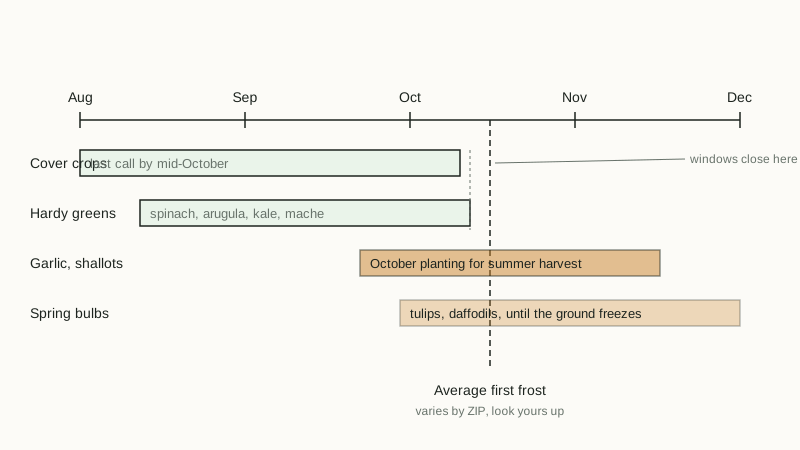
Use frost tolerance when choosing sowing and harvest windows, but check the crop's actual guidance. Row cover, a cold frame, or a sheltered microclimate can reduce exposure. Watering and wind conditions can change damage, and protection must be installed before the freeze.
The frost date finder provides probability-based dates, while the fall planting calculator helps count backward from a selected first frost estimate.
Example
Kale may continue producing after a light frost, while basil can be damaged by the same event. Neither result guarantees survival through a hard freeze.
Common confusion
Frost tolerant is not the same as hardy to a USDA zone. Zone ratings describe long-term winter minimums for established plants, not every short-term frost event.
Sources
University of Minnesota Extension discusses cold-hardy vegetables and frost protection.