seeds
Seed dormancy
Last reviewed 2026-10-04
Seed dormancy is a condition in which a living seed does not germinate even when basic moisture, temperature, and oxygen conditions appear suitable. Dormancy can protect a seed from sprouting at the wrong season. Different species require different signals to end dormancy.
What it means
Dormancy may result from a hard seed coat, an immature embryo, chemical inhibitors, or a temperature requirement. Some seeds need cold, some need warmth, and some need light or darkness. A seed can be viable and dormant at the same time.
How it affects the garden
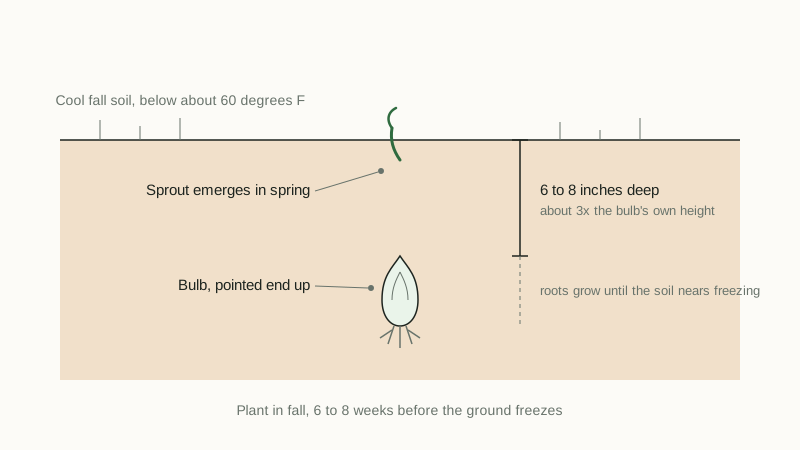
Follow species-specific instructions rather than applying one treatment to every packet. Scarification can help a hard coat, while stratification can provide a temperature and moisture sequence. Some dormant seeds respond to natural outdoor seasons, but this method is less predictable than a controlled treatment.
A germination test should use the recommended treatment first. Otherwise, a failed test may show that the cue was missing rather than that the seed was dead.
Example
A native perennial seed may remain ungerminated in a warm tray because it needs a period of cold, moist conditions. After the required treatment, it can germinate when warmth and moisture return.
Common confusion
Dormancy is not the same as low viability. A dormant seed is alive but waiting for a cue. A nonviable seed cannot produce a normal seedling even under suitable conditions.
Sources
University of California Agriculture and Natural Resources describes physical and physiological causes of seed dormancy.