soil
Soil aggregate
Last reviewed 2026-10-04
A soil aggregate is a cluster of mineral particles, organic matter, roots, and biological material held together as a structural unit. Aggregates create a mix of pore sizes that lets soil store water while allowing air and excess water to move. Stable aggregates support root growth and reduce crusting and erosion.
What it means
Individual sand, silt, and clay particles can join into crumbs or larger clods. A crumbly aggregate that withstands ordinary rain is different from a hard clod created by working wet soil. Roots, fungal threads, organic compounds, and cycles of wetting and drying influence stability.
How it affects the garden
Protect aggregates by avoiding traffic on wet beds, limiting unnecessary tillage, keeping living roots where practical, and using suitable organic matter or surface mulch. Do not assume any dark material has good structure. Test how soil behaves when moist and observe infiltration after rain.
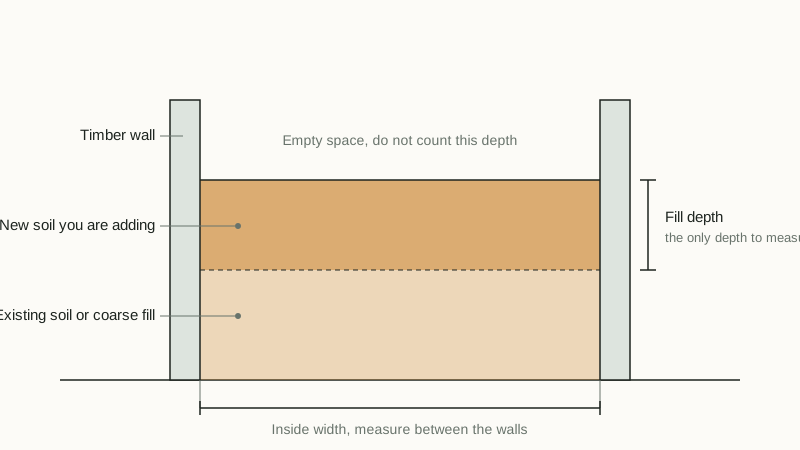
The compost calculator estimates how much material is needed, but the right rate depends on the existing soil and amendment.
Example
A well-structured bed breaks into small crumbs when handled at the right moisture. A wet bed worked with a shovel may later dry into large hard clods because the original aggregates were destroyed.
Common confusion
An aggregate is not the same as a soil texture class. Texture describes particle proportions; aggregation describes how particles are arranged.
Sources
USDA Natural Resources Conservation Service discusses soil structure and aggregation.