What does this pH amendment calculator calculate?
This calculator estimates how much amendment it takes to move soil pH from where your test says it is to where your plants want it. When the target is above the current pH, it returns pounds of ground limestone. When the target is below, it returns pounds of elemental sulfur.
Soil texture controls how much amendment the same pH change requires. Sandy soil has little buffering and shifts easily. Clay soil buffers strongly and can need several times more material for the same change.
What you will need
Current soil pH
Use a measured value, not a guess. A lab soil test is best because it often includes a lime or sulfur recommendation calculated for your exact soil, which will always beat a generic table. Cheap meters and kits get you in the neighborhood.
Target soil pH
Most vegetables and flowers do well between pH 6.0 and 7.0. Acid lovers like blueberries want 4.5 to 5.5. The plant pages in this library list a preferred range for each plant; aim for the middle of it rather than the edge.
Soil texture
Pick the closest option. Sandy soil feels gritty and falls apart when squeezed. Loam forms a weak ball that crumbles easily. Clay forms a firm ball that holds a fingerprint. When in doubt between two textures, choose the heavier one and plan to retest.
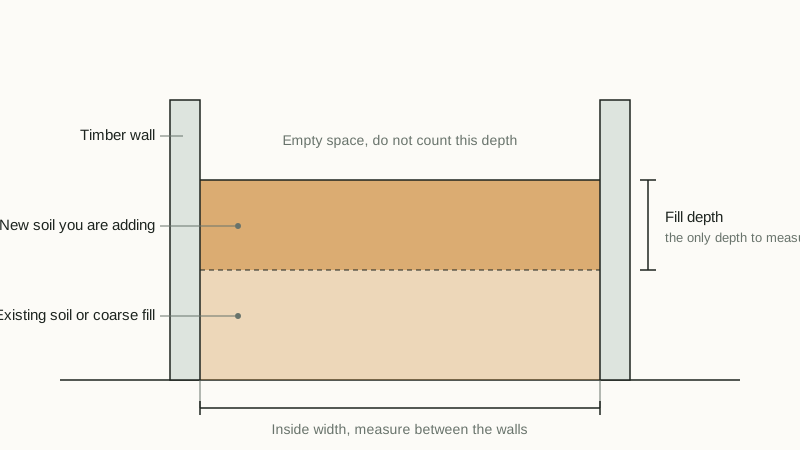
Area
Measure only the ground that will actually receive amendment. For beds, that is length times width summed across beds, excluding paths.
How the calculation works
The calculator scales published extension rates to your inputs:
- To raise pH, roughly 3 to 6 pounds of ground limestone per 100 square feet for each half point of change, depending on texture. Sandy soil sits at the low end, clay at the high end.
- To lower pH, roughly 4 to 16 pounds of elemental sulfur per 1,000 square feet for each half point of change, again by texture.
A worked example: a 200 square foot loam bed at pH 5.5 that needs to reach 6.5 needs about 8 pounds of limestone per 100 square feet, or 16 pounds total.
Apply the result carefully
Work lime into the top 6 inches when possible. Surface applications still work, but lime moves down slowly, sometimes over years. Both calcitic and dolomitic limestone raise pH; dolomitic also adds magnesium, which not every soil needs.
Elemental sulfur is a different animal. Soil bacteria convert it to acid, so it needs warmth, moisture, and time, often three to six months for the full effect. Apply no more than about 15 pounds per 1,000 square feet at once, water it in, and retest before repeating. The calculator tells you when your amount crosses that line.
Worked examples
Blueberry bed
A 100 square foot sandy bed at pH 6.5 targeting 4.5 needs a 2.0 point drop. At roughly 4 pounds of sulfur per 1,000 square feet per half point, that is about 16 pounds per 1,000, or 1.6 pounds for the bed. Split into two applications six months apart.
Vegetable garden that runs acid
A 400 square foot clay bed at pH 5.5 targeting 6.5 needs 6 pounds of lime per 100 square feet per half point, doubled for the full point: about 48 pounds of ground limestone tilled in.
Common mistakes
Amending without a soil test
pH affects nutrient availability more than almost anything else in soil chemistry, and overshooting a target creates problems that take seasons to undo. Test first, amend second, retest before repeating.
Expecting sulfur to work in weeks
Sulfur depends on bacterial activity. Applied in cold soil, it may do almost nothing until the soil warms. Fall or early spring applications give it a head start.
Ignoring calcareous soil
If your soil fizzes when you drop vinegar on it, it contains free lime, and generic sulfur tables underestimate the job by a wide margin. Lowering pH in calcareous soil is difficult and often temporary; containers or raised beds with imported mix are the more reliable route for acid-loving plants.
Treating the number as exact
Buffering varies with organic matter, drainage, and history. Treat the result as a starting dose, not a prescription, and retest after the amendment has had time to work.
When this calculator may not be the right choice
If your soil test report already includes a lime or sulfur recommendation, use it. Lab methods account for your soil's actual buffer capacity, which this table approximates by texture alone. For pots and planters, changing the potting mix is simpler and more reliable than amending small volumes.
Where our data comes from
The lime rates follow the Michigan State University soil pH table for raising pH with ground limestone by texture. The sulfur rates follow the University of California extension table for elemental sulfur, including the guidance to cap single applications at 15 pounds per 1,000 square feet and retest after about six months. Rates are smoothed into a per-half-point scale so any current and target pH can be entered.
Frequently asked questions
Do I need a soil test first? Yes. The calculation starts from your current pH, and applying lime or sulfur without a test can push the soil the wrong way. County extension labs run tests cheaply.
How fast does lime or sulfur work? Months, not days. Lime moves slowly through the soil, and elemental sulfur needs soil bacteria to convert it before it acidifies. Fall applications for spring planting are the usual pattern, and retesting comes before reapplying.
Why did my pH barely change after amending? Texture is the usual cause. Clay and high-organic soils buffer change and need larger amounts than sandy soil. Calcareous soils with free lime resist acidification almost entirely, which is why the calculator warns about them.
Can I lower alkaline soil enough for blueberries? Sulfur works within limits, but strongly calcareous soil keeps reverting. For blueberries in alkaline ground, a raised bed filled with an acidic mix is usually the more reliable answer.