plant biology
True leaves
Last reviewed 2026-10-04
True leaves are the first leaves that resemble the mature foliage of a seedling. They develop after the cotyledons and usually have the shape, arrangement, and function associated with the plant's later leaves. The appearance of true leaves is a useful stage marker for early care.
What it means
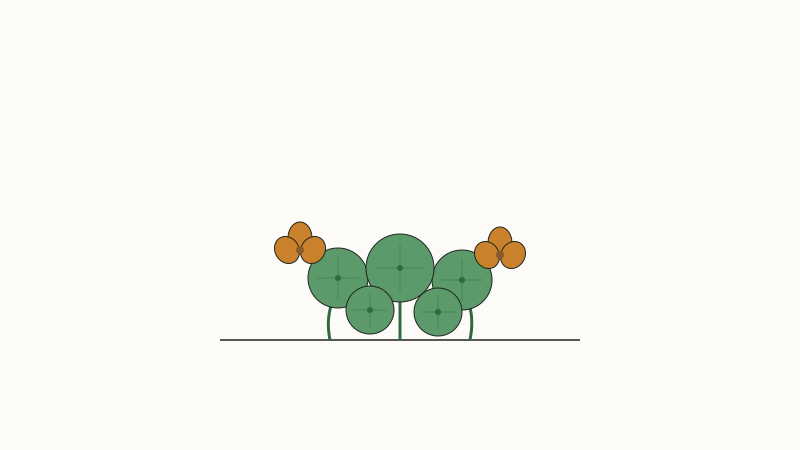
Cotyledons are seed leaves formed as part of the embryo. True leaves develop from the seedling's growing point and gradually take over photosynthesis. Their shape varies by species, so a tomato's first true leaf looks different from a bean's.
How it affects the garden
A seedling with true leaves is beginning to rely more on active leaf growth and root development. It may need more space, stronger light, and careful watering. Follow crop-specific guidance before feeding or transplanting. Too much fertilizer or weak light can produce soft, stretched growth even after true leaves appear.
The seed starting calculator can estimate a sowing date, but the seedling's actual stage determines readiness. Harden plants gradually before moving them outside.
Example
A pepper seedling first shows two smooth cotyledons. When the next leaves develop a recognizable pepper shape, the plant has true leaves and is entering a later seedling stage.
Common confusion
True leaves do not mean the plant is ready for transplanting in every case. Root development, weather, and hardening off also matter.
Sources
University of Minnesota Extension covers seedling stages and indoor growing conditions.