Fruit growing guide
Almond
Prunus dulcis · Rosaceae
Sun
Full sun
Season
Deciduous tree; blooms early spring
Maturity
3 to 5 years to first nuts
Water
Low to moderate
Soil pH
6.0 to 7.5
Spacing
20 to 25 ft
By Dandre Noah
Planting almond
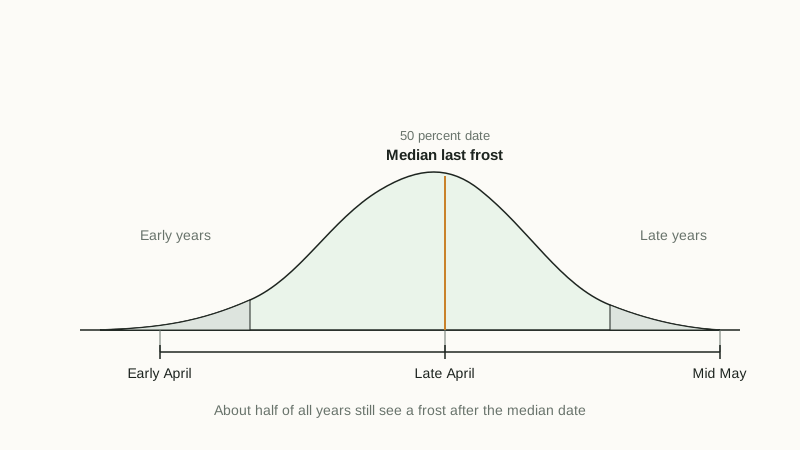
Almonds ask for a Mediterranean climate: mild winters with enough chill to break dormancy, roughly 300 to 600 hours below 45 F, springs without late frost, and long dry summers. That makes them reliable in about zones 7 to 9 on the right site and marginal elsewhere, because they bloom so early that one hard freeze wipes out the year's nuts. Plant bare-root trees in late winter while dormant, in full sun for at least three quarters of the day, in deep well-drained soil; UC IPM calls for 4 to 6 feet of loam with no wet feet. Space standard trees 20 to 25 feet apart on ground that does not frost-pocket; a gentle slope that drains cold air downhill is ideal. Keep the graft union 2 to 3 inches above the final soil line.
Planting details
- Spacing: 20 to 25 feet for standard trees
- Chill requirement: roughly 300 to 600 hours below 45 F
- Needs a compatible second cultivar unless self-fertile
- Plant bare-root in late winter; graft union above the soil line
- First real crop in 3 to 5 years
Growing requirements
Full sun and deep, well-drained, fertile sandy loam are the baseline. The tree tolerates drought once established but crops far better with deep, infrequent watering through the dry season, and Utah State Extension recommends deep irrigation plus annual nitrogen as the tree matures. Rain during bloom invites blossom brown rot, which is the main reason almonds struggle outside dry-summer climates. Bees do the pollinating, so keep insecticide off the tree during bloom. Pest and disease pressure largely mirrors peaches and apricots: borers, stink bugs, and the usual stone-fruit problems.
Harvesting and care
Prune during the first three winters to build an open, strong scaffold, and pull early fruit for the first couple of seasons so the tree puts energy into structure rather than nuts. In late summer the hulls split and the nuts are ready to knock or shake down; harvest promptly after hull split rather than letting them dry on the tree, spread them to dry until the kernel snaps cleanly, and freeze the in-shell nuts for two weeks to kill any hitchhiking worms, per University of California guidance. Store dried nuts airtight.
Common mistakes
- Planting in a frost pocket; early bloom plus late frost is the classic almond failure
- A lone non-self-fertile tree, which blooms beautifully and sets nothing
- Wet or shallow soil, which rots roots and invites disease
- Letting young trees crop in year one or two, which stunts the framework
- Leaving split nuts on the tree, which lets mold and pests into the harvest
Companion plants
Underplant with low, non-competitive groundcovers or pollinator annuals that feed the bees it depends on; borage and calendula bloom early enough to overlap almond blossom. Keep the root zone free of lawn and tall weeds that compete for water and hide crown rot. The most important companion of all is a second compatible almond cultivar.
Varieties worth growing
- All-in-One: self-fertile and semi-dwarfed; the standard backyard pick
- Nonpareil: the leading commercial cultivar; needs a pollinizer
- Carmel or Mission: common pollinizer partners for Nonpareil plantings
- Hall's Hardy: old hard-shell selection that tolerates more cold
Frequently asked questions
Can I grow almonds outside California?
In the right microclimate, yes: roughly zones 7 to 9 with dry springs and summers. Late frost on early bloom is the usual dealbreaker elsewhere.
Do I need two almond trees?
Most cultivars need a compatible second tree for pollination. Self-fertile types like All-in-One crop alone.
Are homegrown almonds safe to eat?
Sweet almond cultivars are fine once harvested and dried. Bitter almonds are a different matter and are not sold as edible nuts; buy a named sweet cultivar.
How big does an almond tree get?
About 20 feet tall and wide unpruned, and it stays smaller with annual pruning.