Planning
When is my last frost date for planting?
By Tools for Gardeners · Last reviewed 2026-10-06
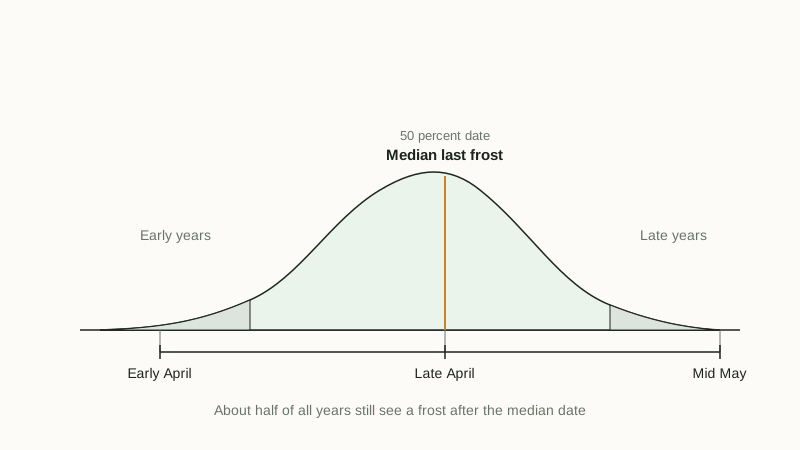
Your last frost date is the day by which there is historically about a 50 percent chance the last 32°F reading of spring has already happened at the weather station nearest you. Frost arrives after that date in about half of all years, so treat it as a probability, not a promise.
Enter your ZIP in the frost date finder to see yours, along with the station the estimate comes from and how far away that station is.
Where the number comes from
The dates are not predictions. They come from the NOAA U.S. Climate Normals, a 30-year record of weather station observations covering 1991 to 2020. For each station, NOAA publishes freeze probability tables: the dates by which a 32°F reading is 10, 20, 50, up to 90 percent likely to have already occurred for the season.
The date most sources call "last frost date" is the 50 percent value, the median. Half of the years on record saw the last spring freeze earlier than that date, and half saw it later. The frost date finder looks up the nearest station to your ZIP that reports valid freeze dates and shows you the station name and distance so you can judge how well it matches your site.
Why half of all years are "late"
A median is the middle of a spread, and the spread is wide. It is normal for a location to see a frost two or even three weeks after its median last frost date in a bad year. The NOAA tables quantify this directly: if your median last freeze is April 20, the same table might show a 10 percent date near May 4, meaning one year in ten still gets a freeze after May 4.
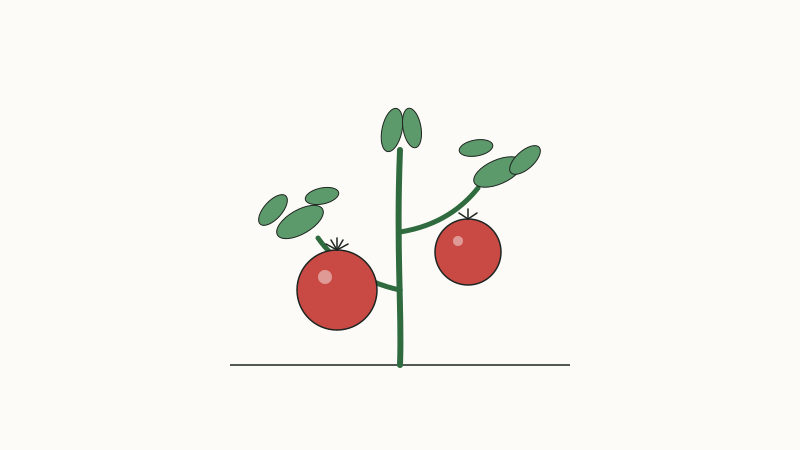
This is why experienced gardeners treat the median as a starting point, then adjust. Planting warm-season crops on the median date is a coin flip. Waiting one to two weeks past it, or checking the 20 to 30 percent probability dates instead, stacks the odds. A tomato set out early in a lucky year gains little; the same plant killed by a May frost loses the season.
Frost is not the same as a 32°F reading
The freeze dates measure air temperature at standard instrument height, a few feet off the ground. Actual frost forms on surfaces, and on clear, calm nights a leaf can radiate heat away and drop several degrees below the official air temperature. That is why you can scrape frost off a windshield on a morning when the reported low was 35°F.
Your garden also has its own microclimate. Cold air drains downhill and pools in low spots, so a garden at the bottom of a slope frosts earlier and later than one on a rise. Brick walls, pavement, and buildings hold heat and protect nearby beds.
Why your neighbor's date differs
Two towns a few miles apart can have last frost dates weeks apart because the normals describe the station, not the ZIP code. Elevation is the biggest driver: a valley floor collects cold air while the hillside above it escapes. Urban areas stay warmer than surrounding farmland, sometimes by several degrees on still nights. And when the nearest reporting station sits at an airport or reservoir miles away, its numbers describe its site, not yours.
If the frost date finder shows your station is far away or much higher or lower than your garden, treat the date as a regional estimate and let a week of local forecasts override it for planting decisions.
How to use the date
The median last frost is an anchor for counting, not a deadline:
- Seed packets say "start indoors 6 to 8 weeks before last frost" or "transplant after last frost." Count from your median date.
- Most warm-season transplants like tomatoes and peppers are safest going out on or a bit after the median date, with row cover ready.
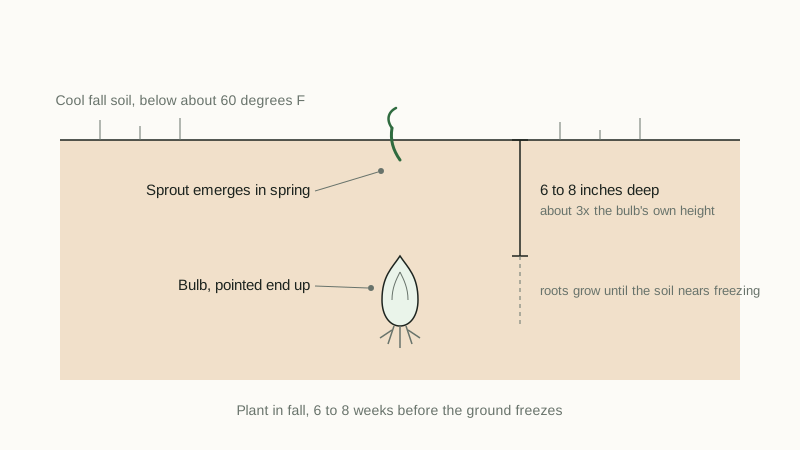
- The same 30-year normals produce your first fall frost date, which sets the back end of the season. Everything you plant in late summer counts backward from it, which is the logic behind what you can still plant in October and behind fall bulb timing in the tulip planting guide.
- The planting calendar does this counting for your ZIP and builds the whole season's schedule from the same median date.
What to do next
Look up your ZIP in the frost date finder and note both the median last spring freeze and first fall freeze, plus how far away the reporting station is. Then open the planting calendar and let it lay out seed starting, transplanting, and fall sowing dates around those anchors.