Vegetable growing guide
Artichoke
Cynara scolymus · Asteraceae
Sun
Full sun
Season
Warm; perennial in mild climates
Maturity
100 to 150 days from transplant
Water
High
Soil pH
6.0 to 7.5
Spacing
36 to 48 in
By Dandre Noah
Planting artichoke
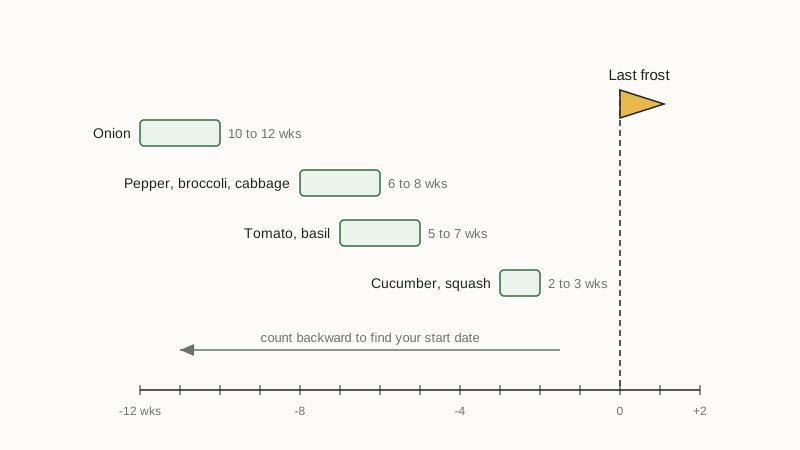
Start seed indoors 8 to 10 weeks before the last frost, or better, plant crowns or divisions in spring. To bud in its first year, a seed-grown plant needs a chill: expose seedlings to about two weeks of cool weather under 50 degrees and they behave as if they overwintered, which is the trick behind annual production. In zones 7 to 10 it grows as a perennial; colder gardeners grow it as an annual from early-started or vernalized varieties like Imperial Star. Set transplants out after hard frost danger passes into rich, deeply worked soil in full sun. The plant you now eat is the Scolymus Group of Cynara cardunculus, still widely listed under its old name C. scolymus.
Planting details
- Seed depth: about 1/4 to 1/2 inch
- Spacing: 3 to 4 feet; a mature plant is a 4 foot mound
- Crowns and offsets outproduce seed-grown plants
- Hardy perennial in zones 7 to 10; grown as an annual elsewhere
- Harvest the tight bud before the bracts open
Growing requirements
Full sun, deep rich soil, and steady moisture. It is a thistle bred up into a vegetable and grows like one: fast, large, and greedy. Feed it well, mulch deep to hold moisture, and never let buds sit through a dry spell or they come small and tough. Cool coastal summers are its home climate; in hot dry regions it sulks above 90 degrees, and in humid ones watch for gray mold on the buds. A deep taproot makes it drought stubborn once established but also hard to move.
Harvesting and care
Cut the central bud with an inch or two of stem while the bracts are still tight and fleshy; after it is gone, smaller side buds follow down the stalk. Harvest before the bracts spread, or the bud opens into a striking but tough purple thistle flower. In zones 7 to 10, cut the plant to the ground after frost, mulch the crown deep, and it returns each spring for 4 or 5 productive years before you divide and renew it. In cold zones, treat it as an annual and replant.
Common mistakes
- Crowding a 4 foot perennial onto ordinary vegetable bed spacing
- Waiting for buds to open; once the bracts spread the choke toughens
- Expecting first-year buds from seed without vernalizing the seedlings
- Letting buds form through a dry spell, which leaves them small and bitter
- Leaving the crown unmulched in zone 7, where a hard freeze can kill it
Companion plants
Plant it where its size is an asset: at the back of a border or as an edible ornamental among perennials, where the huge silvery leaves are the show until the buds come. Aphids gather on forming buds, so flowering insectary plants like alyssum nearby support the predators that clean them up. If a bud gets past you, leave it: the electric purple bloom is a pollinator magnet.
Varieties worth growing
- Green Globe: the standard perennial for mild climates
- Imperial Star: bred to bud the first year from seed
- Violetto: purple tinged Italian type
- Colorado Star: purple, early, bred for annual production
- Big Heart: nearly thornless with meaty hearts
Frequently asked questions
Why didn't my artichoke produce buds?
Seed-grown plants need a cold spell of about two weeks under 50 degrees to trigger budding, or they skip a season. Perennial crowns bud more reliably in their second year.
Can artichokes survive winter?
In zones 7 to 10, yes: cut the plant down, mulch the crown deeply, and it resprouts in spring. In colder zones it is grown as an annual.
How do I know when to pick an artichoke?
Cut the bud while the bracts are still tight and the bud feels plump and heavy. Once the bracts begin to spread it is past prime.
Is an artichoke really a thistle?
Yes. It is a domesticated form of the cardoon thistle, Cynara cardunculus, selected for an edible flower head.