Flower growing guide
Asiatic jasmine
Trachelospermum asiaticum · Apocynaceae
Sun
Sun to full shade
Season
Evergreen vine or groundcover
Maturity
Spreads 10 to 12 ft
Water
Low once established
Soil pH
5.5 to 7.5
Spacing
18 to 36 in
By Dandre Noah
Planting asiatic jasmine
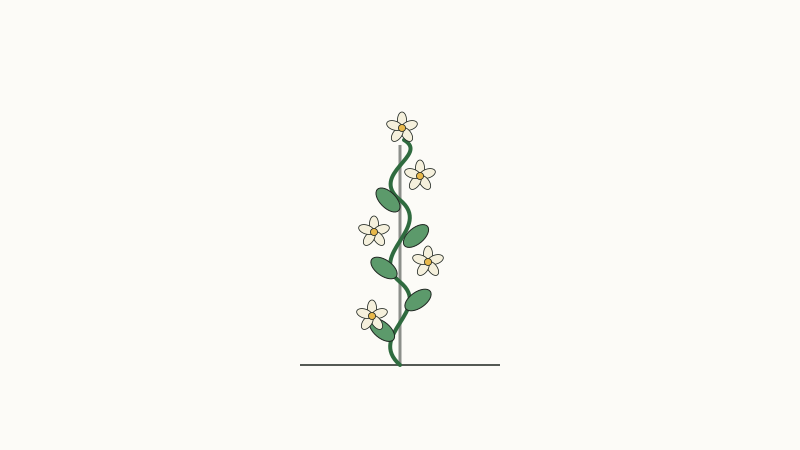
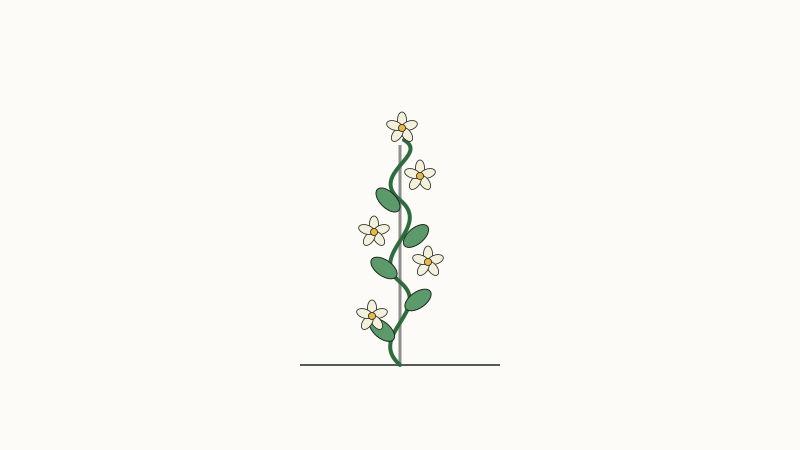
Plant in spring or fall in full sun to part shade; it is one of the few groundcovers that also performs in heavy shade. As a groundcover it stays 1 to 2 feet tall and spreads 10 feet or more by stems that root at the nodes, and where it meets a fence or trellis it climbs by twining instead. Hardy in zones 7 to 11 and evergreen through most of that range, bronzing in cold winters. Set plants 18 inches to 3 feet apart for coverage, closer where you want it to knit fast. Despite the name and the fragrant starry flowers, it is not a true jasmine but a dogbane relative.
Planting details
- Spacing: 18 inches to 3 feet as a groundcover
- Hardy in zones 7 to 11; evergreen in most of them
- Stays a 1 to 2 foot carpet, or twines up a support to 10 feet
- Creamy white to yellowish star flowers in late spring
- Cuttings and self-layered stems root easily
Growing requirements
It tolerates nearly everything a southern garden offers: sun, shade, drought once established, salt, and deer. Well-drained soil of almost any texture suits it, though growth is fastest in loam. Water through the first season; after that, irrigation is optional except in real drought. The small fragrant flowers open late spring into summer, smaller and milder than those of confederate jasmine, its close cousin. Feed in spring only if growth stalls; this is a plant that thrives on neglect.
Harvesting and care
The main job is containment. Mow or shear the groundcover once in late winter at a high setting to keep it dense and fresh, and edge the beds a couple of times a year or it will root into whatever it touches. Vining plants need an annual pruning after bloom to stay on their support. It layers itself freely: pin a stem node to the soil and it roots, which makes new plants trivial to produce. Pests are few; scale and occasional leaf spots are the most you should see.
Common mistakes
- Planting it where a 10 foot spread was never planned for
- Expecting confederate jasmine's heavy perfume; this species blooms smaller and milder
- Watering an established mat on schedule; it prefers neglect to sogginess
- Skipping the late winter shear, which leaves a leggy tired carpet
- Confusing it with true jasmine (Jasminum), a different genus entirely
Companion plants
Use it as the green carpet under shrubs that want the same conditions: it runs beneath lantana and agapanthus plantings without complaint and climbs a fence behind a sunny border. Because it handles root competition and shade, it covers ground under trees where turf quits. Keep it out of beds of small perennials, which it will steadily smother.
Varieties worth growing
- Variegatum: cream-edged leaves that brighten shade
- Bronze Beauty: new growth flushed bronze purple
- Snow N Summer: pink new growth maturing to white and green
- Summer Sunset: sunset-toned new foliage
- T. jasminoides (confederate jasmine): the fragrant cousin for the trellis
Frequently asked questions
Is Asiatic jasmine a true jasmine?
No. It is Trachelospermum in the dogbane family; the name comes from the jasmine-like fragrance of its star-shaped flowers.
Will Asiatic jasmine grow in full shade?
Yes, that is one of its strengths. It tolerates heavy shade where most groundcovers fail, though flowering thins out.
Does Asiatic jasmine climb?
It twines up fences, trellises, and trees where it finds support, rising 10 feet or more. On open ground it forms a rooting mat.
Is Asiatic jasmine invasive?
It is vigorous and roots at the nodes, so it needs mowing and edging to stay put. Check local lists before planting in the Deep South.