Houseplant growing guide
Corn plant
Dracaena fragrans · Asparagaceae
Sun
Low to bright indirect
Season
Year-round indoors
Maturity
5 to 10 years
Water
Low
Soil pH
6.0 to 6.5
Spacing
2 ft spread
Planting corn plant
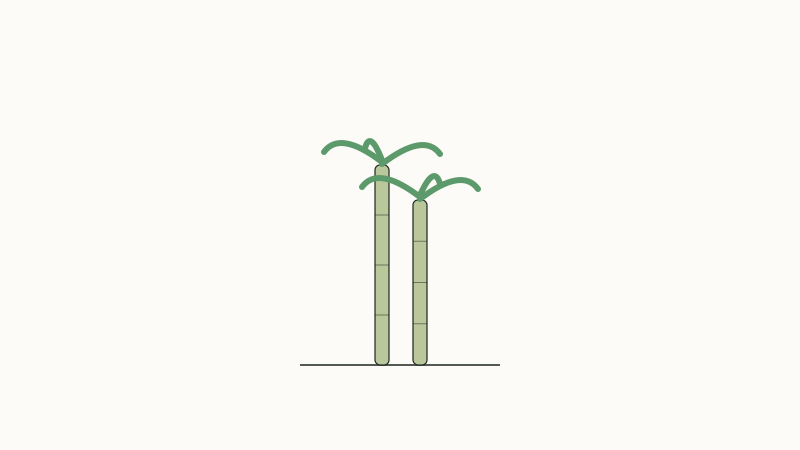
Corn plant arrives from the nursery as leafy tufts sprouting from cut cane sections. Repot in spring or early summer, and only when roots fill the container or lift the plant, because dracaenas resent disturbance and do fine slightly rootbound. Go up one pot size into a standard houseplant mix in a pot with drainage. Indoors it is a year-round plant anywhere; outdoors it survives only in frost-free zones 10 to 12, though it can summer on a shaded patio.
Planting details
- Repot every 2 to 3 years in spring, one pot size up
- Drainage holes required; the cane rots at the base in soggy mix
- Deep pots suit the cane form and keep a top-heavy plant stable
- New plants come from cane or tip cuttings, not seed
- Keep the mix pH near 6.0 to 6.5 to limit fluoride injury
Growing requirements
Bright filtered light is ideal, but corn plant is one of the few houseplants that holds up in genuinely low light, which is why it fills office corners. Direct sun bleaches and burns the leaves. Water when the top inch of mix dries, and less in winter. Room temperatures around 60 to 75 F suit it, and it suffers below about 50 F. The quirk worth knowing is fluoride: dracaenas are unusually sensitive, and brown leaf tips often trace to fluoridated tap water, perlite-heavy mixes, or fertilizers containing superphosphate. Flushing the pot with plain water monthly keeps salts from building up.
Harvesting and care
Individual leaves last for years, so a yellowing leaf or two at the bottom is normal aging; pull them off cleanly. A cane that reaches the ceiling can be cut back anywhere along its length and resprouts below the cut, and the removed top roots in water or moist mix for a second plant. Wipe the wide leaves when dust collects, and check the leaf bases now and then for mealybugs and spider mites, which tuck into the joints.
Common mistakes
- Overwatering, which causes sudden leaf drop and a soft, rotting cane base
- Fluoridated tap water or perlite-heavy mix, which burns leaf tips brown
- Direct sun on the foliage, which bleaches and scorches the stripes
- Cold below about 50 F, including a drafty winter windowsill
- Repotting on a schedule instead of when roots demand it; corn plant dislikes disturbance
Companion plants
Corn plant anchors the low-light end of a houseplant group next to snake plants, ZZ plants, and pothos, all of which share the same dry-down watering rhythm. Smaller foliage plants set at its base make the cane look planted rather than potted. Keep the whole group clear of drafty doors and heating vents, and place the corn plant where pets cannot chew it, since dracaenas are toxic to cats and dogs.
Varieties worth growing
- Massangeana: the classic corn plant; a wide yellow stripe down the center of each leaf
- Lindenii: creamy white stripes along the leaf edges instead of the center
- Victoria: gold-edged leaves on a slightly smaller plant
- Lemon Lime: chartreuse stripes that read brighter in a dim room
Frequently asked questions
Why are the tips of my corn plant turning brown?
Usually fluoride or salt buildup rather than thirst. Water with distilled or rain water, flush the pot monthly, and avoid perlite-heavy mixes and fertilizers with superphosphate.
Is corn plant actually corn?
No. It is a tropical shrub in the asparagus family whose strap leaves happen to resemble sweet corn foliage. For the vegetable, see the sweet corn guide instead.
Can I cut the top off a corn plant?
Yes. Cut the cane at any height and it resprouts below the cut, often with two or three new tufts. Root the removed top in water or moist mix for a new plant.
Is corn plant safe around pets?
No. Dracaena fragrans is toxic to cats and dogs and causes drooling and stomach upset if chewed, so place it out of reach.