What does this potting mix calculator calculate?
This calculator finds the fill volume of a container and converts it into the units potting mix is actually sold in. Round pots are treated as tapered cylinders, and rectangular planters as boxes. Enter how many identical containers you are filling and the result shows the total in dry quarts and cubic feet, plus the number of bags at the size you select.
What you will need
Container dimensions in inches
For a round pot, measure the top diameter, the bottom diameter, and the depth you plan to fill. Most pots taper, so measuring only the top diameter overstates the volume.
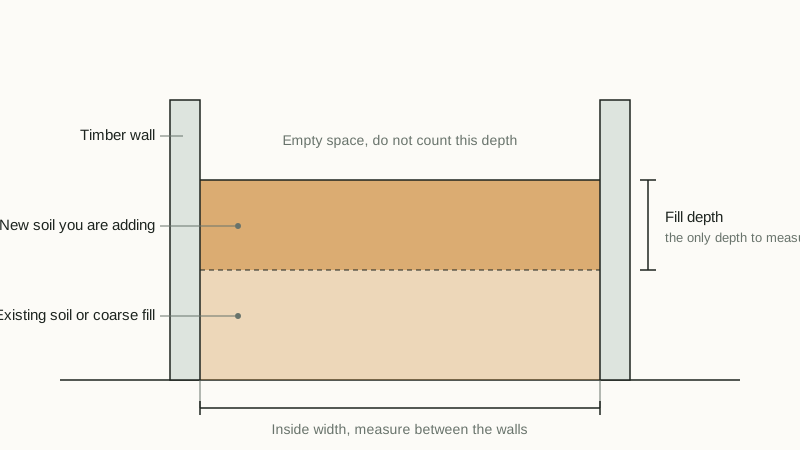
For a rectangular planter or window box, measure the inside length, width, and depth. Inside measurements matter because the walls of a large planter can remove an inch or more in every direction.
Fill depth, not container height
Use the depth of mix you will actually add, not the height of the pot. Most plants need an inch or two of empty space below the rim so water does not run straight off the surface.
Bag size
Potting mix is sold by volume in dry quarts or cubic feet. Select the size printed on the bags you plan to buy. The bag count is rounded up because partial bags cannot be purchased.
How the calculation works
A rectangular planter is a simple box:
Length x width x depth = cubic inches
A tapered round pot is a truncated cone. The calculator uses the full frustum formula rather than pretending the pot is a cylinder, which is why the bottom diameter is a required input:
Volume = pi x depth x (top radius squared + top radius x bottom radius + bottom radius squared) / 3
The result in cubic inches is divided by 67.2 to get dry quarts and by 1,728 to get cubic feet. One cubic foot is about 25.7 dry quarts.
How much potting mix should you buy?
The result is the exact geometric volume of the space you described. Loose potting mix settles after the first few waterings, so containers are often topped up once after planting. Buying the next bag size up is usually cheaper than a second trip for a single pot, but avoid stockpiling opened bags for more than a season or two.
Do not fill containers with garden soil or topsoil. Extension guidance is consistent on this point: use a soilless potting mix, because garden soil compacts in containers and drains poorly.
Worked examples
A 10 inch flower pot
A pot with a 10 inch top diameter, a 7 inch bottom diameter, and 8 inches of fill holds about 459 cubic inches. That is roughly 6.8 dry quarts, so three pots take about 21 quarts, which means one 16 quart bag and one 8 quart bag.
A window box
A 24 inch by 8 inch box filled 7 inches deep holds about 1,344 cubic inches, which is 20 dry quarts or about 0.78 cubic feet. One cubic foot bag covers it with room to spare.
A cluster of large patio pots
Five tapered pots, each 16 inches across the top, 11 inches at the bottom, and 13 inches deep, hold about 28 quarts each. The cluster needs roughly 140 quarts, or about 5.4 cubic feet, so plan on three 2 cubic foot bags.
Common measuring mistakes
Using the top diameter only
A tapered pot is smaller than a true cylinder of the same top diameter. Skipping the bottom measurement overstates the volume, which is why the calculator asks for both.
Confusing dry quarts with liquid quarts
Potting mix is sold by dry volume. A dry quart is about 67 cubic inches, larger than a liquid quart. The bag label already accounts for this, so match the label rather than converting a kitchen measure.
Filling pots to the rim
Roots need the full depth, but the top inch or two should stay empty as a watering reservoir. Enter the fill depth you plan to use, not the physical height of the pot.
When this calculator may not be the right choice
Containers with unusual shapes, such as urns with narrow necks or bowls that bulge in the middle, do not match either shape closely. For those, fill the container with water or packing material, measure what it took, or use the shape that comes closest and round the bag count up. For beds measured in feet, use the soil calculator instead.
Frequently asked questions
Why does it ask for fill depth instead of pot height? Pots are not filled to the rim. Leaving an inch or two below the edge keeps water and soil from spilling over, so the volume you need is the soil column, not the container.
How do I measure a tapered pot? Measure the diameter at the soil line and at the base and average the two, or use the narrower end for a conservative fill.
What is the difference between dry quarts and quarts? Potting mix is sold in dry quarts, which are larger than liquid quarts. A dry quart is about 67 cubic inches, so a cubic foot is roughly 25.7 dry quarts. Check the bag for the measure it actually prints.