Houseplant growing guide
Money plant
Epipremnum aureum and Pilea peperomioides
Sun
Bright indirect
Season
Year-round indoors
Maturity
2 to 5 years
Water
Low to moderate
Soil pH
6.0 to 7.0
Spacing
6 to 10 in pot
Planting money plant
The name money plant lands on two houseplants: golden pothos, a trailing vine, and the Chinese money plant, Pilea peperomioides, an upright plant with flat round leaves. Both live in pots, so planting means potting or repotting, and indoor plants can be potted any time of year; spring gives the fastest recovery. Go up only one pot size, use a container with drainage holes, and fill it with a well-drained houseplant mix rather than garden soil.
Planting details
- Repot when roots circle the pot or push out the drainage holes, usually every 2 years
- Pot size: one size up, 1 to 2 inches wider; oversized pots stay wet too long
- Pothos: root a stem cutting in water, then pot it once roots reach about 2 inches
- Pilea: pot up the pups that sprout around the base for free new plants
- Both: a standard houseplant or aroid mix with some perlite drains well
Growing requirements
Bright indirect light suits both, a few feet back from an east or west window. Pothos survives dimmer corners but variegated types fade toward plain green, while pilea goes leggy and leans hard without a bright window. Water thoroughly, then let the top 1 to 2 inches of mix dry before watering again; pothos droops visibly when thirsty and perks back within hours. Both want normal room temperatures around 65 to 85 F, dislike cold drafts, and accept average home humidity. Feed lightly with a diluted houseplant fertilizer every month or two in spring and summer.
Harvesting and care
Prune pothos vines to keep the plant bushy instead of long and bare at the base; every trimmed piece with a node roots into a new plant. Rotate pilea a quarter turn each week so it grows evenly toward the light rather than lopsided. Wipe dust off the leaves now and then. Pilea pups can be left to fill out the pot or separated and passed along, which is where the friendship plant nickname comes from.
Common mistakes
- Overwatering, the main killer of both; yellow pothos leaves and a mushy pilea stem are the classic signs
- Jumping several pot sizes at once, which leaves roots sitting in damp mix for weeks
- Direct midday sun, which scorches the leaves
- Dim corners plus heavy feeding, which stretches pilea stems and fades pothos variegation
- Cold drafts from doors and air vents, which blacken leaves overnight
Companion plants
Both sit happily alongside snake plants, ZZ plants, and philodendrons, which take the same bright indirect light and dry-down between waterings. Grouping them also raises local humidity a little. The one real difference: pilea is considered non-toxic to cats and dogs, while chewing a pothos leaf causes mouth irritation, so pet owners often give pilea the low shelf.
Varieties worth growing
- Golden pothos: the plant most often sold as money plant; a trailing vine with yellow-splashed leaves
- Marble Queen pothos: heavily marbled white and green; needs brighter light to hold the pattern
- Neon pothos: solid chartreuse leaves that brighten a dim shelf
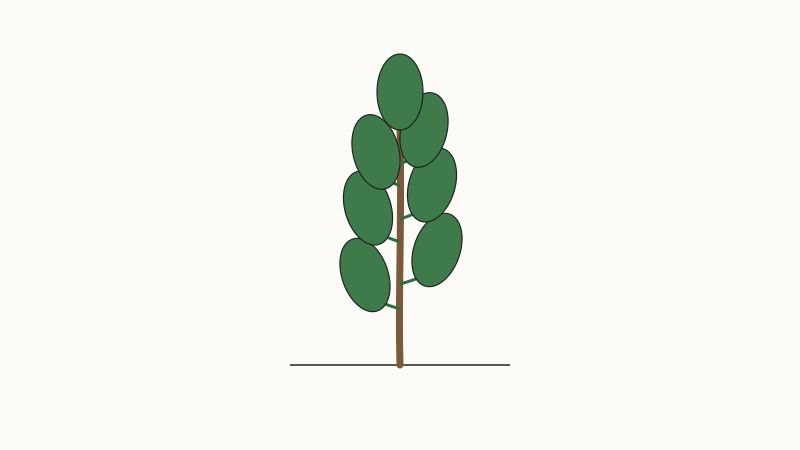
- Chinese money plant: Pilea peperomioides; upright, with flat coin leaves and free pups for sharing
Frequently asked questions
Which plant is actually the money plant?
The name covers several plants. In a houseplant shop it usually means golden pothos or Pilea peperomioides. In the garden it can also mean honesty (Lunaria annua), the biennial with papery silver dollar seed pods.
Is money plant toxic to pets?
Pothos is; the leaves contain calcium oxalate crystals that irritate the mouth if chewed. Pilea peperomioides is generally listed as safe for cats and dogs.
Why is my pothos losing its variegation?
Not enough light. Variegated leaves revert toward plain green in dim spots. Move the plant closer to a bright window and new leaves come in patterned again.
How do I make more plants?
Pothos roots from stem cuttings in water or moist mix; cut below a node where a leaf joins the stem. Pilea separates itself: lift and pot the pups that emerge around the base.