Vegetable growing guide
Eggplants
Solanum melongena · Solanaceae
Sun
Full sun
Season
Warm
Maturity
60 to 80 days
Water
Moderate
Soil pH
5.5 to 6.8
Spacing
18 to 24 in
By Dandre Noah
Planting eggplants
Eggplant is the most heat-demanding of the common garden nightshades. Start seed indoors 8 to 10 weeks before the last frost on warm soil, 75 to 85 F, or germination crawls. Transplant out only once nights hold above about 55 F and the soil has warmed through, usually a week or two after tomatoes in the same climate. In short-season zones, choose early Asian or small-fruited types, since large-fruited varieties need a long, hot run to ripen a useful crop. In the South, eggplant is happiest set out after the soil is thoroughly warm in late spring.
Planting details
- Start indoors: 8 to 10 weeks before the last frost, with bottom heat near 80 F
- Transplant: once nights stay above 55 F; cold soil stalls eggplant harder than tomatoes
- Spacing: 18 to 24 inches
- Seed depth: about 1/4 inch
- One or two plants usually supply a household; three or four suit heavy eaters
Growing requirements
Eggplants need full sun, real heat, and fertile, well-drained soil. Keep moisture even, because water stress produces small or bitter fruit. Feed lightly when fruit sets; too much nitrogen grows a leafy bush that never fills with fruit. Mulch after the soil warms to hold heat and moisture. The main enemy early on is the flea beetle, which can skeletonize young transplants in days, so row cover for the first weeks after planting is the single most effective protection.
Harvesting and care
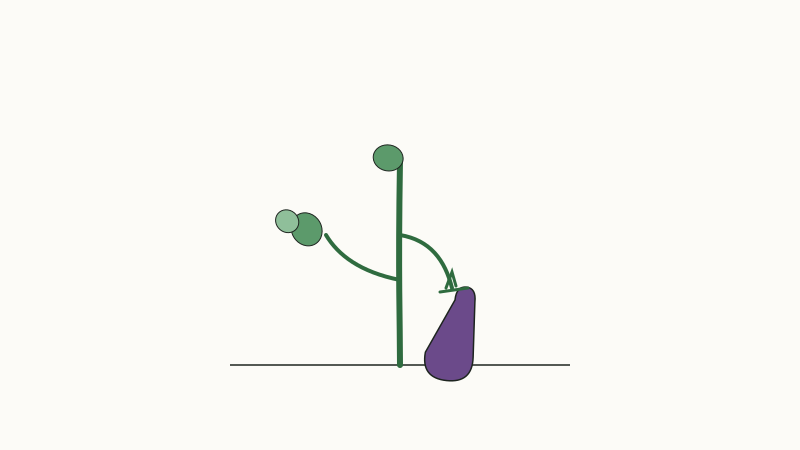
Harvest while the skin is glossy and springs back when pressed; a dull, soft fruit is past its prime and seedy inside. Cut fruit free with snips, leaving a short stem, since the calyx and branches are tough and thorny on some varieties. Frequent picking keeps plants setting new fruit through late summer. Plants often flag in midday heat even with enough water, then recover by evening, which is normal.
Common mistakes
- Planting out into cool nights, which stunts plants for weeks
- Leaving fruit until the skin dulls, which gives bitter, seedy flesh
- Ignoring flea beetles, which can shred young transplants in days
- Overfeeding with nitrogen, which grows leaves instead of fruit
- Skipping early row cover in flea-beetle country
Companion plants
Eggplants pair naturally with peppers and basil, which share their heat and feeding needs. Bush beans are another workable neighbor because they fix light nitrogen without shading the crop. Keep eggplant away from heavy feeders that compete for fertility, and out of beds where potatoes or tomatoes grew the year before, since nightshade diseases carry over in soil.
Varieties worth growing
- Black Beauty: the classic large, dark oval type for slicing
- Ichiban: slim Asian fruit that sets early and stays tender
- Fairy Tale: compact plant for containers, with lavender-striped mini fruit
- Rosa Bianca: heirloom with mild, creamy flesh and fewer seeds
Frequently asked questions
Why does my eggplant have flowers but no fruit?
Nights below about 55 F or days of extreme heat make blossoms drop. The fix is patience until temperatures even out; extra feeding does not help set fruit.
When is an eggplant ready to pick?
Pick when the skin is glossy and the flesh springs back from a thumb press. Dull skin and seeds that have darkened mean the fruit is overripe.
Do eggplants need pruning or staking?
Light staking helps once fruit loads up, since branches can lean or break. Pruning is optional; removing a few inner stems improves airflow in humid climates.