soil
Tilth
Last reviewed 2026-10-04
Tilth describes the physical condition of soil and how well it supports seedling emergence, root growth, drainage, and air exchange. Soil with good tilth has stable crumbs, useful pore spaces, adequate moisture, and a surface that can be worked without becoming dust or hard clods. It is not a measurement of fertility by itself.
What it means
Good tilth is about structure rather than color. Aggregates create large pores for drainage and smaller pores for water storage. Organic matter, roots, fungi, earthworms, freezing and thawing, and careful cultivation can all influence structure. Compaction removes pore space and makes roots work around dense layers.
How it affects the garden
Avoid walking on beds when the soil is wet. Repeated tilling can break aggregates and leave soil vulnerable to crusting, erosion, and compaction. Adding finished compost or leaving roots in place can support structure, but amendment rates should match the soil and crop. Mulch protects the surface from raindrop impact and rapid drying.
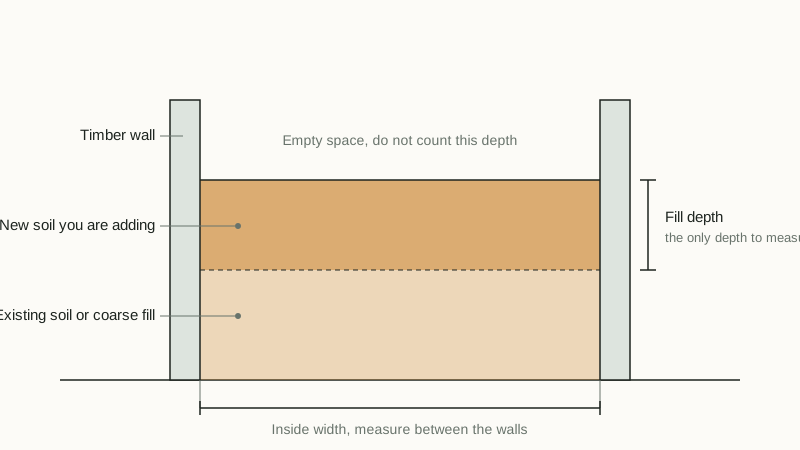
Tilth matters at sowing time because a crusted surface can block small seedlings. It also matters later when roots need oxygen and water at the same time. The compost calculator can help estimate an amendment volume, but it cannot replace a soil test or an assessment of existing structure.
Example
A raised bed with loose crumbs, visible pores, and enough cohesion to hold a shallow furrow may have better tilth than a bed that is equally dark but smears when wet and forms hard blocks when dry.
Common confusion
Tilth is not a synonym for loam. Loam is a texture class. A sandy soil can have good tilth, and a loam can have poor tilth if it is compacted or worked at the wrong moisture level.
Sources
University of California Agriculture and Natural Resources discusses soil structure, organic matter, and garden soil management.