plant biology
Runner
Last reviewed 2026-10-04
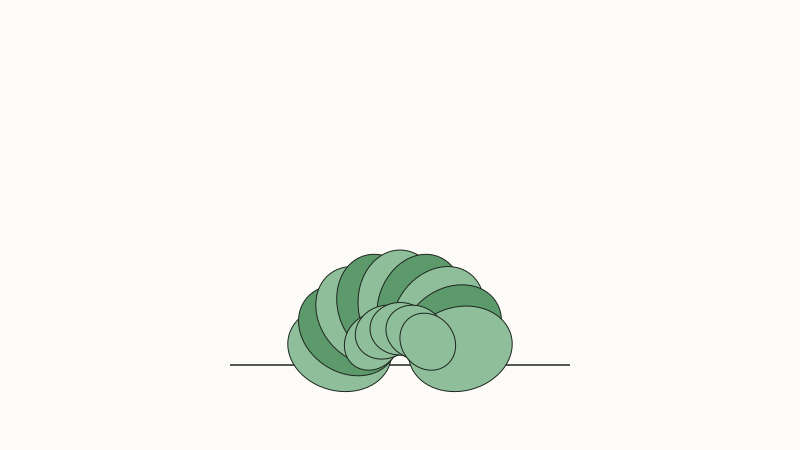
A runner is a horizontal stem that grows from a plant and can produce a new plant at one or more nodes. Strawberries are a familiar example. When a runner touches suitable soil, a daughter plant may root while remaining connected to the parent until established.
What it means
Runners are a form of vegetative growth. They allow a plant to spread without producing seed and create genetically similar daughter plants. Not every horizontal stem is a runner, and some plants use stolon as a related term.
How it affects the garden
Runners can fill a bed quickly or provide an easy way to propagate a plant. Space daughter plants so their crowns and roots have room. Remove or redirect runners when they compete with fruiting plants or escape the intended planting area.
The plant spacing calculator helps plan the eventual layout. Check the crop's crown depth and moisture needs when rooting a daughter plant.
Example
A strawberry sends a runner across the soil surface. A node produces a small plant, which can be pinned to the soil until roots form and then separated if the gardener wants a new plant.
Common confusion
A runner is not a root. It is a stem with nodes, leaves, and the potential to form roots.
Sources
University of Minnesota Extension describes strawberry runners and daughter plants.