Herb growing guide
Hyssop
Hyssopus officinalis · Lamiaceae
Sun
Full sun
Season
Warm
Maturity
75 to 90 days
Water
Low
Soil pH
6.0 to 7.5
Spacing
12 to 18 in
Planting hyssop
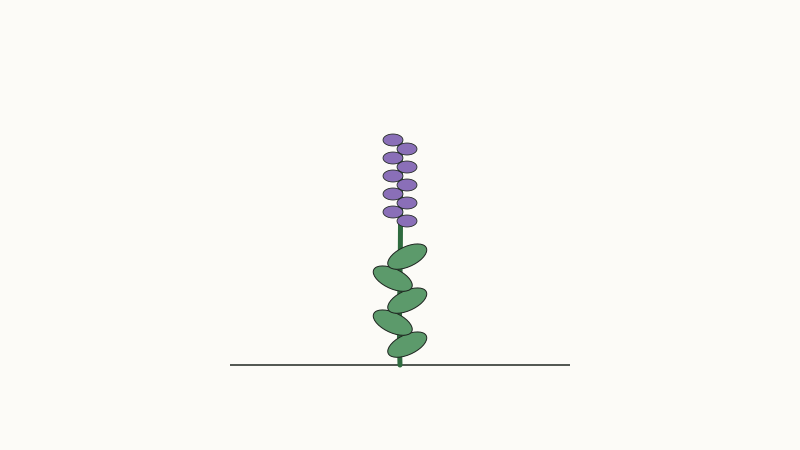
Start seed indoors 6 to 8 weeks before the last frost, sow directly around the last frost date, or set out divisions and starts in spring. Press the seed into the surface rather than burying it, since it needs light to germinate. Hyssop is a cold-hardy perennial in zones 4 to 9 that shrugs off light frost, so the planting window is forgiving; fall sowing also works in mild climates, and established plants self-sow freely once they flower. Set transplants out a week or two after the last frost. One caution at the seed rack or nursery: this is true hyssop, not anise hyssop, a taller native plant in a different genus.
Planting details
- Start indoors: 6 to 8 weeks before the last frost
- Direct sow: around the last frost date; transplant a week or two after
- Spacing: 12 to 18 inches; plants grow 1 to 2 feet tall
- Seed depth: surface sown or barely covered; light aids germination
- Propagate by seed, stem cuttings, or division in spring
Growing requirements
Full sun produces the densest plants, though light afternoon shade helps where summers run hot. Hyssop wants well-drained, average to lean soil and tolerates dry, sandy, or rocky ground and slightly alkaline pH that fussier herbs refuse. Once established it is genuinely drought tolerant; wet, heavy soil is the one condition it will not forgive. Deer and rabbits leave the aromatic foliage alone.
Harvesting and care
Take young leaves and shoot tips anytime; they carry a minty, bitter edge best used sparingly in soups and stews. Let most of the plant flower, since the spikes are the pollinator payoff, then shear lightly after the first flush for a second round of bloom. Because the stems are semi-evergreen, skip fall pruning and cut back in spring instead, shaping the plant and clearing winter damage in one pass. Hyssop is short-lived even with good care, so root a few cuttings or welcome self-sown seedlings as replacements.
Common mistakes
- Heavy, wet soil; hyssop tolerates drought and poor ground but rots where drainage fails
- Pruning hard in fall, which strips semi-evergreen growth before winter; wait for spring
- Burying the seed, which needs light to germinate; press it into the surface instead
- Confusing it with anise hyssop at the nursery; they are different plants in different genera
- Expecting permanence; hyssop is short-lived and needs replacing or resowing every few years
Companion plants
Hyssop earns its space at the edge of the vegetable garden as a nectar plant, since the flower spikes run for weeks through summer and feed bees, butterflies, and hummingbirds. Gardeners have long set it beside cabbage-family crops, and its compact mound competes little for light or water. It naturalizes readily, so expect volunteer seedlings near the parent plant.
Varieties worth growing
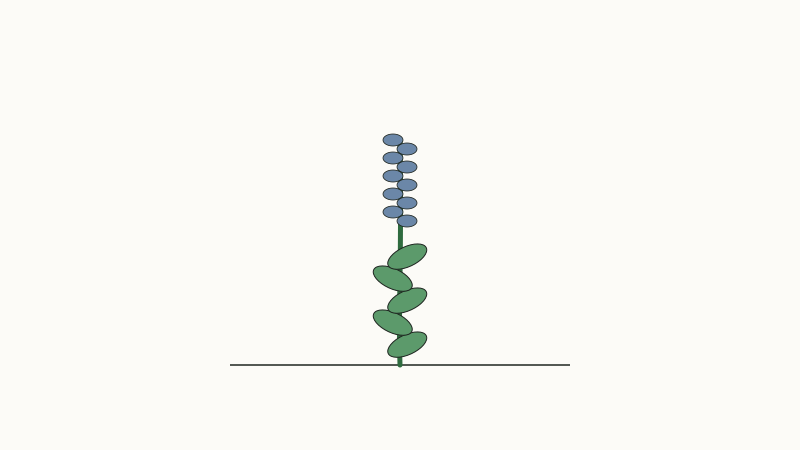
- Blue species form: the standard; blue-purple spikes and the heaviest bee traffic
- Alba: white flowers on the same compact frame
- Rosea: a pink-flowered selection for the ornamental herb garden
- Rock hyssop (subsp. aristatus): a dwarf, tighter habit for edging and rock gardens
Frequently asked questions
Is hyssop the same plant as anise hyssop?
No. True hyssop is Hyssopus officinalis, a compact European subshrub. Anise hyssop is Agastache foeniculum, a taller North American native with a stronger anise flavor. They share a family and part of a name, not a genus.
Does hyssop come back every year?
Yes. In zones 4 to 9 it is a hardy perennial and often semi-evergreen. It is short-lived, though, so plan on replacements from cuttings, division, or its own self-sown seedlings.
When should I cut hyssop back?
In spring, not fall. The stems hold foliage through winter, and a spring shearing keeps the plant compact and less likely to splay open at the base.
Is hyssop edible?
Yes. Young leaves, shoot tips, and flowers are edible, with a minty bitterness suited to soups and stews in small amounts. The oil is a traditional flavoring in Chartreuse liqueur.
Sources
- NC State Extension Gardener Plant Toolbox, Hyssopus officinalis
- University of Georgia Extension, herbs in Southern gardens
- Iowa State University Extension seed germination requirements
- Utah State University Extension vegetable planting groups
- University of Maryland Extension fall vegetable gardening
- University of Minnesota Extension vegetable garden planting