plant biology
Crown
Last reviewed 2026-10-04
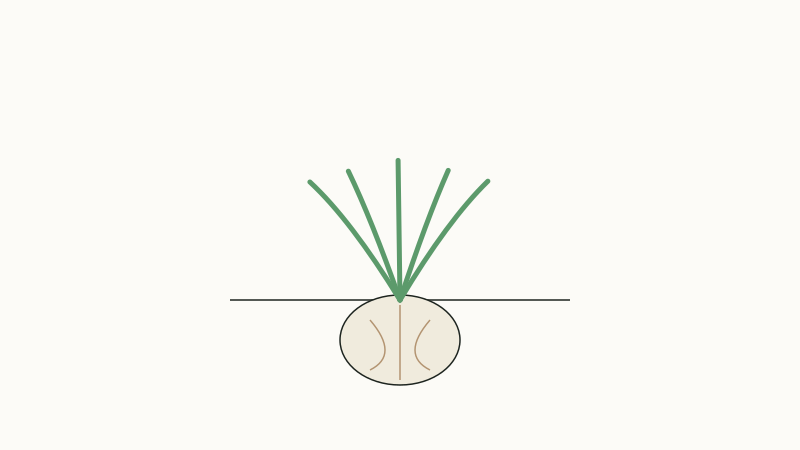
A plant crown is the area where the roots meet the stems or leaves. In many perennials, crowns contain growing points that produce new shoots. The crown's position matters because burying it too deeply can reduce air movement and encourage decay, while exposing it can dry or injure the plant.
What it means
The crown is not always a visibly distinct structure. In strawberries, it is the short central stem between roots and leaves. In a perennial division, it includes the roots and buds needed to produce new growth. Planting depth should follow the crop rather than a single rule.
How it affects the garden
Keep crowns at the depth recommended for the plant. Avoid piling wet mulch against them. When dividing a perennial, include healthy roots and viable buds in each section. A crown that looks dry, soft, or damaged may not establish even when the leaves appear alive.
The can I grow this tool helps check broad site fit, but the plant's planting instructions determine crown depth. Transplant carefully and keep the root zone evenly moist while roots establish.
Example
A strawberry is planted with its crown level with the soil surface. If the crown is buried, new leaves may be slow or the center may rot; if it sits too high, roots can dry.
Common confusion
The crown is not the same as the root ball. The root ball is the mass of roots and soil in a container, while the crown is the transition and growing point between roots and shoots.
Sources
University of Minnesota Extension explains correct strawberry planting depth and crown position.