plant biology
Node
Last reviewed 2026-10-04
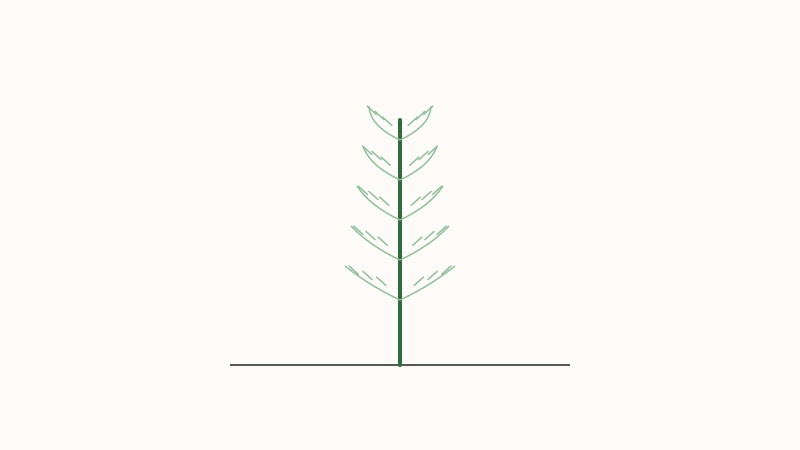
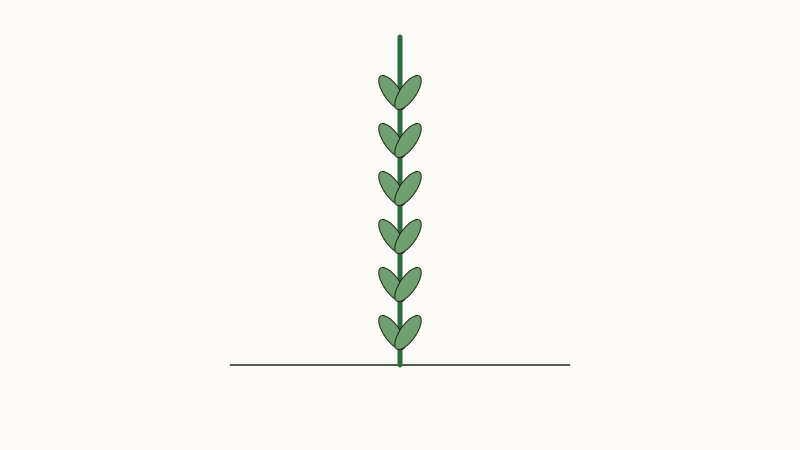
A node is a point on a plant stem where a leaf, bud, branch, flower, or sometimes an adventitious root can develop. Nodes are visible as joints, scars, or slight swellings along stems. Their position helps gardeners decide where to prune, take cuttings, or identify new growth.
What it means
The section between two nodes is an internode. A dormant bud may sit in the angle between a leaf and stem, called the leaf axil. Plants differ in how obvious their nodes are, but the basic structure is common across many stems.
How it affects the garden
When pruning, a cut near a healthy node can leave a bud positioned to produce new growth. When propagating a stem cutting, including at least one viable node is often important because roots or shoots may form there. The correct cut and rooting method still depend on the plant.
Use the plant spacing calculator for garden layout, but do not confuse close nodes with overcrowding. Some plants naturally have short internodes, especially under particular light or growth conditions.
Example
A gardener takes a pothos cutting with two nodes and one leaf. A new root or shoot may develop from a node when the cutting is placed in suitable conditions.
Common confusion
A node is not the same as a leaf. A leaf attaches at a node, while the node is the stem region that contains the growing points.
Sources
North Carolina Extension Gardener Plant Toolbox illustrates stem growth and propagation structures in a common houseplant.