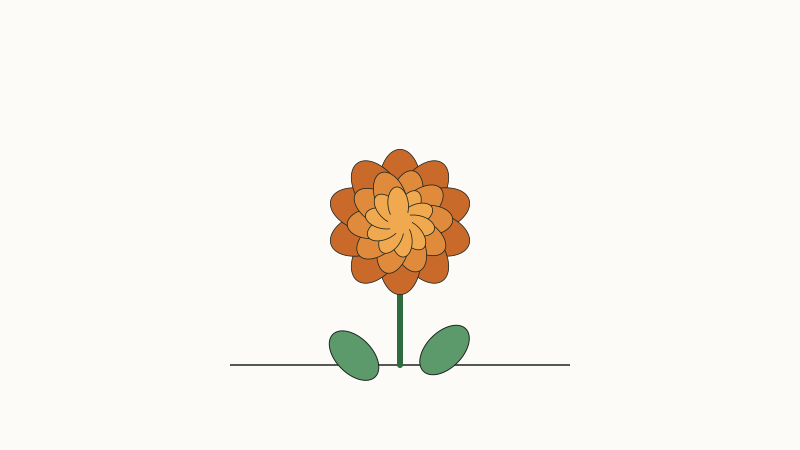
Flower growing guide
African marigold
Tagetes erecta · Asteraceae
Sun
Full sun
Season
Warm
Maturity
70 to 90 days
Water
Moderate
Soil pH
6.0 to 7.5
Spacing
12 to 18 in
By Dandre Noah
Planting african marigold
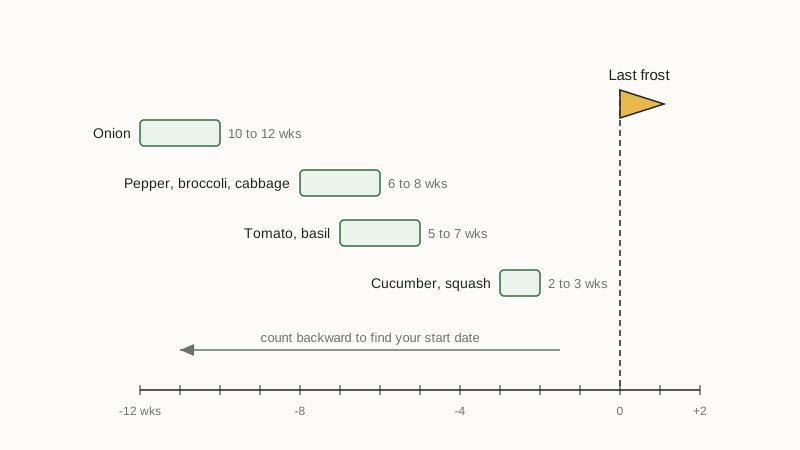
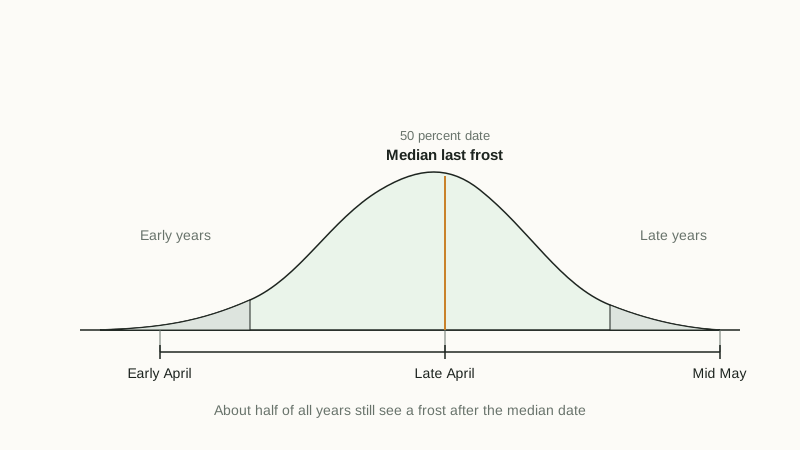
Start indoors 6 to 8 weeks before the last frost for June bloom, or sow directly after the last frost once the soil is warm; germination is fast in warm ground. Despite the common name, this is a Mexican and Guatemalan species, the cempasuchil of Dia de los Muertos, not an African plant. It runs much bigger than French marigolds, reaching 1 to 4 feet tall and 1 to 2 feet wide, so give it the back of the border or its own row for cutting rather than tucking it into an edge. Set transplants out only after frost danger is fully past and nights have warmed.
Planting details
- Start indoors: 6 to 8 weeks before the last frost
- Spacing: 12 to 18 inches; tall cultivars go 18 to 24
- Seed depth: about 1/4 inch
- Pinch young plants once for bushier, sturdier stems
- Tall cultivars need staking or a wind-sheltered site
Growing requirements
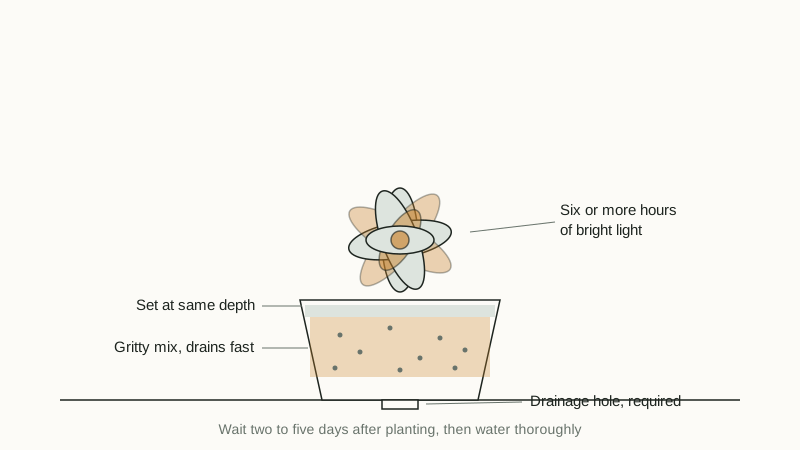
Full sun, with light afternoon shade tolerated in hot climates; it will not flower in real shade. It prefers evenly moist, well-drained soil but tolerates clay and short dry spells better than the French types. Deer usually leave it alone, and the strongly aromatic foliage is the reason. Watch for botrytis and powdery mildew in wet weather, phytophthora in poorly drained ground, and thrips, slugs, and spider mites through dry spells. The sap can irritate skin in some people, so gloves are worth it for heavy deadheading sessions.
Harvesting and care
Deadhead fast and often: the heavy double heads snap stems in wind and rain once they age, and prompt removal keeps the plant branching into new buds. Cut stems for the vase as soon as flowers fully open; it is one of the longest-lasting annual cuts you can grow. In late season let a few heads dry on the plant if you want seed, but note that seed saved from hybrids will not come true. Pull the plants at frost or once they look spent in late summer.
Common mistakes
- Spacing it like a French marigold; it needs twice the room
- No support for 3 foot cultivars, which then snap in storms
- Letting giant spent heads ride, since their weight breaks stems
- Overhead evening watering, which feeds botrytis and mildew
- Heavy nitrogen, which grows lush foliage at the expense of flowers
Companion plants
Like other marigolds it earns its place along vegetable bed edges near tomatoes and peppers, and its height keeps it clear of the shading problems that plague the dwarf French types tucked under tall crops. In a cutting row its late-season gold pairs naturally with zinnias that carry the same summer calendar.
Varieties worth growing
- Antigua series: dwarf 12 to 16 inch plants; several showed strong disease resistance in trials
- Inca II: double 4 to 5 inch blooms on 14 to 18 inch plants
- Crackerjack: the classic 3 foot cut-flower strain
- Safari series: weather-tolerant bedding types
- Sweet Cream: pale cream blooms, unusual for the species
Frequently asked questions
Is African marigold really African?
No. It is native to Mexico and Guatemala and reached Europe through African trade routes, which is how it picked up the name.
Can I eat African marigold?
Skip it. Signet marigolds are the edible-flower species; T. erecta sap can irritate skin and the big doubles are grown for show, not the table.
Do African marigolds repel nematodes?
Tagetes species can suppress some root-knot nematodes, but the effect is variety-specific and works best when the plants are grown densely for a full season rather than as a border afterthought.
How is it different from French marigold?
T. erecta is the tall species, 1 to 4 feet with flowers to 5 inches. French marigold, T. patula, stays under a foot with smaller blooms.