soil
Cation exchange capacity
Last reviewed 2026-10-04
Cation exchange capacity, often shortened to CEC, describes the amount of positively charged nutrient ions that soil can hold on the surfaces of clay and organic matter and exchange with plant roots. A higher CEC can mean greater nutrient holding capacity, but it does not mean nutrients are automatically present or available.
What it means
Calcium, magnesium, potassium, and ammonium are examples of positively charged ions, called cations. Clay and humus have sites that attract these ions. A soil test may report CEC as a measure of the soil's holding capacity. Texture and organic matter both affect the result.
How it affects the garden
Sandy soils often have lower nutrient holding capacity and may need smaller, more frequent nutrient applications. Clay and organic soils can hold more, but they may also retain nutrients in forms plants cannot readily use. Fertilizer decisions should follow the complete soil report, crop needs, and local recommendations rather than CEC alone.
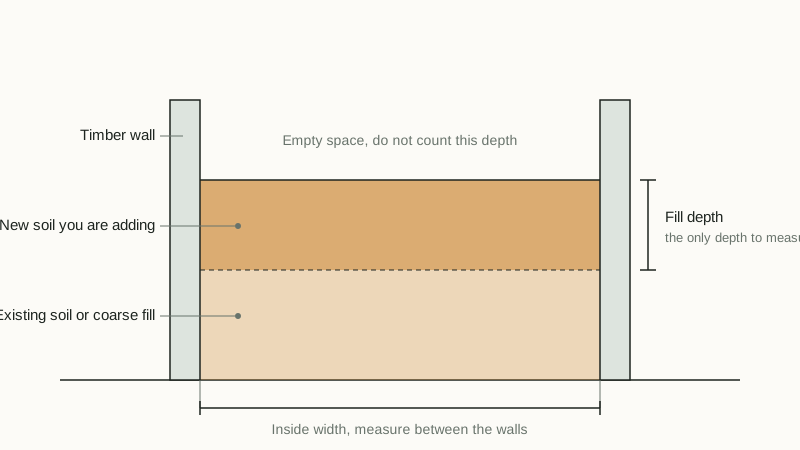
Do not try to raise CEC with a single quick fix. Adding suitable organic matter over time and protecting soil structure can improve the growing environment. The soil calculator measures how much material fills a bed, not its nutrient chemistry.
Example
Two beds receive the same fertilizer. A sandy bed may lose soluble nutrients more quickly with irrigation, while a clay-rich bed may hold more ions. The correct response depends on testing and plant performance, not on applying the same extra amount to both beds.
Common confusion
CEC is not the same as soil pH, fertility, or tilth. It describes one chemical property of soil.
Sources
USDA Natural Resources Conservation Service explains soil quality indicators, including nutrient holding properties.