Fruit growing guide
Aronia
Aronia melanocarpa · Rosaceae
Sun
Full sun to part shade
Season
Cool
Maturity
2 to 3 years to first fruit
Water
Moderate
Soil pH
5.0 to 7.0
Spacing
4 to 6 ft
By Dandre Noah
Planting aronia
Plant dormant shrubs in early spring or fall at the same depth they grew in the pot. Aronia is hardy in zones 3 to 8 and unusually flexible about site: it tolerates clay, sand, wet boggy ground, and drought once established, which is why it shows up in rain gardens and problem corners as often as in orchards. What it does not forgive is shade if you want fruit. Full sun gives the best yields and the most even ripening; part shade grows a fine ornamental shrub with a lighter crop. Space bushes at least 4 feet apart for hand harvesting, 6 feet where you want each shrub to develop a full crown, and remember the plant suckers, so a row slowly becomes a hedgerow whether you planned one or not.
Planting details
- Spacing: at least 4 feet for fruit production, 6 feet for specimen shrubs
- Self-fruitful: one plant produces a full crop without a pollinator partner
- Tolerates wet soil, clay, and drought; full sun for best yields
- Suckers into a thicket; mow or pull suckers where you want single shrubs
- First fruit in year 2 or 3; serious yields by year 4 or 5
Growing requirements
Full sun is the yield variable; Iowa State Extension recommends it for the best crops and uniform ripening. Beyond that, aronia is about the least demanding fruit shrub in the library: it takes poorly drained ground that would rot a blueberry, handles drought after establishment, needs no rich soil, and has few serious pest or disease problems. Slightly acidic ground with some organic matter is the ideal, but it performs across a wide pH range. Water new plantings through their first year or two, then only during genuinely dry spells. Low fertility keeps the shrubs compact; feeding is rarely needed outside of a spring compost mulch.
Harvesting and care
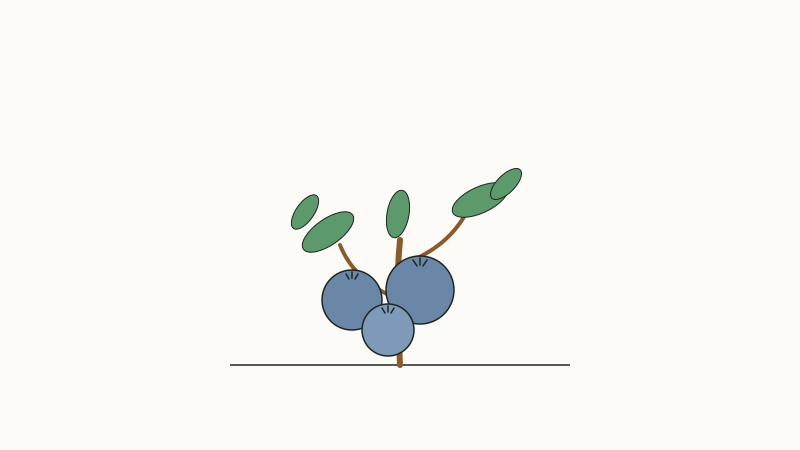
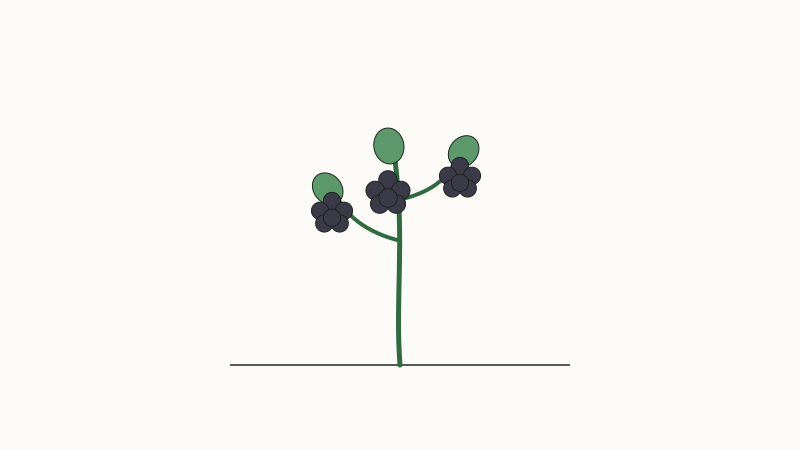
Clusters of small white flowers open in May and June, and the quarter-inch black fruits ripen from late August through mid-September. The berries hang well on the bush, giving a harvest window of four to six weeks; pick when the clusters pull free easily and a taste test shows the astringency mellowing. Expect roughly 15 to 20 pounds from a mature, well-sited plant. Raw, the fruit is mouth-puckeringly tannic, so plan on juice, jam, syrup, wine, or drying rather than fresh eating. Birds leave it alone until late, which is a bonus over sweeter fruits. Every few years, cut the oldest canes out at ground level in late winter to keep the shrub productive.
Common mistakes
- Planting in shade and expecting fruit; it grows fine there but crops thinly
- Harvesting early, when the berries are at their most astringent
- Letting suckers take over where a single shrub or row was the plan
- Skipping renewal pruning, which leaves a leggy shrub with declining fruit
- Expecting a sweet fresh-eating berry; aronia is a processing fruit
- Buying two cultivars for pollination; aronia is self-fruitful
Companion plants
Aronia slots into the native edible border beside blueberry on acid soils and alongside raspberry where ground is richer, sharing the late-season harvest rhythm without needing its own bed. In the landscape it earns its place as a wildlife shrub too: the flowers feed spring pollinators and the berries carry birds into fall, so it pairs naturally with other native backbone shrubs and perennials like bee balm and black-eyed Susan. Give it room to sucker where you want that hedge effect, or keep it clear of paths where you do not.
Varieties worth growing
- 'Viking': large berries and heavy yields; the standard production cultivar
- 'Nero': shorter plant with dark, flavorful berries
- 'Autumn Magic': ornamental pick with dependable bright red fall color
- 'Morton' (Iroquois Beauty): dwarf form around 3 feet for small gardens
- 'McKenzie': taller, 6 to 12 foot form bred for conservation plantings
Frequently asked questions
Can you eat aronia berries raw?
They are edible but intensely astringent fresh, which is where the chokeberry name comes from. Juice, jam, syrup, wine, and drying are where the fruit shines.
Does aronia need a second plant to fruit?
No. Aronia is self-fruitful, so a single shrub sets a full crop. Extra plants just mean extra berries.
When do you harvest aronia berries?
Late August through mid-September. The fruit hangs well for weeks, so you can wait for sugars to climb and the astringency to soften before picking.
Is aronia a true berry?
Technically it is a pome, like its relative the apple, not a berry. The fruits are quarter-inch black pomes in clusters of about 10 to 15.