Houseplants
How often should you water a snake plant?
By Dandre Noah · Last reviewed 2026-10-13
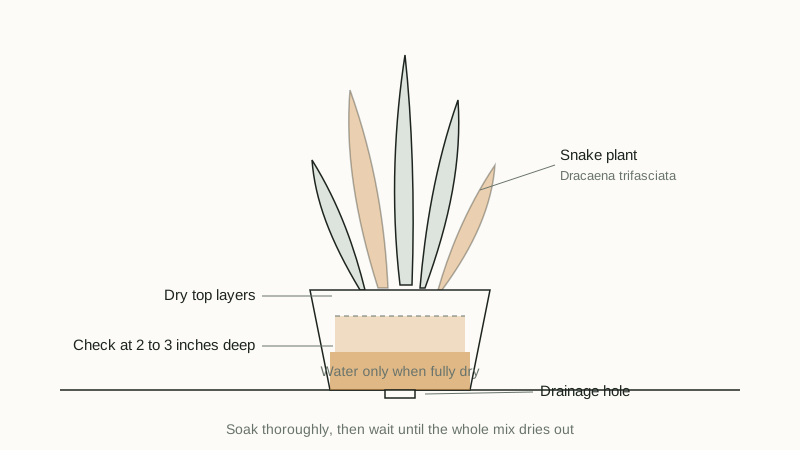
Water a snake plant every 2 to 6 weeks, only when the soil has dried out completely all the way down. In bright light during summer that can mean every 2 to 3 weeks. In winter or a dim room, once a month or even less is normal.
That range is wide because no fixed schedule works. Snake plants (Dracaena trifasciata, still widely sold as Sansevieria) are succulents that store water in thick leaves and rhizomes, and they tolerate dry soil far better than wet soil. Penn State Extension puts it bluntly: you can neglect watering for a month and the plant will be no worse for wear, but overwatering can kill it.
How to tell it is time to water
Skip the calendar and check the soil instead. Push a finger or a wooden skewer 2 to 3 inches into the potting mix.
- Dry all the way down: water thoroughly, until water runs out of the drainage hole.
- Cool or slightly damp at depth: wait a few more days and check again.
- Wet or musty smelling: do not water, and if it stays wet for weeks, check the roots for rot.
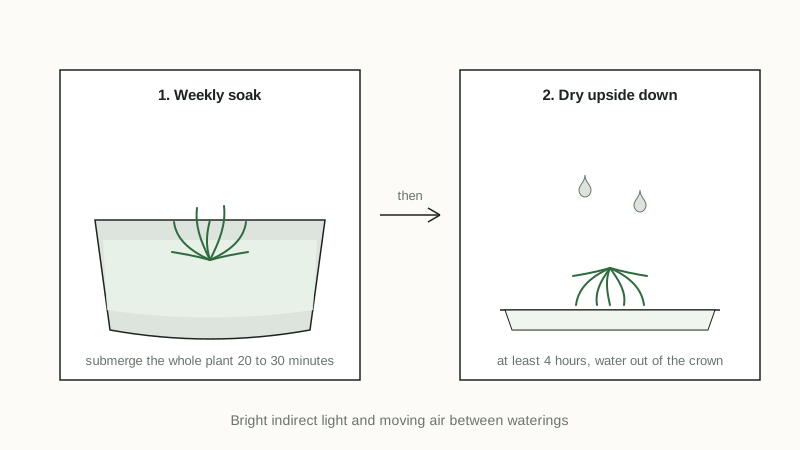
When you do water, soak the whole root ball rather than giving small frequent sips. Small sips wet only the top inch, which encourages shallow roots and leaves the lower mix stale. Empty the saucer or cache pot after 15 to 30 minutes so the plant never sits in water.
What changes the timing
The same plant can need water twice as often in one spot as in another. The main variables:
- Light. More light means faster growth and faster water use. A snake plant in bright indirect light dries out noticeably faster than the same plant in a hallway corner, where Iowa State Extension notes plants can go weeks or even months between waterings.
- Season. Growth slows or stops in winter. The North Carolina Extension Gardener Plant Toolbox recommends letting soil dry between waterings spring through fall, then watering only every one to two months in winter.
- Pot size and material. Small pots and unglazed terracotta dry faster than large plastic or glazed pots. Snake plants tolerate being pot-bound, and a snug pot dries more evenly than an oversized one full of wet, rootless mix.
- Soil mix. A gritty cactus mix drains and dries quickly. Dense, peat-heavy potting soil holds water much longer, which is where most overwatering problems start.
Signs you are watering too much or too little
Overwatering is the failure mode to watch for. Yellowing leaves, soft or mushy leaf bases, and a musty smell from the soil all point to root rot. If you see them, stop watering and check the roots. Our guide to why snake plants turn yellow walks through the diagnosis.
Underwatering looks different: leaves wrinkle slightly, tips turn brown and crispy, and the plant stops growing. It recovers quickly after a thorough soak. If the mix has dried so hard it repels water, set the pot in a basin of water for 30 minutes to rewet it from below.
Set up the pot so watering is easy
Two choices at potting time make the whole watering question simpler.
- Use a pot with a drainage hole. Without one, water pools at the bottom where you cannot see it.
- Use a cactus or succulent mix, or a regular potting mix amended with perlite. The potting mix calculator can tell you how much mix your pot holds if you are repotting.
Light matters as much as soil. If you are unsure whether your spot counts as bright indirect light, the sun calculator can classify the spot by hours of light, and other low-demand succulents like jade plant and aloe follow the same dry-then-soak rhythm.