Houseplants
How do you care for a monstera?
By Dandre Noah · Last reviewed 2026-10-29
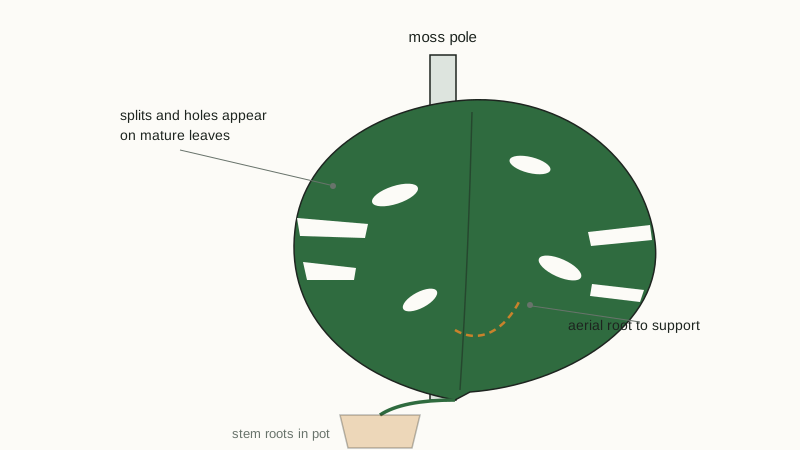
Give a monstera bright, indirect light, water it when the top 1 to 2 inches of potting mix feel dry, and give it a moss pole or trellis to climb. Keep it between 60 and 85 degrees Fahrenheit, away from cold drafts, and it will grow into a large floor plant.
Monstera deliciosa is a tropical understory vine from Central America. Outdoors in its native range it climbs trees and reaches 30 feet or more; indoors it settles around 6 to 8 feet tall, according to the NC State Extension Gardener Plant Toolbox. Everything about its care follows from the fact that it wants to climb.
Light
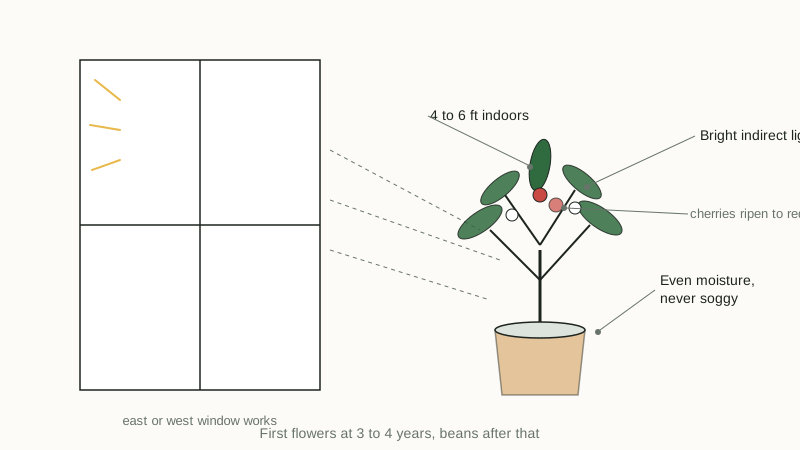
Bright, indirect light is the target. A spot a few feet back from an east or south window works well. Direct midday sun can scorch the leaves, and deep shade produces a leggy plant with small leaves that never develop splits. Clemson Extension notes that monsteras grown in low light will not form their characteristic leaf perforations, so a plant that stays solid-leafed is usually telling you it needs more light, not more fertilizer.
Water
Water thoroughly, then let the top 1 to 2 inches of the mix dry before watering again, per Penn State Extension. In practice that works out to roughly once a week in summer and every two weeks or so in winter, but the finger test beats any schedule. Constantly wet mix causes root rot, the most common way these plants die indoors.
Soil and repotting
Use a well-draining soilless potting mix rich in organic matter. Penn State suggests adding bark, charcoal, or perlite to a purchased mix, which keeps air around the roots the way the loose forest-floor debris does in the wild. The potting mix calculator tells you how much mix you need when you size up a pot.
Repot in spring when roots circle the pot or grow out of the drainage holes, usually every one to two years on a young plant. Go up only one pot size, about 2 inches wider. A pot much larger than the root ball holds wet mix the roots cannot reach and invites rot.
Support
A monstera without support sprawls sideways and produces smaller leaves. Give it a moss pole, trellis, or board wrapped in sphagnum, and tie the stems to it loosely. The plant attaches itself with aerial roots that emerge at the base of each leaf; do not cut these off, because they are how the vine anchors and how it signals that it is climbing. Climbing plants produce larger leaves with deeper splits, so the support is doing double duty.
Feeding and humidity
Penn State recommends a balanced houseplant fertilizer every two weeks during the growing season and monthly in winter. Monstera prefers humidity above 50 percent. It copes with average indoor air, but if your winter air is very dry, a nearby humidifier prevents brown leaf edges better than misting does.
Keep it away from pets
Monstera is toxic to cats and dogs. The ASPCA lists it among plants containing insoluble calcium oxalates, which cause oral irritation, drooling, and vomiting if chewed. Put it where a pet cannot reach the leaves, or choose a pet-safe plant instead.
Common problems
- Yellow leaves. Overwatering is the usual cause. Check that the top of the mix is actually drying between waterings and that the pot drains freely.
- Brown, crispy leaf edges. Low humidity or a cold draft. Move the plant a few feet from the window in winter.
- Leaves with no splits. Too little light, or the plant is still young. Fenestration arrives with maturity on plants getting enough light; our guide to why a monstera is not splitting covers that problem in detail.
- Long bare stems with small leaves. The plant needs more light and something to climb.
What to do next
When the plant outgrows its space, it propagates readily from stem cuttings taken just below a node. If you want a similar vine that tolerates lower light, pothos is a close relative with the same care pattern. Other forgiving options in the plant library include aloe and cast iron plant.