Houseplants
How do you care for an air plant?
By Tools for Gardeners · Last reviewed 2026-10-08
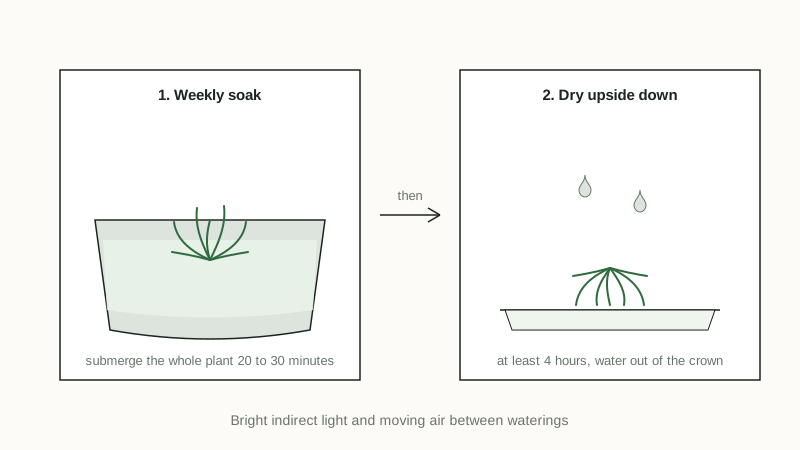
Soak the plant in room-temperature water for 20 to 30 minutes once a week, shake off the excess, and let it dry upside down for at least four hours before putting it back. Keep it in bright, indirect light with moving air. That is the entire routine.
Air plants (Tillandsia) are epiphytes in the bromeliad family. Their roots only anchor them to bark or rock; all water and nutrients enter through the silvery scales covering the leaves, per the NC State Extension Plant Toolbox. Because they never sit in soil, they cannot draw on a water reserve, which is why the weekly soak matters.
There are more than 500 species, native to the southern US, Mexico, and Central and South America. Clemson notes that wild populations in some areas are threatened by over-collection, so buy nursery-propagated plants rather than collected ones.
Watering: soak, rinse, or mist
All three methods work. Pick based on how often you will actually do it:
- Soak. Submerge the whole plant for 20 to 30 minutes once a week. Clemson Extension's Home and Garden Information Center recommends this or thorough misting weekly, and it is the most forgiving schedule for most homes.
- Rinse. Hold the plant under a faucet of tepid water until soaked through, two or three times a week. Fast, but easy to forget.
- Mist. Spray to the point of runoff. In a dry, heated home this has to happen every two to three days, which is why misting alone fails so often indoors.
If you know you will not mist several times a week, soak weekly. A plant that gets skipped drinks for a month on misting will slowly dry out even though it looks like it is being watered.
The step everyone skips: drying upside down
After any watering, water collects between the leaves at the center of the rosette, and that trapped water rots the plant from the inside. Clemson HGIC calls out the fix directly: shake the plant gently and turn it upside down to drain and dry.
Set it face-down on a towel in bright light for at least four hours, longer if your home is humid or still. Only put it back in a glass globe or enclosed display once it is fully dry. A wet plant sealed in a terrarium is the single most common way air plants die.
Light
Bright, indirect light is the target: near an east or west window, or a few feet back from a south window. Most species tolerate full sun in nature, and NC State notes that the sunniest window in a house is not too much for them, especially if you want flowers. Very hot afternoon sun through glass can scorch tender green types, so pull those back an extra foot in summer.
The leaf tells you what it wants. Silvery, fuzzy, stiff-leaved types (like T. xerographica) come from dry, sunny habitats and want the brightest spot. Softer, greener types come from shadier forests and do better a bit further from the glass.
Air and temperature
Moving air is not optional. It dries the plant between waterings and prevents the rot that still air encourages, per Clemson HGIC. An open shelf beats a closed cabinet; a terrarium needs real drying time and ventilation.
Normal room temperatures are fine. Penn State Extension's tillandsia guidance puts the comfort range at 65 to 90°F days with nights above 55°F, and air plants do well outdoors in summer shade as long as they come back inside before cold nights return. If you summer them outside, your frost dates tell you when to bring them in; anything near 50°F nights is the cue, long before actual frost.
Feeding
Optional, but it helps. Clemson HGIC recommends a liquid fertilizer made for bromeliads at one-quarter the labeled rate, added to the soak water about once a month. Standard houseplant fertilizer at heavy dilution also works. More is not better; overfed plants get leggy and lose their compact shape.
Why air plants die indoors
Almost every dead air plant comes down to one of three causes:
- Rot. Water trapped in the center after soaking, or a plant returned to a glass globe while still wet. The base turns brown or black and leaves pull away cleanly.
- Slow drought. Misted occasionally in dry air, the plant dries out over months. Clemson lists the signs: leaves curl or roll inward, color goes dull, and tips brown.
- Too little light. The plant survives but thins, stretches, and never flowers.
A fourth, quieter cause is cold: a night on a cold windowsill or a draft below about 50°F damages tissue that never recovers.
Mounting and display
No soil, ever. Tie or glue them to bark, cork, driftwood, rock, or shells, or rest them in a shallow dish. Clemson's one rule: whatever holds the plant must not hold water. Avoid copper wire (toxic to bromeliads) and skip moss packed around the base, which keeps the crown wet.
Frequently asked questions
Can I use tap water on air plants? Room-temperature tap water is fine for most homes. If your tap water is heavily chlorinated or runs through a salt-based softener, use filtered or rain water instead, since salts build up on the leaves.
Will my air plant flower? Yes, if it gets enough light. NC State notes most species flower readily in bright conditions, and after flowering the parent plant slowly dies back while producing offsets, called pups, at its base. Separate pups when they reach about a third of the parent's size, or leave them to form a clump.
Do air plants need soil or a pot? No. Roots, when present, only hold the plant in place. They can live on a bare shelf as long as the weekly soak and dry routine happens.
What to do next
The routine is weekly: soak 20 to 30 minutes, shake, dry upside down four hours, back to bright light. If you want another low-care plant with a completely different look, aloe and the cast iron plant tolerate similar neglect. For a houseplant that asks a little more but pays it back in flowers, see how to grow a coffee plant at home.