Flower growing guide
Asiatic lily
Lilium Asiatic hybrids · Liliaceae
Sun
Full sun
Season
Perennial bulb, early summer bloom
Maturity
Blooms first summer
Water
Moderate
Soil pH
5.5 to 7.0
Spacing
8 to 12 in
By Dandre Noah
Planting asiatic lily
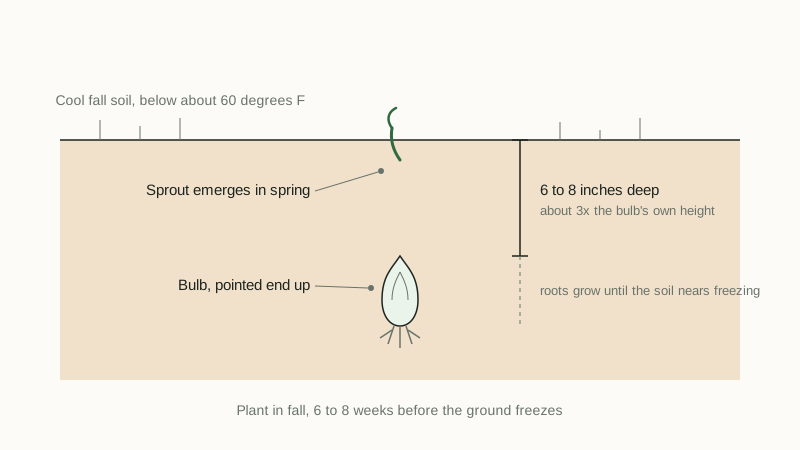
Plant bulbs in fall or early spring, setting them 6 to 8 inches deep with the pointed end up, in well-drained soil where the stems will get full sun. Asiatic hybrids are the hardiest and easiest lilies, reliable in zones 3 to 8, and the first lilies to bloom each summer, usually June into July. Bulbs are fleshy and never truly dormant, so handle them quickly and do not let them dry out. Expect bloom the first summer after planting, with stems 2 to 4 feet tall carrying upward-facing flowers.
Planting details
- Plant bulbs 6 to 8 inches deep, 8 to 12 inches apart
- Full sun for the tops; mulch or low plants shade the roots
- Hardy in zones 3 to 8; the earliest lilies to bloom
- No fragrance, unlike Oriental lilies
- Every part is highly toxic to cats, including pollen and vase water
Growing requirements
Full sun for the stems but cool roots: the old advice is head in sun, feet in shade, so mulch or a low groundcover keeps the bulb zone cool. Well-drained, fertile soil matters because a wet bulb rots before it sprouts; in clay, plant in raised beds. Keep soil moderately moist but never soggy through the growing season. Most stay under 3 feet and need no staking. The trade-off for the brightest colors and the easiest culture is that Asiatics carry no scent.
Harvesting and care
Deadhead the spent blooms so energy returns to the bulb, but leave the stem and leaves until they yellow on their own; the foliage is feeding next year's flowers. Cut the stem to the ground once it browns. Every 3 to 4 years, dig and divide crowded bulbs in fall after the stem dies back. Where the red lily leaf beetle has spread, handpick adults and crush the orange egg stripes under the leaves; aphids can transmit lily mosaic virus, for which there is no cure.
Common mistakes
- Cutting stems down at bloom time; the leaves recharge the bulb for next year
- Soggy soil, which rots bulbs before they ever sprout
- Bringing them into a house with cats; lilies are lethal to them
- Buying lilies expecting fragrance; Asiatics are scentless
- Shallow planting, which leaves stems unstable and bulbs exposed
Companion plants
Their clean vertical stems thread well through mounding perennials that shade the root zone, and daylilies extend the same sunny border into August after the lilies finish. Alliums bridge the gap between spring bulbs and lily season. In a mixed bed they rise cleanly through low groundcovers, and dwarf cultivars slot into pots at the front.
Varieties worth growing
- Tiny series: dwarf 12 to 18 inch plants for pots
- Matrix: compact, uniform, and early
- Netty's Pride: deep maroon and white bicolor
- Forever Susan: dark burgundy orange
- L. lancifolium (tiger lily): tall orange species with recurved petals and stem bulbils
Frequently asked questions
Do Asiatic lilies have a scent?
No, they are essentially fragrance free. If scent is the goal, choose Oriental lily hybrids instead.
Are Asiatic lilies poisonous to cats?
Yes, extremely. All true lilies cause kidney failure in cats, and even pollen or vase water is dangerous. Dogs are far less affected.
Do Asiatic lilies come back every year?
Yes. They are hardy perennials in zones 3 to 8 that multiply into larger clumps each season.
When do Asiatic lilies bloom?
June into July in most gardens, making them the first lilies of the season, weeks ahead of the Orientals.