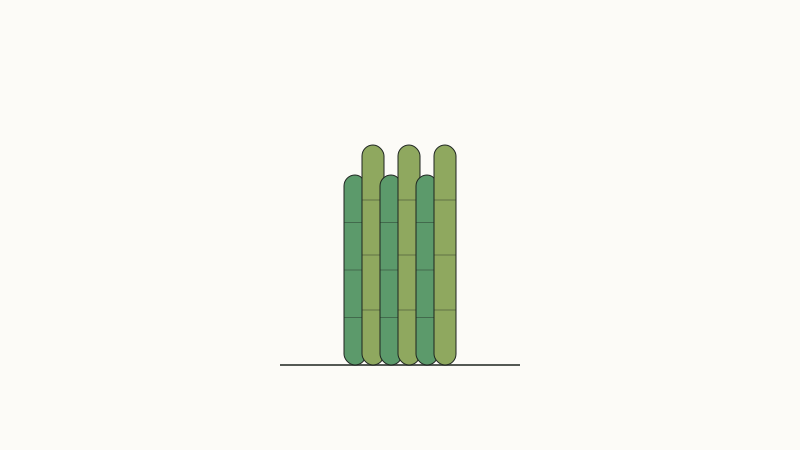
Grass growing guide
Common bamboo
Bambusa vulgaris · Poaceae
Sun
Full sun to part shade
Season
Evergreen
Maturity
4 to 8 years to a full clump
Water
Moderate
Soil pH
5.5 to 7.0
Spacing
10 to 15 ft between clumps
By Dandre Noah
Planting common bamboo
Common bamboo is a tropical giant among grasses: a clumping species whose woody, hollow culms can reach 50 feet or more in frost-free climates. Plant in spring after the soil warms, setting the root ball at the same depth it grew in the pot and watering it in deeply. Site it with its mature size in mind; a hedge or screen wants clumps 10 to 15 feet apart, and even a single specimen claims a wide circle over the years. It is a pachymorph or clumping bamboo, so it expands slowly outward from the base rather than running underground like the temperate bamboos that take over yards, but slowly still means a footprint several feet wider each decade. Hardy outdoors in roughly zones 9b to 12; the UF/IFAS assessment lists it established in South Florida counties.
Planting details
- Plant in spring into warm soil, at the same depth it grew in the container
- Spacing: 10 to 15 ft for a screen; more for a specimen
- Clumping habit; expands slowly outward, does not run
- Propagate by culm or branch cuttings and division, not by seed
- New culms reach full height in a single season
Growing requirements
Full sun produces the thickest stands and strongest culms; it tolerates part shade at the cost of thinner growth. Moist, fertile, well-drained soil suits it best, and regular water during the first years builds the root mass a big clump needs; once established it handles dry spells reasonably but drops leaves when stressed. Cold is the hard limit. Common bamboo is a tropical species, damaged in the upper 20s F and capable of losing its top growth in a hard freeze, though the clump can resprout from the rhizome. Wind exposure also matters: a mature clump is a tall, leafy sail, so give it shelter from prevailing winds or accept shredded foliage.
Harvesting and care
Annual thinning is the main chore. Remove dead, damaged, or crowded culms at ground level with a saw each year, which keeps the clump open and shows off the canes. Cut unwanted new shoots at the base while they are small to keep the clump inside its footprint. Mulch over the root zone to hold moisture and protect the shallow rhizomes. A caution on eating: raw shoots of Bambusa vulgaris are bitter and contain cyanogenic compounds, so they must be boiled before they are safe to eat. In containers, choose a dwarf form like 'Wamin' rather than the species, which quickly outgrows any pot.
Common mistakes
- Planting too close to buildings, fences, or pipes for the mature clump size
- Expecting it to stay narrow; even a clumper widens steadily
- Leaving dead culms standing, which clogs the clump and looks ragged
- Assuming it runs like Phyllostachys; this species clumps, slowly but surely
- Eating raw shoots, which are bitter and must be cooked first
Companion plants
Common bamboo reads as a backdrop plant: a tall evergreen wall behind tropical foliage like bananas, cannas, gingers, and bird of paradise. Beneath the canopy, shade-tolerant ground covers and ferns handle the root competition and leaf litter. Keep it away from septic lines, foundations, and neighbors' fences not because it runs, but because a mature clump leans, drops litter, and is hard to remove once it spans the spot. In edible gardens, remember the clump sheds heavily and shades a widening ring every year.
Varieties worth growing
- Vittata: golden bamboo; yellow culms striped green, the most ornamental form
- Wamin: Buddha's belly bamboo; shorter culms with swollen internodes, the container choice
- Species form: the largest and fastest; green culms for timber-scale screening
Frequently asked questions
Is bamboo a tree?
No, it is a giant woody grass. The culms look and act like trunks, but bamboo is in the grass family and behaves like one: it shoots new culms from the rhizome and each culm reaches full height in a single season.
Does common bamboo spread invasively?
Not like running bamboos do. Bambusa vulgaris is a clumping species that expands slowly outward from the base rather than sending runners. It still gains a wide footprint over the years, so give it room rather than a barrier.
How cold-hardy is common bamboo?
It is a tropical plant, outdoor-hardy in roughly zones 9b to 12. Culms take damage in the upper 20s F and a hard freeze can top-kill the clump, though it often resprouts from the base. In colder zones it belongs in a container that winters under cover.
Are bamboo shoots edible?
Common bamboo shoots are eaten but are bitter and contain cyanogenic compounds. They must be thoroughly boiled before eating; never eat them raw.
How do I keep bamboo from spreading?
Common bamboo is a clumping species that expands slowly outward rather than running, so a wide bed or a simple root barrier is usually enough containment. The genuinely invasive bamboos are running species such as Phyllostachys, which need a buried rhizome barrier 24 to 30 inches deep or regular root pruning around the grove.