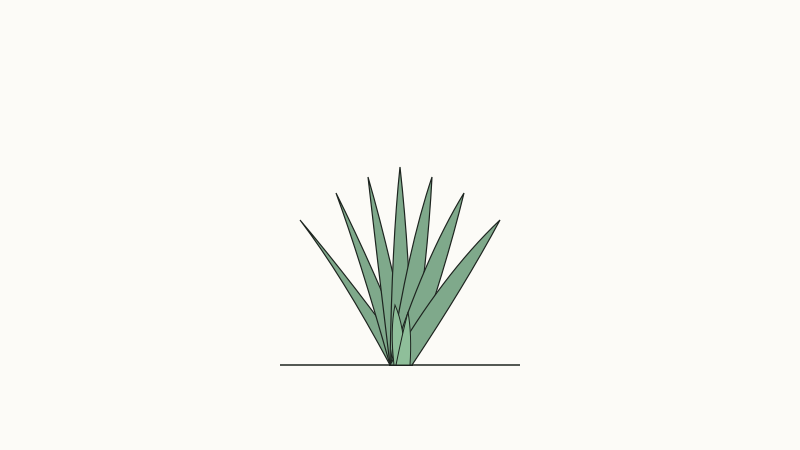
Native plant growing guide
Banana yucca
Yucca baccata · Asparagaceae
Sun
Full sun
Season
Evergreen perennial
Maturity
Several years to first bloom
Water
Very low
Soil pH
6.5 to 8.0
Spacing
3 to 5 ft
By Dandre Noah
Planting banana yucca
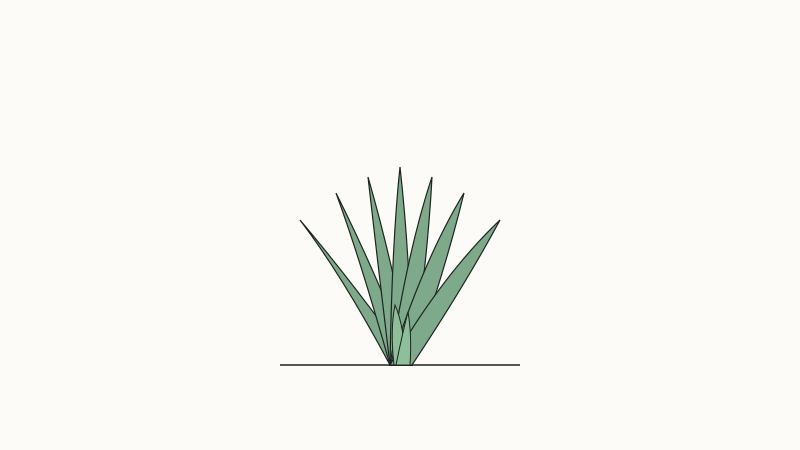
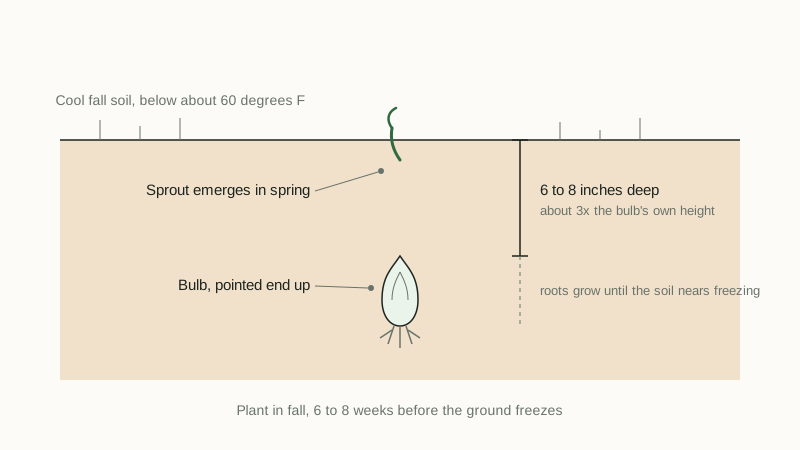
Banana yucca is native to the deserts and high plains of the Southwest, from California to Colorado and Texas, and it is one of the most cold-tolerant yuccas, thriving in gardens well beyond its home range. Plant in spring or early fall into full sun and coarse, sharply drained soil; the University of Arizona Campus Arboretum recommends gritty ground and full exposure. Set the crown at or slightly above grade, because a buried crown rots. Nursery plants and offsets transplant best, though it grows from seed too, germinating best around 60 to 70 F. Give it a wide berth from paths, patios, and play areas: the leaf tips are needle-sharp and the clump slowly widens.
Planting details
- Plant offsets or nursery plants in spring or early fall
- Set the crown at or above soil grade; a buried crown rots
- Spacing: 3 to 5 feet; clumps widen steadily over years
- Seed germinates at 60 to 70 F; offsets are faster
- Keep needle-tipped leaves away from paths and play areas
- Fruits are heavy green pods that ripen sweet; a traditional Apache and Navajo food
- Each rosette flowers once in early summer, then basal offsets carry the clump forward
- Cold-hardy well below 0 F and tolerant of alkaline, limestone-derived soils
Growing requirements
Full sun and drainage, then leave it alone. Banana yucca grows wild on open plains, slopes, and pinyon-juniper country from about 2,000 to 8,000 feet of elevation, often on limestone-derived soils, which is why it tolerates alkaline ground that stunts other plants. Once established it needs no irrigation at all in most climates; the University of Arizona notes that supplemental water only improves appearance. It is genuinely cold-hardy, surviving deep freezes that kill softer yuccas, which makes it one of the few desert plants that works in colder native gardens. Rich, amended, or frequently watered soil is the fast route to rot.
Harvesting and care
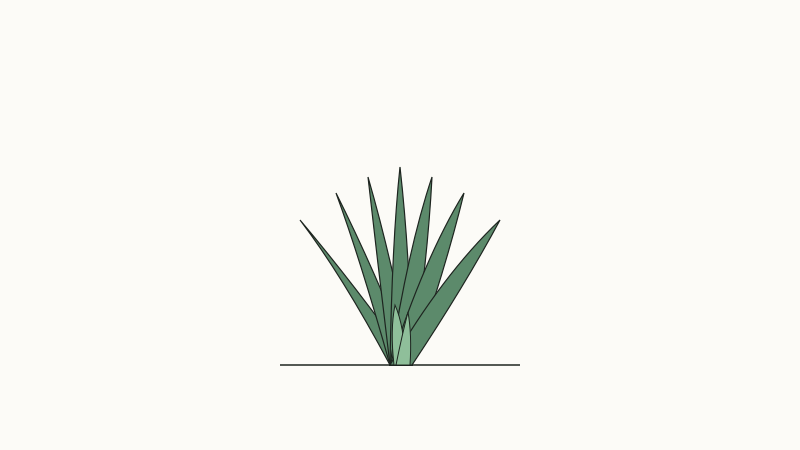
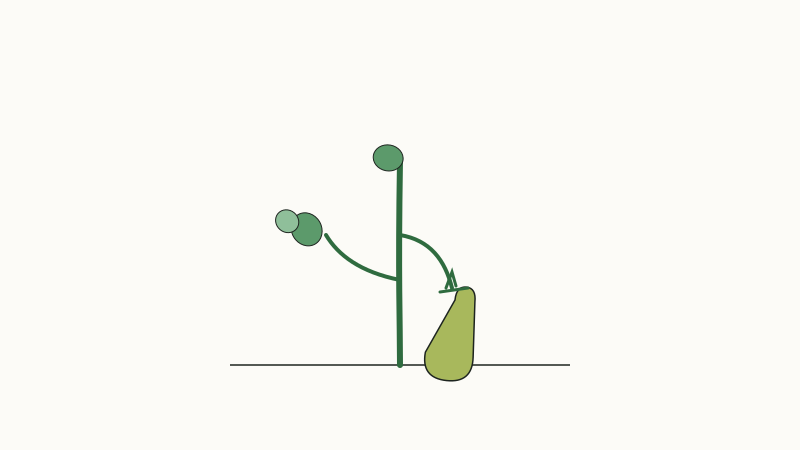
There is almost nothing to do. After the rosette's 2-foot stalk of creamy, pendant flowers fades in early summer, cut the stalk at its base; each rosette blooms once and offsets from the base carry the clump forward. Do not remove the plant's skirt of old leaves in winter, since it insulates the crown. The fat, green, banana-shaped fruits that follow the flowers are edible, a traditional Apache and Navajo food, and can be roasted or baked. Propagation is easy: offsets, rhizome pieces, and stem cuttings all root, and the plant hybridizes freely with neighboring yucca species.
Common mistakes
- Overwatering or planting in clay; wet crowns rot, sometimes fatally
- Siting it beside paths or patios where the needle-tipped leaves jab people
- Expecting bloom from a young plant; it takes years to reach flowering size
- Watering an established plant, which does more harm than good
- Assuming it fruits like the houseplant yucca; garden plants need the moth
Companion plants
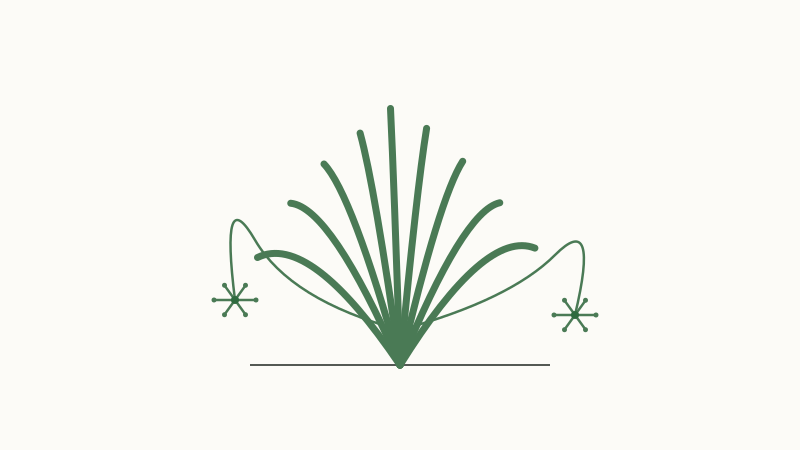
Banana yucca belongs with other dryland natives: agave, prickly pear, desert spoon, sotol, and native bunchgrasses in a gravel-mulched, unirrigated bed. Its pollination story is the famous one: like all yuccas it depends on yucca moths, which gather the pollen and lay eggs in the flower at the same visit, a partnership so tight that the plant sets no fruit where the moth is absent. Keep it out of watered beds and away from turf; irrigation is its enemy. The dense spiny clump is valuable wildlife shelter, so give it a spot where both the plant and its tenants are welcome.
Varieties worth growing
- var. baccata: the widespread form; the broadest, blue-green leaf
- var. brevifolia: shorter-leaved; found in Arizona and New Mexico
- var. vespertina: the California, Nevada, Utah, and Arizona form
Frequently asked questions
Is banana yucca fruit edible?
Yes. Unlike most yuccas, which have dry fruits, banana yucca fruits are fleshy and were a traditional food of Apache and Navajo peoples, usually roasted or baked and sometimes dried into cakes. They can also be ripened off the plant.
How is banana yucca different from the houseplant yucca?
The common indoor yucca is usually Yucca elephantipes, a spineless Mexican tree species. Banana yucca is a cold-hardy, stemless desert native with stiff, needle-tipped leaves and fleshy edible fruit.
Does banana yucca need special pollination to fruit?
Yes. Like all yuccas it relies on yucca moths, which pollinate the flowers while laying eggs inside them. Where the moth is absent, plants still grow and bloom but rarely set fruit.
How cold-hardy is banana yucca?
Very. It grows wild at elevations up to about 8,000 feet across the Southwest and is one of the most cold-tolerant yuccas, handling hard freezes that kill softer species like Yucca elephantipes.
How do I harvest banana yucca fruit?
Pick the green, fleshy pods when they reach full size in late summer, before they dry and split on the stalk. Roast or boil them until soft, then peel and seed; the pulp is sweet and banana-like, which is where the common name comes from. A mature clump in moth-pollinated country can carry dozens of heavy pods.