soil
Soil texture
Last reviewed 2026-10-04
Soil texture is the relative proportion of sand, silt, and clay particles in a soil. Texture affects how quickly water moves, how much moisture the soil holds, how easily roots grow, and how strongly some nutrients are retained. It is different from structure, which describes how particles are arranged into aggregates.
What it means
Sand is the largest of the three mineral particle groups, silt is intermediate, and clay is the smallest. A soil can be classified as sandy loam, clay loam, or another texture based on its proportions. Texture changes slowly compared with structure and organic matter.
How it affects the garden
Texture helps explain why two beds need different watering and amendment plans. Sandy soil may drain quickly, while clay soil may hold water and compact when wet. Additions should be chosen carefully. Adding a small amount of sand to clay rarely creates ideal soil, and organic matter does not instantly change the mineral texture class.
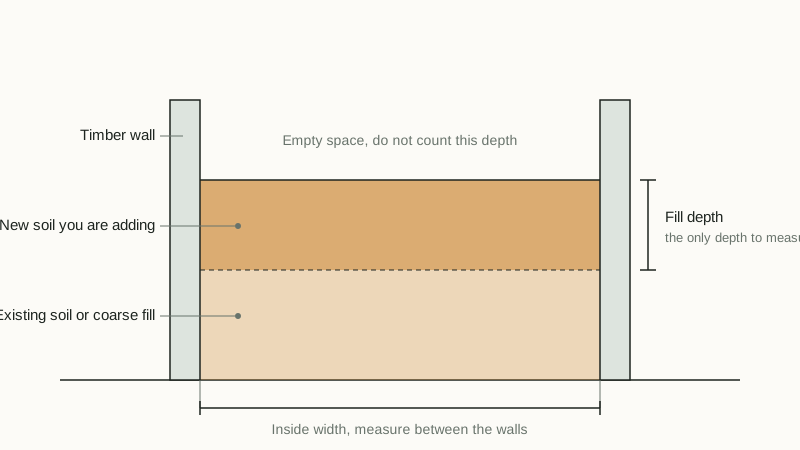
The soil calculator estimates fill volume, not texture. Use a soil test or texture analysis to understand an existing bed.
Example
A sandy soil may need more frequent irrigation because water moves through quickly. A clay loam may need fewer irrigations but careful timing to avoid working it while wet.
Common confusion
Texture is not the same as tilth. A clay soil can have good structure and tilth, while a loam can be compacted.
Sources
USDA Natural Resources Conservation Service explains sand, silt, clay, and soil texture classes.