Houseplant growing guide
Burro's tail
Sedum morganianum · Crassulaceae
Sun
Bright light to part sun
Season
Year-round indoors
Maturity
2 to 3 years
Water
Low
Soil pH
6.0 to 7.5
Spacing
Trails 2 to 4 ft
By Dandre Noah
Planting burro's tail
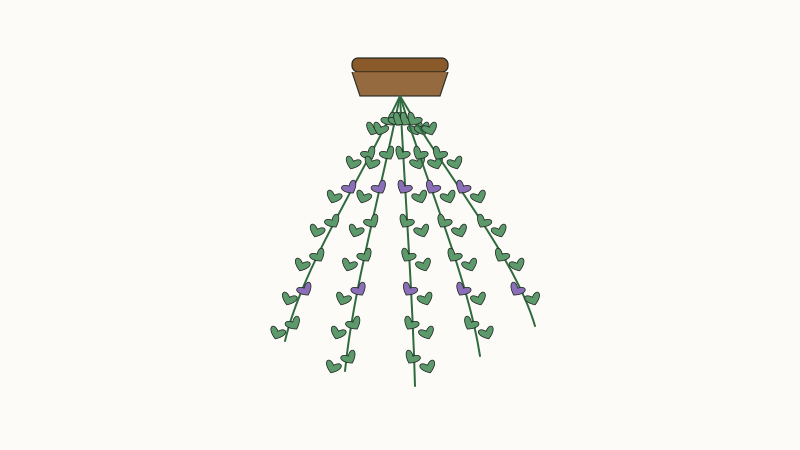
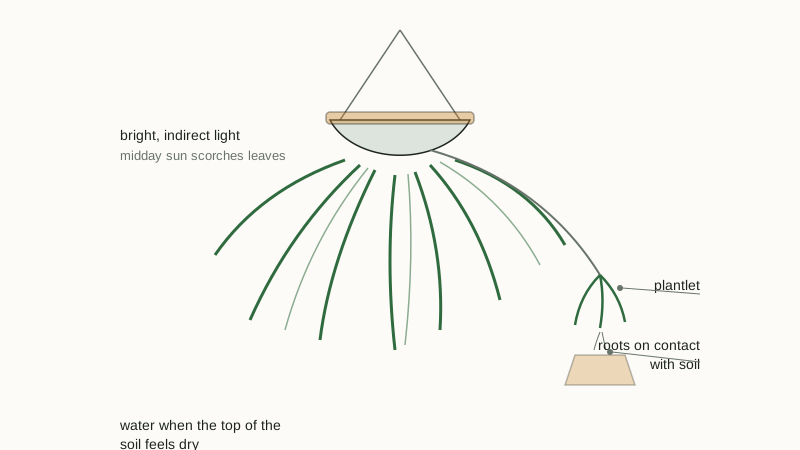
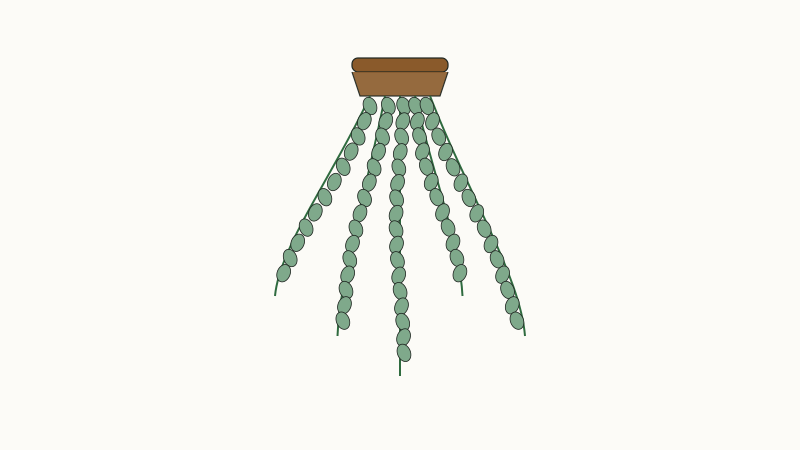
Burro's tail grows best in a shallow pot or hanging basket of gritty cactus mix, where the stems can pour over the rim and braid into ropes two feet long or more. Almost every plant starts as a stem cutting or a handful of fallen leaves laid on dry mix; both root with almost no effort. Give it the brightest window or sill you have, with a few hours of direct sun welcome. Outdoors it is hardy in zones 10 to 11 and tolerates brief dips to about 40 F, which makes it a fine summer basket on a sunny patio anywhere else. The one siting rule that matters more than light: put it where nothing brushes against it, because the leaves snap off at a touch.
Planting details
- Plant in a shallow pot of cactus or succulent mix with sharp drainage
- Stems trail 2 feet or more; hang or shelve it where nothing knocks the leaves
- Propagate from stem cuttings or single fallen leaves laid on dry mix
- Water with tepid water only after the mix dries completely; much less in winter
- Hardy outdoors in zones 10 to 11; a summer patio plant elsewhere
Growing requirements
This is one of the few houseplants that genuinely wants your brightest spot: a south or west windowsill with some direct sun keeps the beads plump and tightly packed, while dim rooms stretch the stems thin and pale. Water deeply, then let the mix dry out completely before the next soak; plump leaves that go slightly soft are the real thirst signal. In winter the plant rests and needs water only every few weeks. It tolerates rocky, poor, and alkaline soil, needs no extra humidity, and asks for only a light feeding once or twice during the growing season, so the whole care routine comes down to light, drainage, and restraint.
Harvesting and care
In summer, mature plants can push out pink to red flower clusters at the stem tips, though bloom is rare indoors. Bare spots along the stems fill in if you tuck a few rooted leaves back into the pot, or lay cuttings on the surface to thicken a thin planting. Handle the plant by its pot, never the stems, and do any repotting in spring over a tray to catch the inevitable leaf drop. Slugs and snails bother it outdoors; indoors the main threat is wet mix. Burro's tail is non-toxic to cats and dogs, though a dangling rope of beads is still worth hanging out of playful reach.
Common mistakes
- Overwatering, which rots stems and turns plump leaves to mush
- Handling or moving it often; the leaves detach at the lightest touch
- Too little light, which stretches stems thin with gaps between leaves
- A deep or oversized pot that keeps the mix wet for weeks
- Cold below about 40 F or a frosty windowsill in winter
Companion plants
Burro's tail shares the sunny shelf or hanging rail with other dry-footed trailers like string of hearts and lipstick plant, all of which want the same soak-and-dry rhythm. On a bright sill it sits well beside jade plant and other succulents that take the same bright, dry conditions. Keep it away from the humidity lovers; ferns and calatheas need the opposite routine of moist air and moist soil.
Varieties worth growing
- Burrito: smaller, rounder lime-green leaves on shorter stems; slightly sturdier than the species
Frequently asked questions
Is burro's tail safe for cats and dogs?
Yes. NC State Extension lists Sedum morganianum as non-toxic to cats, dogs, and horses. Hang it out of reach anyway, since the stems break easily.
Why are leaves falling off my burro's tail?
They are meant to. The leaves detach at the slightest bump and each one can root into a new plant; lay the fallen ones on dry mix to propagate.
Why are the stems shriveling?
Check the roots before watering. Shriveling with a firm plant means thirst; shriveling with a blackened base means rot from overwatering.
Will burro's tail flower indoors?
Rarely. Mature plants produce small pink to red clusters at the stem tips in summer, mostly outdoors, but the foliage is the whole point of the plant.