Houseplant growing guide
String of hearts
Ceropegia woodii · Apocynaceae
Sun
Bright indirect
Season
Year-round indoors
Maturity
1 to 2 years
Water
Low
Soil pH
6.0 to 7.0
Spacing
Trails 2 to 3 ft
By Dandre Noah
Planting string of hearts
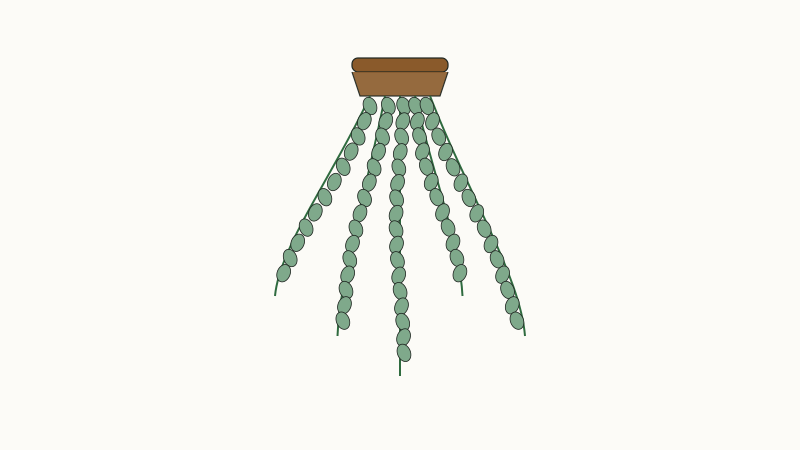
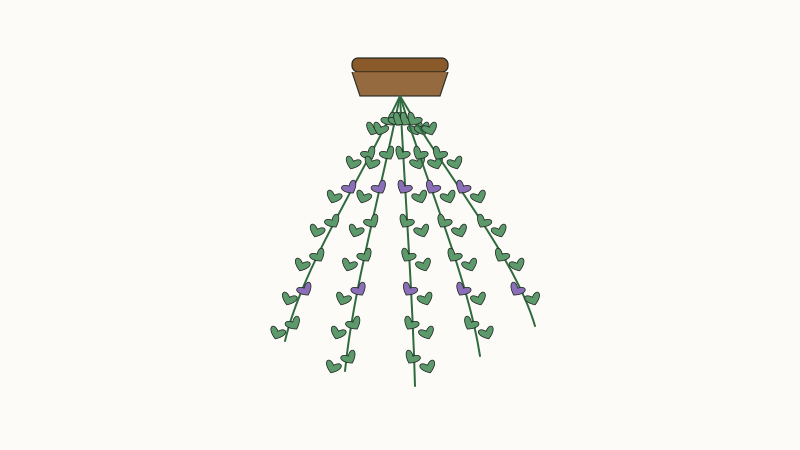
String of hearts is a succulent vine, so treat it like one: a small pot of sandy, fast-draining mix in bright indirect light. It actually prefers to be crowded, so repot only when the pot is truly packed with roots and tubers, often every few years. Stems trail several feet over the pot's edge, and the bead-like tubers along them root wherever they touch soil, which is also the easiest way to propagate: coil a vine onto the surface of fresh mix and the tubers take hold. Outdoors it is hardy in zones 10 to 12, where it scrambles and spreads freely.
Planting details
- Plant in a sandy, fast-draining mix in a small pot; it likes to be crowded
- Stems trail several feet; bead tubers along them root on contact with soil
- Propagate by coiling a vine on moist mix or rooting a stem cutting
- Bright indirect light keeps the silver marbling sharp; dim vines stretch bare
- Hardy outdoors in zones 10 to 12, where it can spread as a groundcover
Growing requirements
Bright indirect or dappled light keeps the leaves close-set and silvered; harsh midday sun scorches them and deep shade stretches the stems with gaps between hearts. A plant that gets a little morning sun often grows the purplest undersides and the most tubers. Let the mix dry out completely between waterings, then soak through, and cut water hard in winter when the plant rests. Normal room temperatures suit it, with a floor around 50 F. Feeding is light: a diluted fertilizer once or twice during the growing season is plenty for a plant that lives lean in the wild.
Harvesting and care
The vines tangle into knots over time, so detangle gently when repotting or trimming. Long bare stems with leaves only at the tips mean too little light or an exhausted plant; snip the vines back and root the cuttings to restart a fuller pot. Small purple lantern-shaped flowers appear along the vines on a happy plant. Watch for mealybugs tucked into the leaf joints. On pet safety: Ceropegia woodii does not appear on the ASPCA toxic plant list and is widely regarded as non-toxic, but it is easily confused with string of pearls and string of dolphins, which are toxic, so confirm which string plant you actually have.
Common mistakes
- Overwatering, which turns leaves yellow and mushy and rots the tubers
- Watering it like a foliage vine; it is a succulent and wants long dry spells
- Too little light, which stretches stems into bare strings
- Repotting eagerly; it flowers and trails better slightly crowded
- Confusing it with the toxic string of pearls or string of dolphins
Companion plants
String of hearts shares the bright shelf or hanging rail with burro's tail and lipstick plant, all trailers that want the same soak-and-dry routine. It pairs nicely with peperomia, which takes the pot beside it under the same indirect light. Avoid the dim humid corner it would share badly with ferns: it is a succulent at heart and wants light over moisture.
Varieties worth growing
- Silver Glory: apple-shaped leaves almost entirely silver
- Variegata: cream and pink flushed leaves; needs brighter light to hold color
- Orange River: green leaves with an orange cast, especially in strong light
- String of Arrows: pointed lime and silver leaves on pinkish stems
Frequently asked questions
Is string of hearts toxic to cats and dogs?
It is not listed on the ASPCA toxic plant list and is generally regarded as non-toxic. But lookalikes like string of pearls and string of dolphins are toxic, so verify which trailing plant you own before letting pets near it.
Why are the leaves spaced far apart on the vines?
Not enough light. In bright indirect light the hearts sit close together; in dim rooms the stem stretches long gaps between them. Move it brighter and trim the leggy vines.
How do I make my string of hearts fuller?
Coil existing vines back onto the soil surface. The bead tubers along each stem root where they touch, and each rooted node pushes out new growth.
What are the little beads on the stems?
Aerial tubers. In the wild they root where vines touch soil, and indoors they are free plants: press one into moist mix and it sprouts.