Planting
How do you plant lavender for success?
By Dandre Noah · Last reviewed 2026-11-03
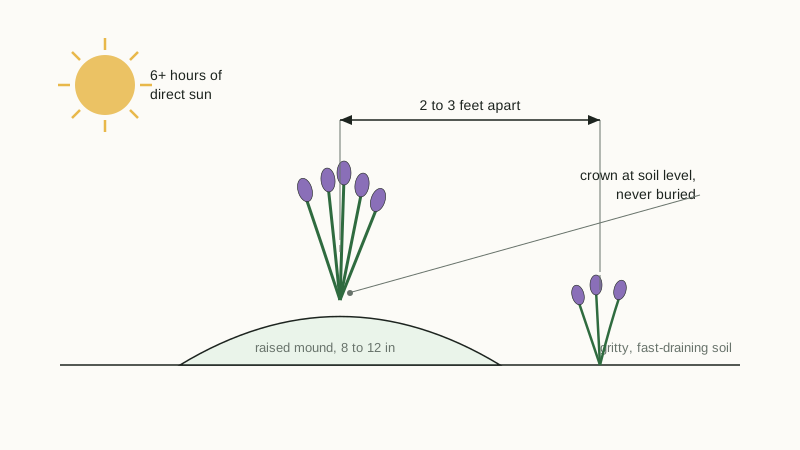
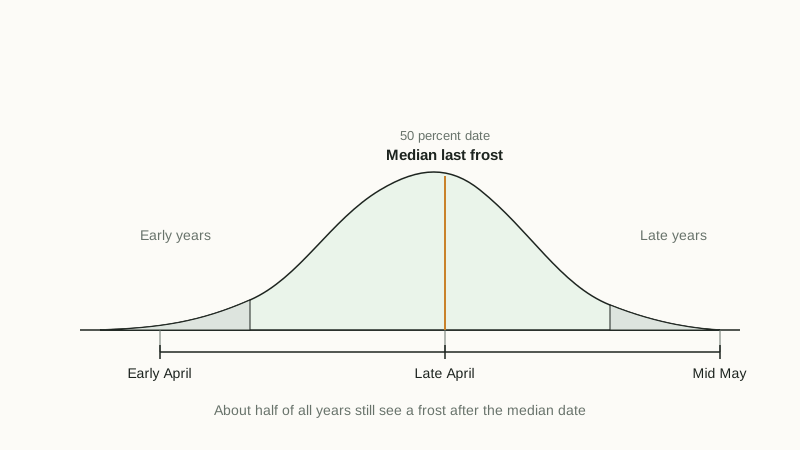
Plant lavender in full sun in soil that drains fast, at the same depth it grew in the pot, spaced 2 to 3 feet apart. In cold climates plant in spring after the last frost; in mild or dry climates fall planting works even better. Wet soil kills lavender faster than cold does.
Lavender is a Mediterranean sub-shrub that evolved in rocky, alkaline, dry ground. Almost every planting failure traces back to asking it to live somewhere wetter or richer than that.
When to plant
The right season depends on what threatens lavender where you live:
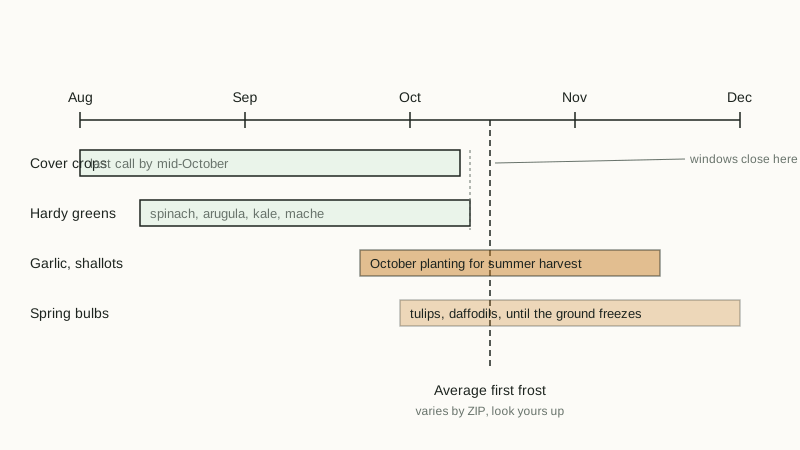
- Cold, wet winters (roughly zones 5 to 7): plant in spring after the last frost so roots establish before winter. English lavender (Lavandula angustifolia) is hardy to about zone 5; French and Spanish types are not winter-hardy and belong in containers or annual beds.
- Mild or dry-winter climates (zones 7 and warmer): fall planting is the better window. Colorado State University Extension reports that New Mexico State University research found fall-planted lavender survives better, establishes faster, and flowers more the following season. For fall planting, choose plants in 4 inch pots or larger so the root system is developed enough to overwinter.
Either way, buy nursery plants rather than growing from seed. Lavender germinates slowly and English lavenders do not come true from seed.
Pick the spot
Lavender needs at least 6 hours of direct sun a day, and more is better. UC IPM's lavender guidance also recommends keeping it away from lawn sprinklers and chronically weedy ground, since lavender competes poorly with weeds and hates the extra moisture turf irrigation delivers. The sun calculator can confirm whether a spot actually gets enough hours.
Fix the drainage first
Heavy clay is the main obstacle. Two fixes work:
- Mound planting. Shape soil into a mound or ridge 8 to 12 inches high and plant on top so the crown never sits in wet ground.
- A raised bed. A bed filled with gritty, lean mix solves drainage completely; the raised bed guide covers how much soil that takes.
One counterintuitive caution from the Colorado State fact sheet: digging sand or gravel into clay soil can make drainage worse rather than better. The better amendment for clay is fine bark mulch, about 1 inch of quarter-inch bark tilled into the top 6 to 8 inches.
Soil and pH
Lavender wants slightly alkaline soil, around pH 6.5 to 7.5, and low fertility. Rich, compost-heavy soil produces floppy growth and weak fragrance. If a soil test shows your ground is acidic, the pH amendment calculator converts the target change into pounds of lime for your bed size.
Planting steps
- Dig a hole about twice as wide as the root ball and no deeper.
- Set the plant at the same level it grew in the pot. Burying the crown invites rot.
- Backfill with the native or amended soil, firm gently, and water in well.
- Space plants 2 to 3 feet apart so air can move between them; lavenders sulk in crowded, humid clumps.
- Mulch with gravel or fine bark kept away from the crown, not a thick layer of shredded wood against the stems.
Watering the first year
Water once or twice a week until plants are established, then taper. Colorado State suggests watering mature plants every two to three weeks until buds form. Established lavender is drought tolerant, and chronic overwatering leads to the root rot (Phytophthora) that is the plant's main killer.
Common mistakes
- Amending with rich compost. Lavender wants lean soil. Skip the compost entirely.
- Planting too deep. The crown should sit at or slightly above soil level.
- Organic mulch against the stems. It holds moisture where the plant is most vulnerable.
- Choosing a tender type for a cold zone. English lavender and lavandins survive winters to about zone 5; French and Spanish lavenders do not.
What to do next
The lavender plant page lists varieties and harvest timing. If you are planting in spring, the planting calendar shows your last frost date so you can set the plants out once the soil starts to warm.