Houseplant growing guide
Areca palm
Dypsis lutescens · Arecaceae
Sun
Bright indirect
Season
Year-round indoors
Maturity
5 to 10 years
Water
Moderate
Soil pH
6.0 to 7.0
Spacing
3 to 5 ft
By Dandre Noah
Planting areca palm
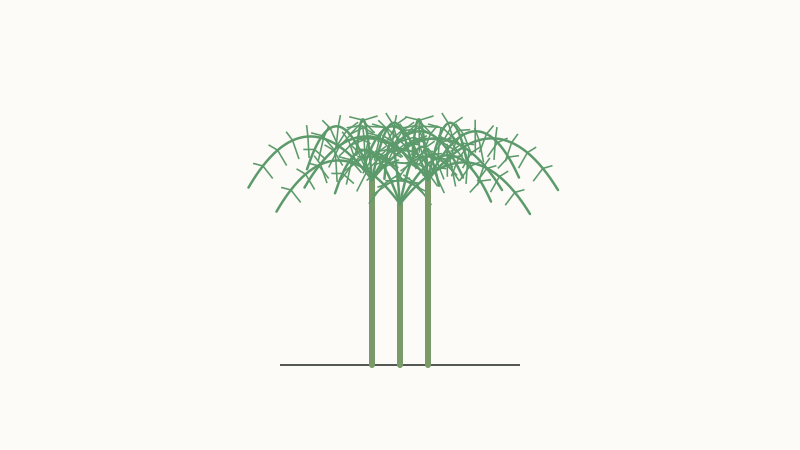
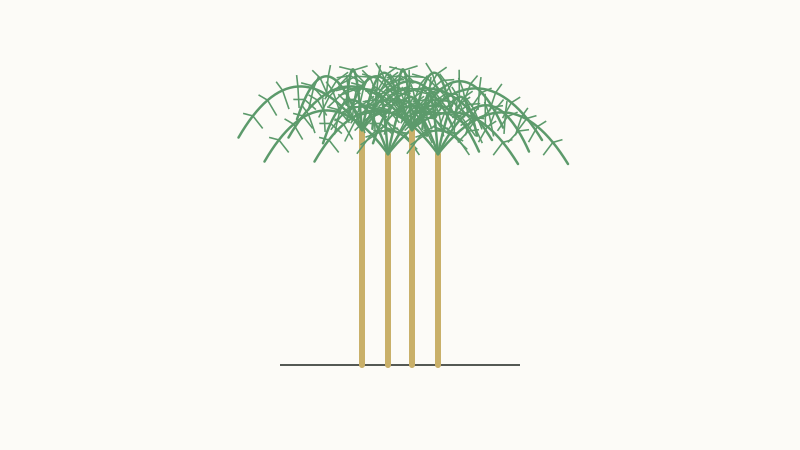
Areca palm is a clumping palm, so the pot you buy already holds several golden, ringed canes rising from one base. Repot in spring every two or three years, one size up into a well-drained mix, and only when roots crowd the pot; like most palms it resents root disturbance. Keep it near a bright east or west window indoors. Outdoors it is hardy in zones 10 to 11 in partial shade, where it slowly becomes a 20-plus-foot screen, and it summers well on a sheltered patio anywhere. You will also see it sold under its older botanical name, Chrysalidocarpus lutescens.
Planting details
- Repot every 2 to 3 years in spring, one pot size up; arecas dislike root disturbance
- Canes arise in a cluster from one base; divide only when the pot is badly crowded
- Grows 6 to 10 inches a year indoors and regularly outgrows its corner
- Also sold under the older name Chrysalidocarpus lutescens
- Hardy outdoors in zones 10 to 11 in part shade; a patio plant in summer elsewhere
Growing requirements
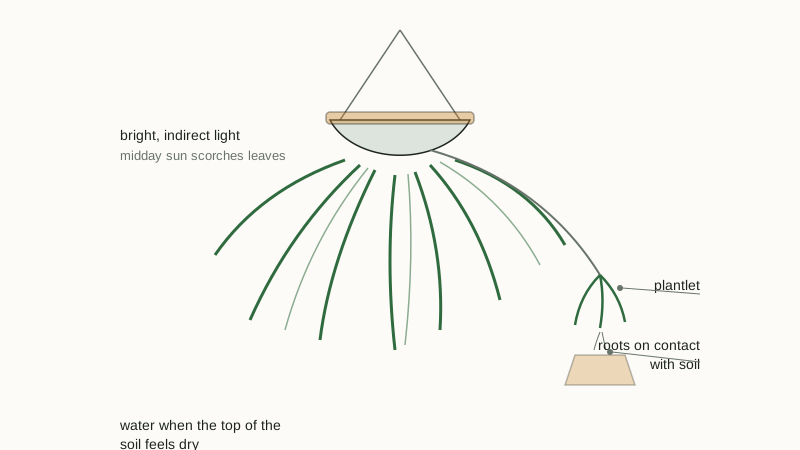
Bright indirect light is the sweet spot; an east or west window works, and gentle morning sun is fine, but harsh afternoon sun scorches the fronds. Keep the mix lightly and evenly moist through the growing season, letting just the surface dry between waterings, and never let the pot sit in water. This Madagascar native appreciates warmth and humidity, so keep it above 60 F and away from drafts and radiators. Feed monthly in spring and summer with a balanced fertilizer and flush the pot occasionally to clear salt buildup, which shows up as browned leaflet tips; in hard-water areas, occasional distilled water prevents the worst of it.
Harvesting and care
Golden canes are the plant's natural coloring, not a nutrient problem. Trim fronds at the base once they brown past the halfway point, and expect some browning on the oldest leaves as new fronds push from the center. Areca is famously susceptible to spider mites, along with scale and whiteflies, so check the frond undersides and rinse the foliage periodically. A dusty crown also invites mites, and a monthly shower keeps it clean. Never cut the growing tip off a cane, since that kills the cane rather than branching it; to control height, remove whole outer canes at the soil line instead. The plant is non-toxic to cats and dogs.
Common mistakes
- Direct afternoon sun, which scorches the leaflets
- Soggy mix or a water-filled saucer, which rots the roots
- Dry air, which invites the spider mites areca is prone to
- Cutting the top off a cane to control height; the cane dies back instead of branching
- Repotting yearly out of habit instead of waiting for crowded roots
Companion plants
Areca palm anchors the bright end of a tropical grouping and pairs naturally with parlor palm for a layered palm look, since both want indirect light and even moisture. At its feet, shade-tolerant plants like calathea or nerve plant use the light the fronds filter. It also holds a corner beside bird of paradise, which appreciates the same bright spot without needing the same humidity.
Frequently asked questions
Is areca palm safe for cats and dogs?
Yes. The ASPCA and NC State Extension list it as non-toxic to cats and dogs, making it one of the few large indoor palms safe for pet homes.
Why are the frond tips turning brown?
Usually dry air, inconsistent watering, or salt buildup in the mix. Trim the brown tips, keep moisture even, and flush the pot with plain water now and then.
How fast does an areca palm grow?
About 6 to 10 inches a year indoors in good light, eventually reaching 6 to 7 feet. It is one of the faster indoor palms, so give it room.
Is areca palm really a palm or a bamboo?
A true palm. The canes look like bamboo because they are slender, golden, and ringed, but it is a clustering palm from Madagascar, also listed as Chrysalidocarpus lutescens.