Houseplant growing guide
Orange bird of paradise
Strelitzia reginae · Strelitziaceae
Sun
Full sun to part shade; brightest light indoors
Season
Year-round indoors; blooms fall to spring
Maturity
3 to 4 ft; blooms at 3 to 5 years from division
Water
Moderate
Soil pH
5.5 to 8.0
Spacing
3 to 4 ft
By Dandre Noah
Planting orange bird of paradise
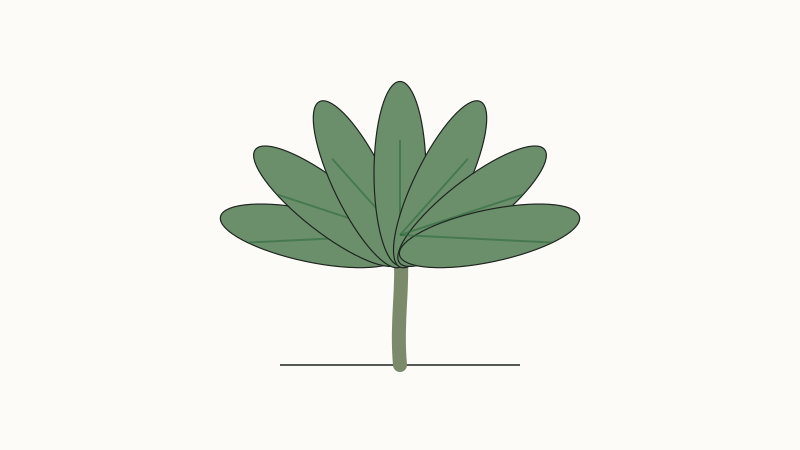
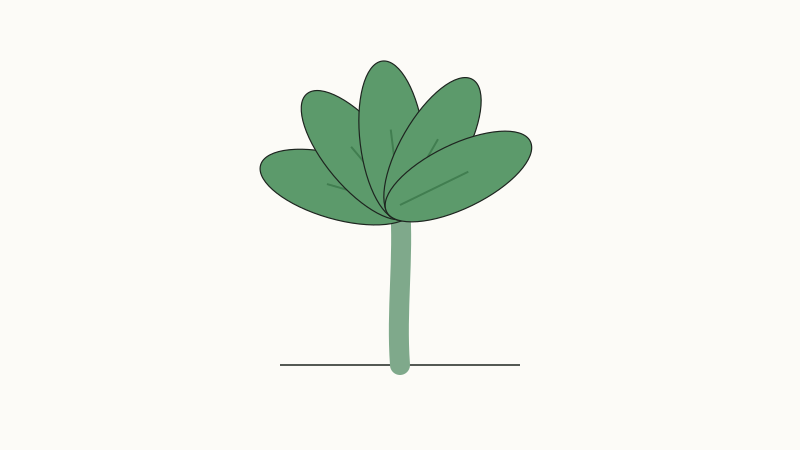
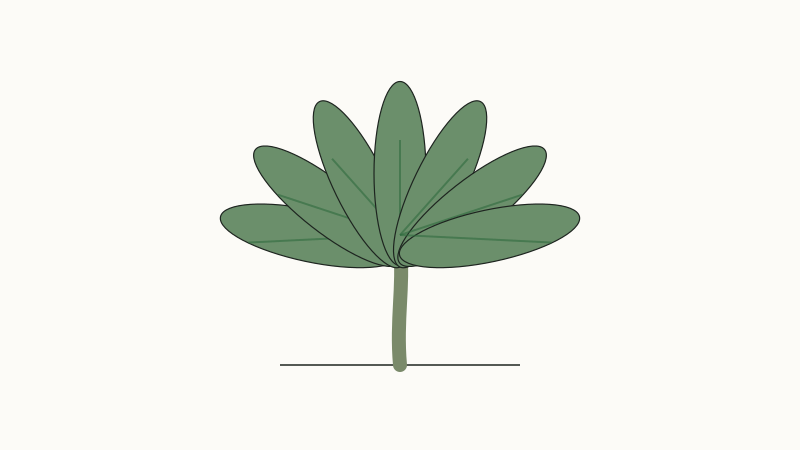
Strelitzia reginae is the true bird of paradise, a clumping South African perennial with gray-green banana-like leaves and the orange and blue crane flowers that make it the floral emblem of Los Angeles. Pot it in a deep container of rich, well drained mix and give it the brightest position you have; Wisconsin Extension notes it needs nearly full sun in summer and all the light it can get in winter to bloom. Do not overpot or plant too deep, since slight crowding and even exposed root tops encourage flowering. Outdoors it forms a 3 to 4 foot clump in zones 10 to 12.
Planting details
- Give it the sunniest spot available; light is the main limit on blooming
- Pot in rich well drained mix; plant shallow and repot reluctantly
- Outdoors in zones 10 to 12; indoors it summer-vacations outside after acclimating
- Divide established clumps or sow soaked seed 1 inch deep, warm
- Expect flowers on plants 3 to 5 years old from division, 4 to 7 from seed
Growing requirements
Nearly full sun is what separates a blooming plant from a foliage plant; part shade is tolerated at the cost of flowers. Water freely in spring and summer and let the pot dry somewhat between waterings in winter. It is a heavy feeder: Wisconsin Extension recommends a water soluble fertilizer every two weeks in summer and monthly in winter. Night temperatures of 55 to 65 F suit it, and NC State Extension notes it tolerates a range of soil pH as long as drainage is good.
Harvesting and care
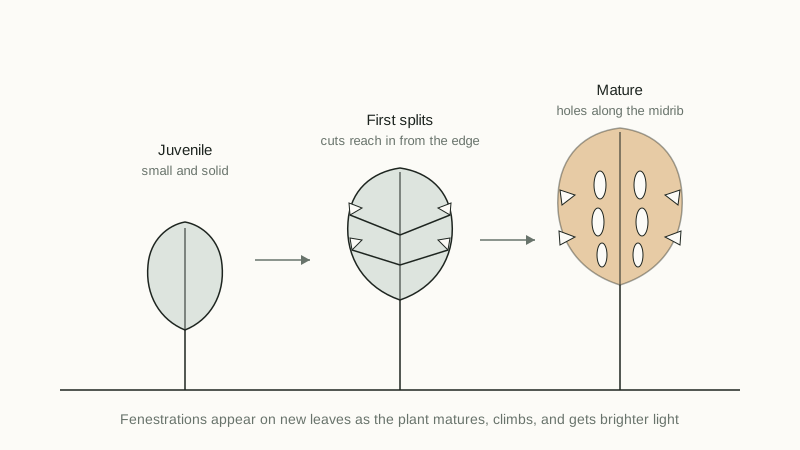
Remove spent flowers and stalks at the base, and wipe the big leathery blades with a damp cloth; skip leaf shine products, which damage the natural matte finish. Mealybugs, scale, and spider mites are the usual pests, and overwatering in dim conditions causes root rot. Expect the leaves to split along the veins; that is normal architecture, not damage. One caution: NC State rates it mildly toxic to cats, dogs, and horses, mainly the fruit and seeds, so position it out of pet traffic.
Common mistakes
- Too little light, the most common reason a mature plant never blooms
- Repotting eagerly; plants flower most freely when somewhat potbound
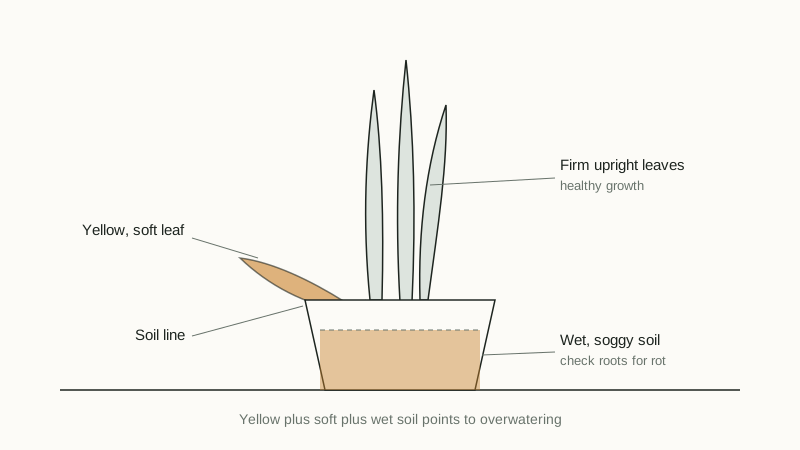
- Winter overwatering in dim conditions, which rots the fleshy roots
- Cold below about 28 F; bring container plants in before frost
- Expecting quick bloom from seed, which takes 4 to 7 years
Companion plants
In a zone 10 to 12 border it reads as the mid height layer in front of giant bird of paradise or bananas, with low spreading companions beneath. Indoors, park it in the same bright window as other sun tolerant tropicals and keep thirstier, shade-loving plants elsewhere. Wherever it lives, give the clump its own 3 to 4 feet; the stiff leaf fans do not like being crowded.
Varieties worth growing
- Mandela's Gold: yellow and blue flowers on the same reginae frame; released by Kirstenbosch in 1996
- Strelitzia juncea: rush-like form with spear shaped leaf stalks instead of blades; rarely offered
- Strelitzia nicolai: the giant white bird of paradise; 20 ft plus outdoors, grown indoors for foliage
Frequently asked questions
Will Strelitzia reginae bloom indoors?
It can, which is what sets it apart from the giant S. nicolai, but it needs nearly full sun in summer and the brightest possible window in winter. Most plants that fail to bloom are simply underlit.
What is the difference between reginae and nicolai?
Strelitzia reginae stays 3 to 4 feet, grows in clumps, and produces the orange and blue crane flowers. S. nicolai is the giant white species that reaches 20 feet or more outdoors and is grown indoors strictly for its banana-scale foliage.
Is bird of paradise toxic to pets?
Mildly. NC State Extension lists Strelitzia reginae as low severity toxic to cats, dogs, and horses, with the fruit and seeds causing nausea, vomiting, and drowsiness if eaten.
How do I get my bird of paradise to flower?
Max out the light, keep it slightly potbound, and feed it: a water soluble fertilizer every two weeks in summer and monthly in winter per Wisconsin Extension guidance. Then give it time; even a good division takes 3 to 5 years to flower.