Vegetable growing guide
Peanut
Arachis hypogaea · Fabaceae
Sun
Full sun
Season
Warm
Maturity
95 to 135 days
Water
Moderate
Soil pH
5.7 to 7.0
Spacing
4 to 6 in
Planting peanut
Peanuts are a tender, warm-season legume, so sow them directly after the last frost once the soil is genuinely warm; germination runs best between 68 and 95 degrees. Buy seed peanuts or plant raw in-shell peanuts, which germinate fastest shell-on, because roasted nuts will not grow. The season is the real constraint: Spanish and Valencia types finish in about 95 to 110 days, while Virginia and Runner types need roughly 135, so pick a variety that fits your frost-free window. Peanuts fix their own nitrogen with rhizobium bacteria, and on ground that has never grown them a legume inoculant at planting pays off.
Planting details
- Direct sow: after the last frost into warm soil
- Spacing: 4 to 6 inches in the row, rows 24 to 36 inches apart
- Seed depth: about 1 1/2 to 2 inches, up to 3 inches in loose sandy soil
- Use raw or seed peanuts; roasted nuts will not germinate
- Allow at least 120 frost-free days for full-size types
Growing requirements
Loose, sandy, well-drained loam is the nonnegotiable: the pegs that carry each developing pod have to physically push into the soil, and crusted or compacted ground blocks them. Soil pH between 5.7 and 7.0 suits peanuts, and they respond to calcium in the top few inches, which gypsum supplies without moving pH. Full sun, steady moisture through pegging and pod fill, and a drier finish as harvest nears. Do not plant them where beans, peas, or other legumes just grew, since they share soil diseases; corn or a grass-family crop is the friendly rotation.
Harvesting and care
After the pale yellow flowers fade, thin stems called pegs bend down and drive each pollinated flower into the soil, where the pod actually forms. Keep the surface loose so pegs can dive, and hill the row like potatoes if the ground crusts. Dig when the tops yellow, or just before frost; pull a test pod first and look for dark veining inside the shell. Lift the whole plant, shake off soil, and cure the pods in a warm, dry, airy spot for several weeks before roasting.
Common mistakes
- Sowing roasted or salted peanuts, which cannot germinate
- Heavy or crusted soil, which pegs cannot penetrate; pods only form underground
- A season too short for the variety; Virginia types need roughly 135 frost-free days
- Planting where beans or peas just grew, which shares legume diseases
- Leaving mature pods in wet ground, which invites rot and mold
Companion plants
Peanuts pay rent in nitrogen, so slot them where a leafy or fruiting crop will follow next year. In the same season they stay low enough to grow beside sweet corn or cucumbers without a light fight. Keep them out of soil that just carried beans or peas, which share their diseases, and away from tall crops in general, since peanuts resent shade.
Varieties worth growing
- Valencia: three to four small kernels per pod; often ready in about 95 days, the short-season pick
- Spanish: small kernels on compact, upright plants; roughly 110 days
- Virginia: the big two-kernel pods for roasting; needs about 135 days
- Runner: uniform medium pods; the standard commercial peanut type
Frequently asked questions
Can I plant peanuts from the grocery store?
Only raw ones, and leaving them in the shell gives the fastest germination. Roasted, boiled, or salted peanuts will not sprout, and seed peanuts from a garden supplier are safer still.
How do peanuts grow underground?
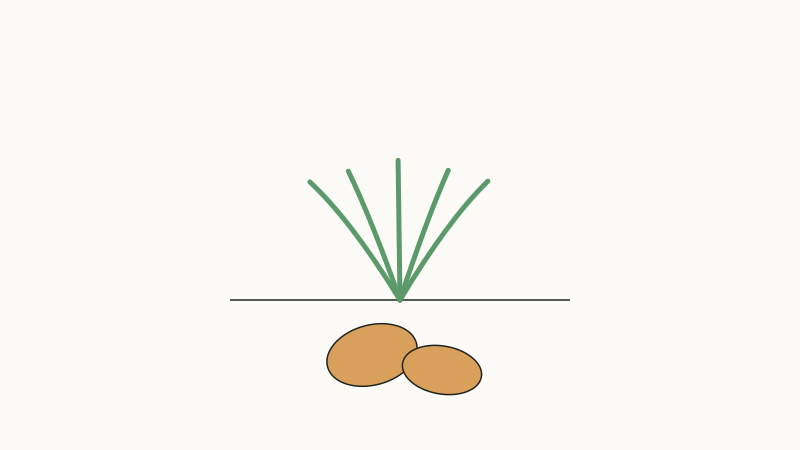
The plant flowers above ground, then each pollinated flower grows a peg that bends down and pushes into the soil. The pod swells at the peg's tip, which is why loose soil and hilling matter.
When do I dig peanuts?
When the tops start to yellow, or just before the first frost. Dig a test pod first: mature shells show dark veining inside. Then cure the lifted plants for several weeks before eating.
Do peanuts need fertilizer?
Not much. They fix their own nitrogen, so heavy feeding grows vines instead of pods. Calcium near the soil surface matters more for pod fill; gypsum supplies it without changing pH.