Vegetable growing guide
Sesame
Sesamum indicum · Pedaliaceae
Sun
Full sun
Season
Warm
Maturity
100 to 120 days
Water
Low
Soil pH
6.0 to 7.0
Spacing
12 to 18 in
Planting sesame
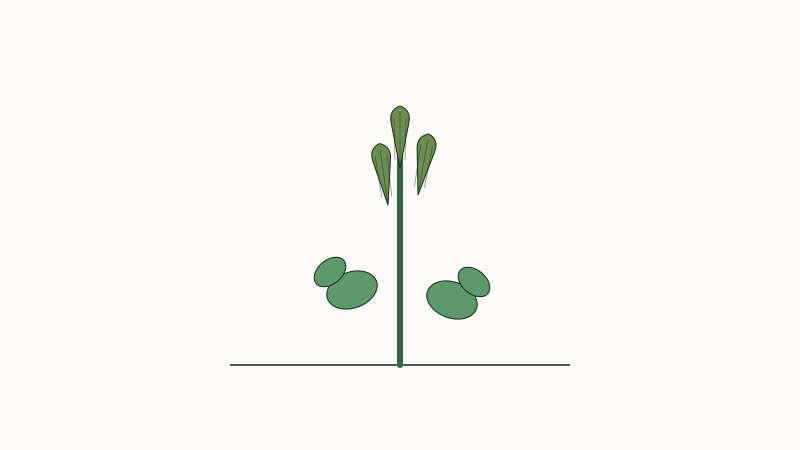
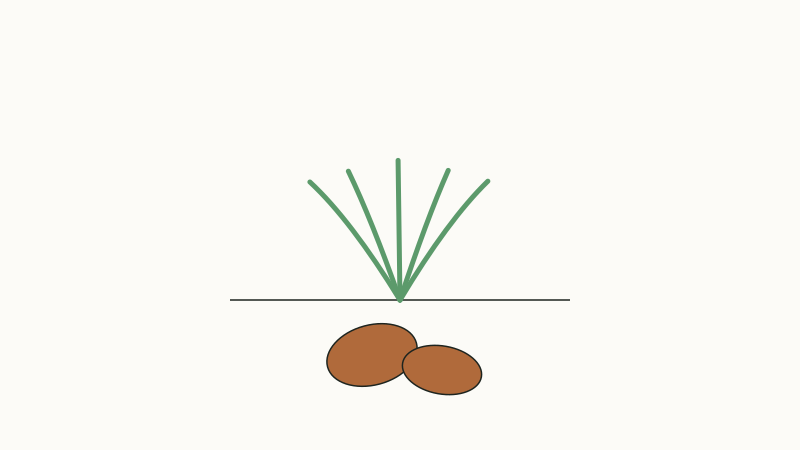
Sesame is a warm-season annual that wants genuinely hot ground, so sow directly after the last frost once the soil reaches about 70 degrees. It needs roughly 100 frost-free days to fill the pods plus another week or two of dry-down, which makes it comfortable in zones 7 and warmer and a stretch anywhere shorter without an indoor start. The seed is tiny, so sow shallow into a clean, weed-free bed and keep it evenly moist until the slow seedlings take hold. Transplants work if handled gently, but direct seeding is simpler.
Planting details
- Direct sow: after the last frost, into soil around 70 degrees
- Spacing: 12 to 18 inches; plants reach 3 to 6 feet
- Seed depth: about 1/4 to 1/2 inch
- Start indoors 4 to 6 weeks early only where the season is short
- Keep the bed weed-free early; young sesame does not compete
Growing requirements
Full sun, heat, and well-drained soil. Sesame is famously drought tolerant once its branched root system is down, but it needs real moisture at two moments, germination and flowering, and it cannot stand waterlogged ground at any point. Fertile, medium-textured soil near neutral pH grows the tallest plants; on rich ground expect 5 to 6 feet of stalk. The white, inch-long bell flowers open from leaf axils starting low on the stem and keep opening upward for weeks.
Harvesting and care
Pods ripen from the bottom up while the stem tip is still flowering, which is the whole harvest problem: dry capsules split and spill their seed. Watch the lowest pods and cut plants as they turn brown, before they open. Stand the stalks upright in a bucket or a paper bag to finish drying for a week or two, then shake and crush the capsules over a bowl to catch the seed. Late-season rain worsens shattering, so time the cut to the weather.
Common mistakes
- Waiting for the whole plant to dry before cutting; ripe capsules split and pour seed on the ground
- Sowing into cool soil below about 65 degrees, which stalls or kills germination
- Wet feet at any stage; waterlogged soil kills sesame outright
- Skipping early weeding; the seedlings grow slowly and lose to weeds
- Planting in part shade; shaded sesame stays stunted and unproductive
Companion plants
Sesame's height and foxglove-like bloom make it a back-of-the-border plant among other heat lovers like okra, sweet potatoes, and sunflowers, and the long flowering run feeds bees for weeks. Keep it out of damp or heavily irrigated rows, and give shorter neighbors the sunny side, since a mature stand throws real shade.
Varieties worth growing
- White-seeded types: the classic bakery sesame; most garden seed packets are these
- Black sesame: deep black seed with a stronger, nuttier flavor
- Non-shattering cultivars: capsules hold closed at maturity; the practical choice for a clean hand harvest
- Shattering heirloom types: the traditional form; cut stalks before the lowest pods open
Frequently asked questions
Why did my sesame harvest disappear?
Dry capsules split and pour seed out of the bottom. Cut stalks when the lowest pods brown but before they open, and finish drying them standing upright in a bucket or bag.
Can sesame grow in short seasons?
It needs about 100 frost-free days plus dry-down. In shorter seasons start indoors 4 to 6 weeks early and transplant gently; in genuinely cold climates it works better as an ornamental.
Is sesame really drought tolerant?
Once rooted, yes. But germination and flowering still need moisture, and no amount of toughness survives waterlogged soil.
What do sesame flowers look like?
White to pale pink bells about an inch long, opening in the leaf axils and working up the stem over weeks. The look is close to foxglove, which makes it a legitimate ornamental too.